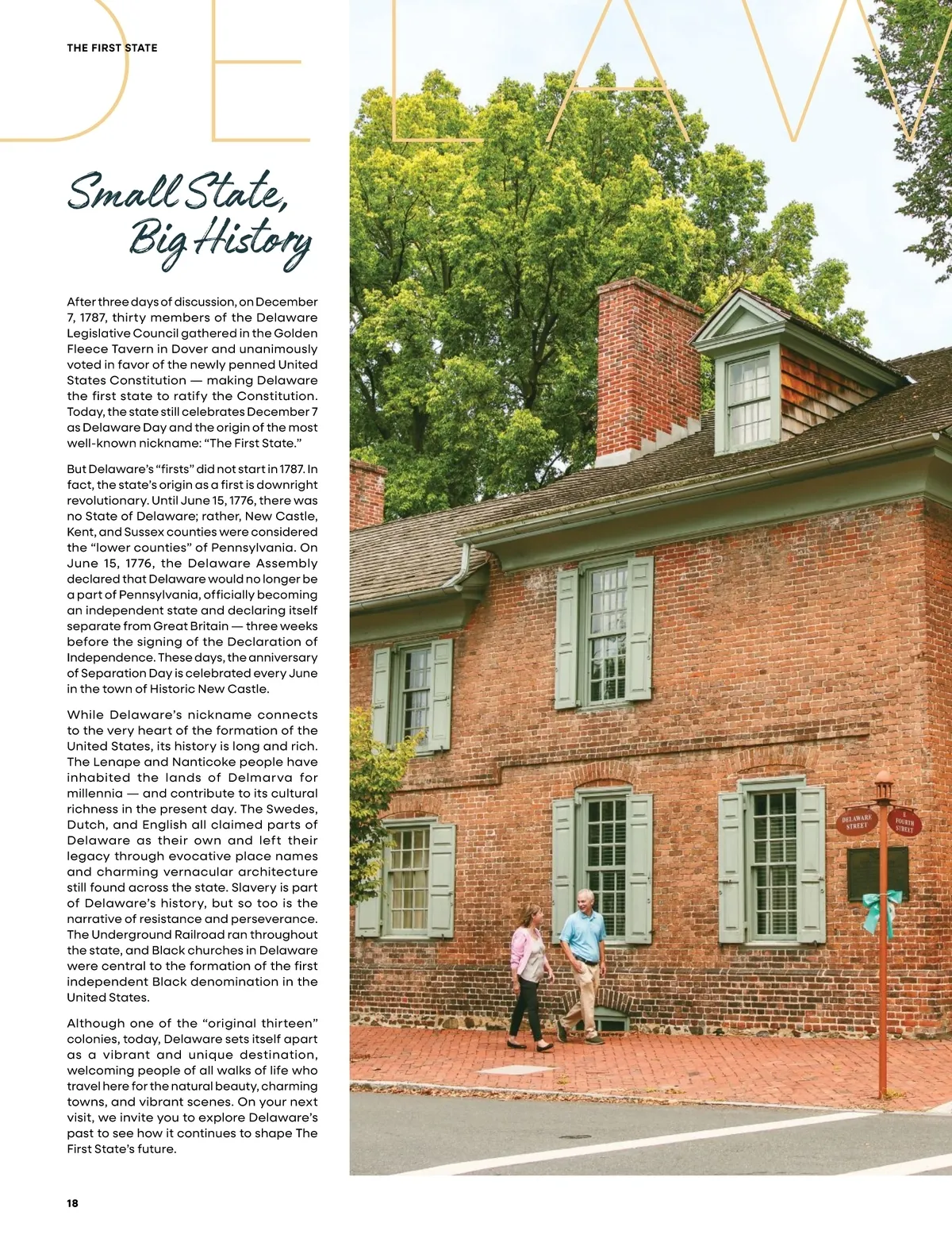
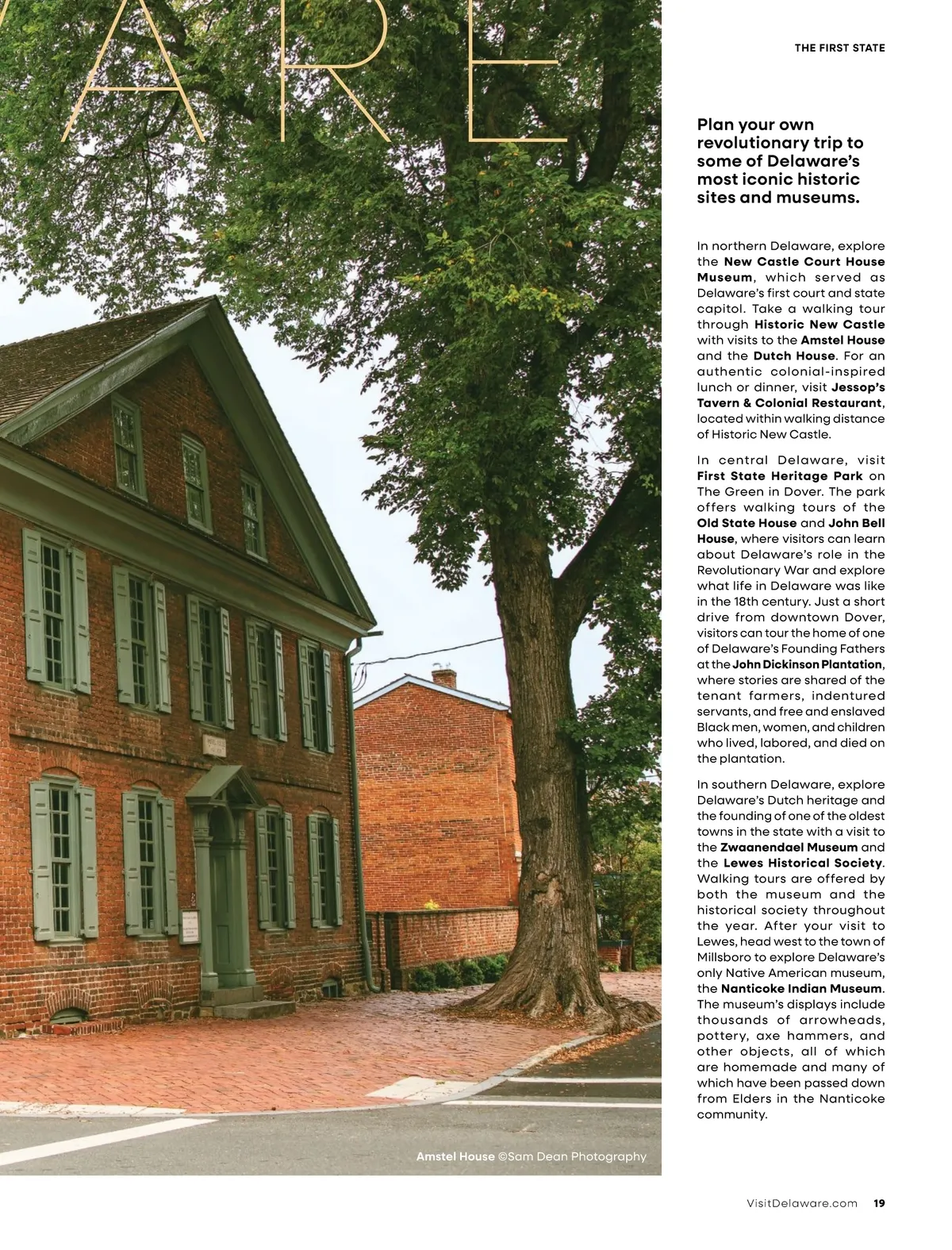
DELAW tHe First stAte Small State, Big History After three days of discussion, on December 7, 1787, thirty members of the Delaware Legislative Council gathered in the Golden Fleece Tavern in Dover and unanimously voted in favor of the newly penned United States Constitution — making Delaware the first state to ratify the Constitution. Today, the state still celebrates December 7 as Delaware Day and the origin of the most well-known nickname: “The First State.” But Delaware’s “firsts” did not start in 1787. In fact, the state’s origin as a first is downright revolutionary. Until June 15, 1776, there was no State of Delaware; rather, New Castle, Kent, and Sussex counties were considered the “lower counties” of Pennsylvania. On June 15, 1776, the Delaware Assembly declared that Delaware would no longer be a part of Pennsylvania, officially becoming an independent state and declaring itself separate from Great Britain — three weeks before the signing of the Declaration of Independence. These days, the anniversary of Separation Day is celebrated ever y June in the town of Historic New Castle. While Delaware’s nickname connects to the very heart of the formation of the United States, its history is long and rich. The Lenape and Nanticoke people have inhabited the lands of Delmarva for millennia — and contribute to its cultural richness in the present day. The Swedes, Dutch, and English all claimed parts of Delaware as their own and left their legacy through evocative place names and charming vernacular architecture still found across the state. Slavery is part of Delaware’s history, but so too is the narrative of resistance and perseverance. The Underground Railroad ran throughout the state, and Black churches in Delaware were central to the formation of the first independent Black denomination in the United States. Although one of the “original thirteen” colonies, today, Delaware sets itself apart as a vibrant and unique destination, welcoming people of all walks of life who travel here for the natural beauty, charming towns, and vibrant scenes. On your next visit, we invite you to explore Delaware’s past to see how it continues to shape The First State’s future. 18
Official Delaware State Travel Guide Delaware Official State Travel Guide 2026/2027: Page 18