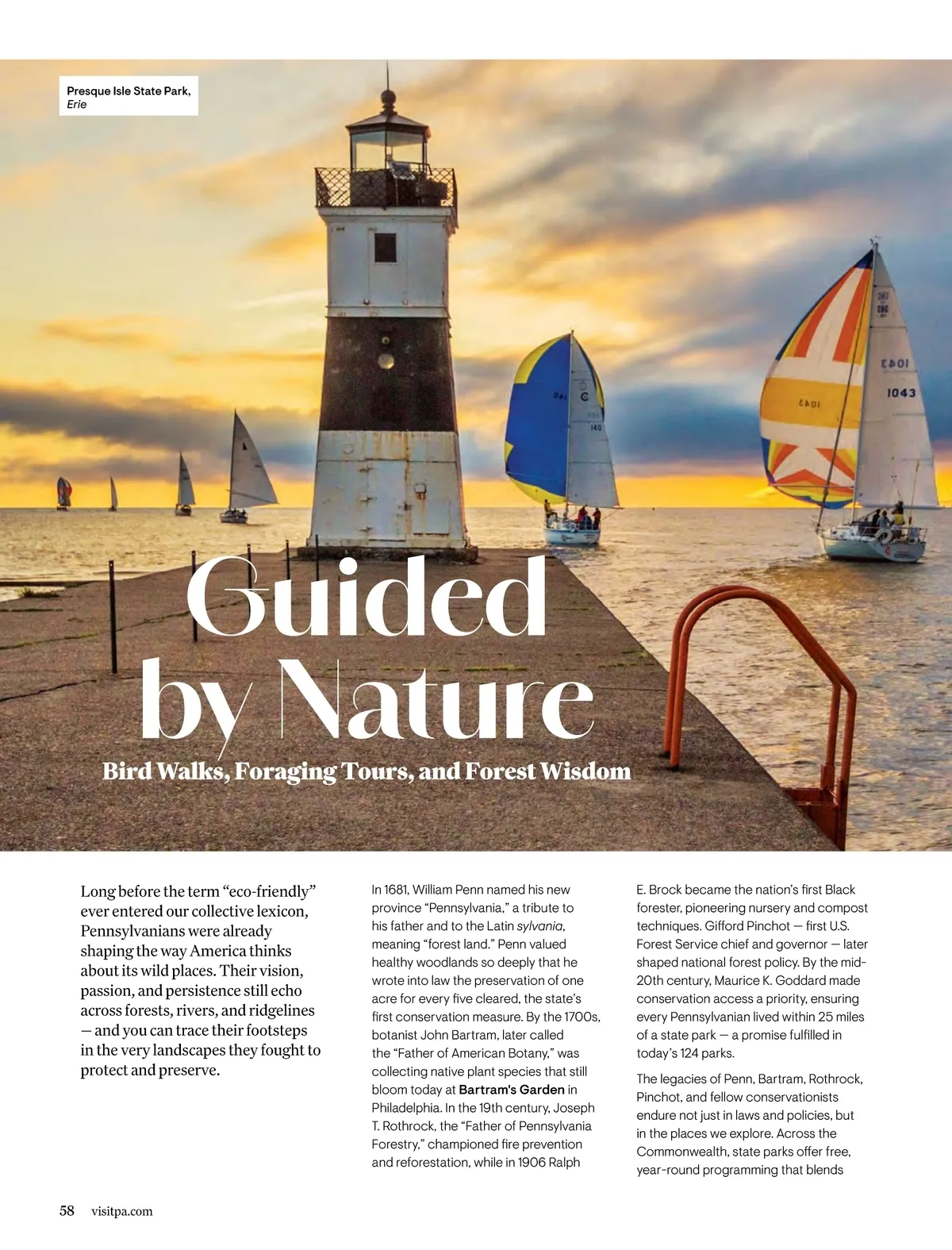
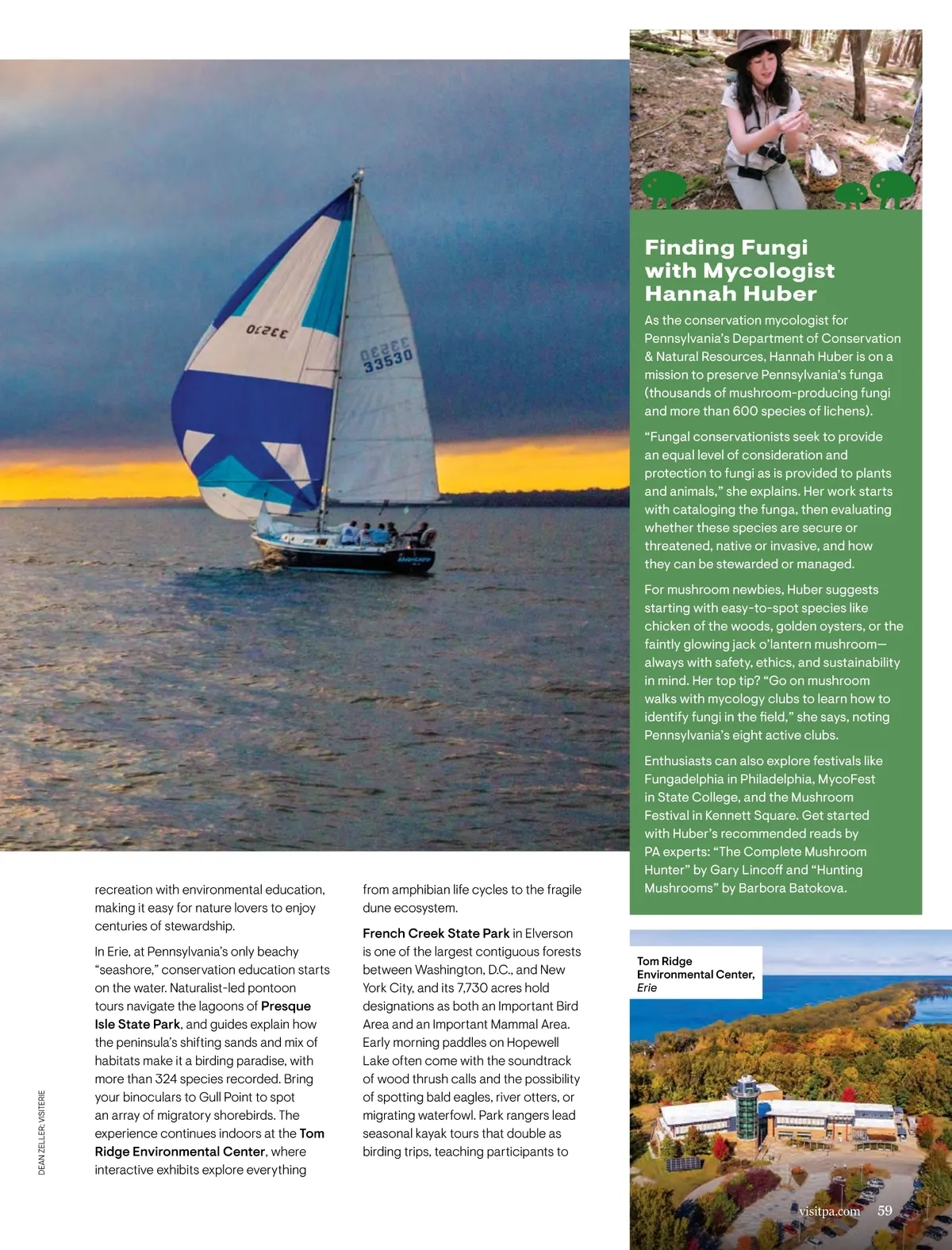
Finding Fungi with Mycologist Hannah Huber As the conservation mycologist for Pennsylvania’s Department of Conservation & Natural Resources, Hannah Huber is on a mission to preserve Pennsylvania’s funga (thousands of mushroom-producing fungi and more than 600 species of lichens). “Fungal conservationists seek to provide an equal level of consideration and protection to fungi as is provided to plants and animals,” she explains. Her work starts with cataloging the funga, then evaluating whether these species are secure or threatened, native or invasive, and how they can be stewarded or managed. For mushroom newbies, Huber suggests starting with easy-to-spot species like chicken of the woods, golden oysters, or the faintly glowing jack o’lantern mushroom— always with safety, ethics, and sustainability in mind. Her top tip? “Go on mushroom walks with mycology clubs to learn how to identify fungi in the field,” she says, noting Pennsylvania’s eight active clubs. Enthusiasts can also explore festivals like Fungadelphia in Philadelphia, MycoFest in State College, and the Mushroom Festival in Kennett Square. Get started with Huber’s recommended reads by PA experts: “The Complete Mushroom Hunter” by Gary Lincoff and “Hunting Mushrooms” by Barbora Batokova. recreation with environmental education, making it easy for nature lovers to enjoy centuries of stewardship. In Erie, at Pennsylvania’s only beachy “seashore,” conservation education starts on the water. Naturalist-led pontoon tours navigate the lagoons of Presque Isle State Park , and guides explain how the peninsula’s shifting sands and mix of habitats make it a birding paradise, with more than 324 species recorded. Bring your binoculars to Gull Point to spot an array of migratory shorebirds. The experience continues indoors at the Tom Ridge Environmental Center , where interactive exhibits explore everything from amphibian life cycles to the fragile dune ecosystem. French Creek State Park in Elverson is one of the largest contiguous forests between Washington, D.C., and New York City, and its 7,730 acres hold designations as both an Important Bird Area and an Important Mammal Area. Early morning paddles on Hopewell Lake often come with the soundtrack of wood thrush calls and the possibility of spotting bald eagles, river otters, or migrating waterfowl. Park rangers lead seasonal kayak tours that double as birding trips, teaching participants to Tom Ridge Environmental Center, Erie DEAN ZELLER; VISITERIE visitpa.com 59
Pennsylvania Pennsylvania Travel Guide 2026: Page 59