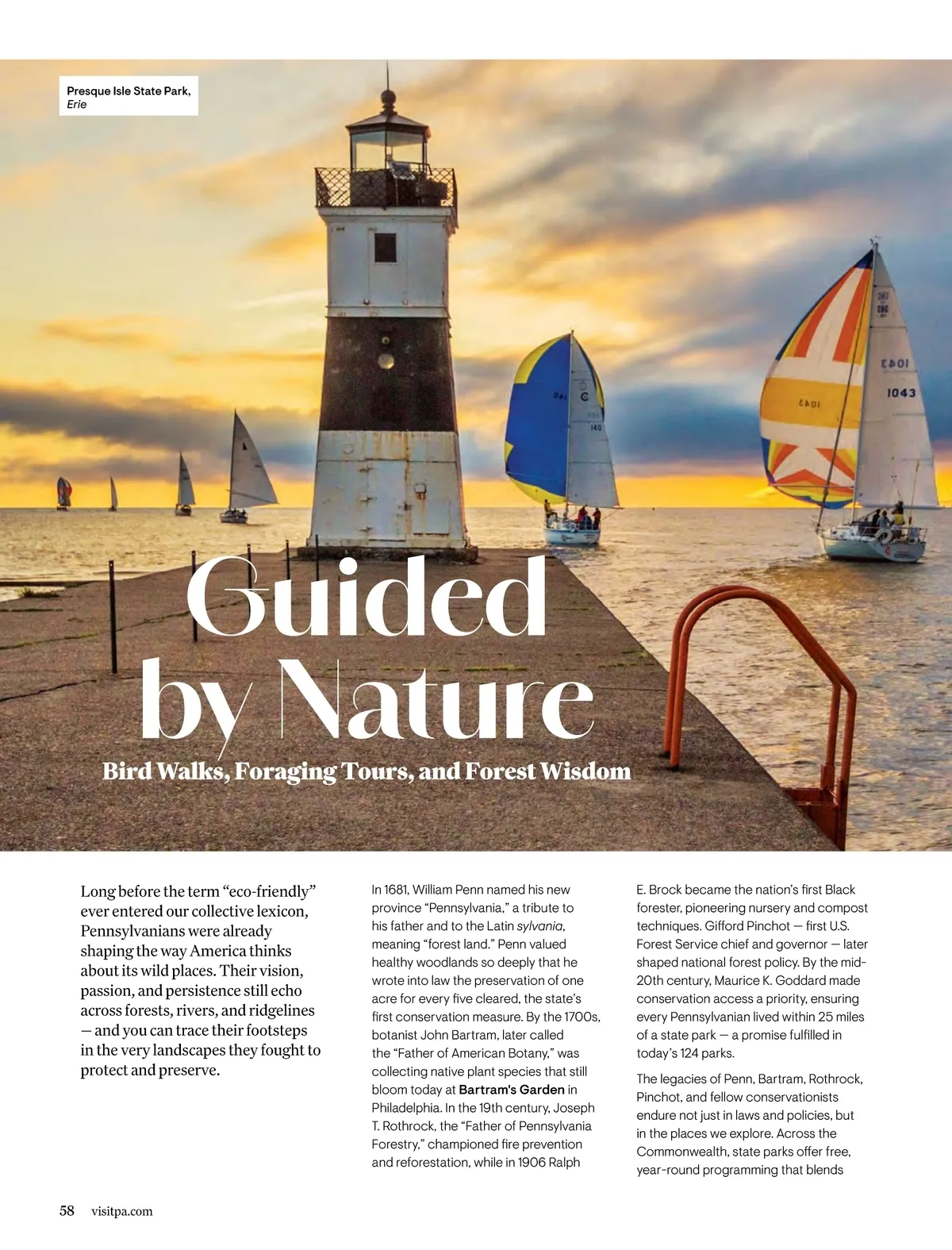
Presque Isle State Park, Erie Bird Walks, Foraging Tours, and Forest Wisdom Guided by Nature Long before the term “eco-friendly” ever entered our collective lexicon, Pennsylvanians were already shaping the way America thinks about its wild places. Their vision, passion, and persistence still echo across forests, rivers, and ridgelines — and you can trace their footsteps in the very landscapes they fought to protect and preserve. In 1681, William Penn named his new province “Pennsylvania,” a tribute to his father and to the Latin sylvania , meaning “forest land.” Penn valued healthy woodlands so deeply that he wrote into law the preservation of one acre for every five cleared, the state’s first conservation measure. By the 1700s, botanist John Bartram, later called the “Father of American Botany,” was collecting native plant species that still bloom today at Bartram's Garden in Philadelphia. In the 19th century, Joseph T. Rothrock, the “Father of Pennsylvania Forestry,” championed fire prevention and reforestation, while in 1906 Ralph E. Brock became the nation’s first Black forester, pioneering nursery and compost techniques. Gifford Pinchot — first U.S. Forest Service chief and governor — later shaped national forest policy. By the mid-20th century, Maurice K. Goddard made conservation access a priority, ensuring every Pennsylvanian lived within 25 miles of a state park — a promise fulfilled in today’s 124 parks. The legacies of Penn, Bartram, Rothrock, Pinchot, and fellow conservationists endure not just in laws and policies, but in the places we explore. Across the Commonwealth, state parks offer free, year-round programming that blends 58 visitpa.com
Pennsylvania Pennsylvania Travel Guide 2026: Page 58