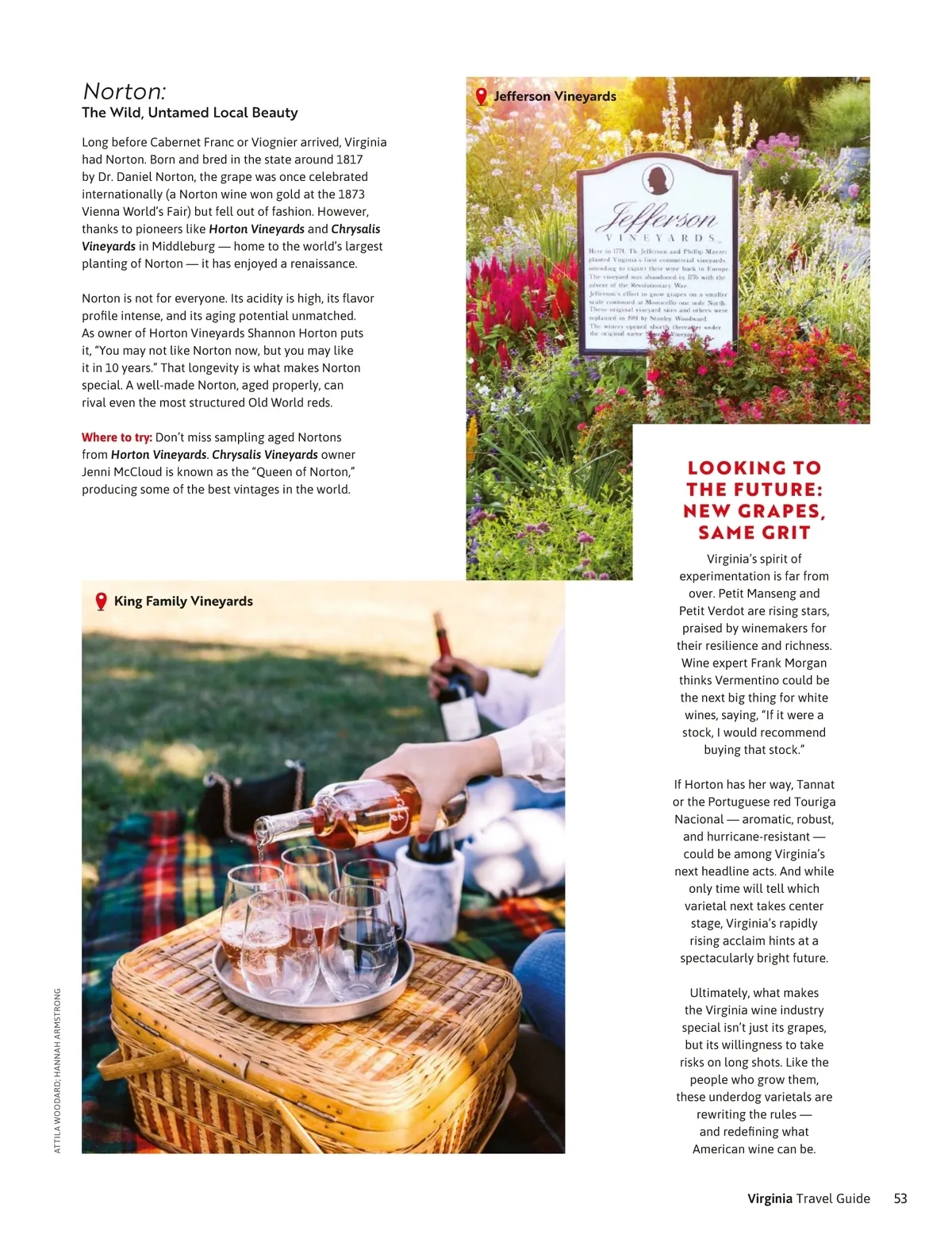
Norton: The Wild, Untamed Local Beauty Long before Cabernet Franc or Viognier arrived, Virginia had Norton. Born and bred in the state around 1817 by Dr. Daniel Norton, the grape was once celebrated internationally (a Norton wine won gold at the 1873 Vienna World’s Fair) but fell out of fashion. However, thanks to pioneers like Horton Vineyards and Chrysalis Vineyards in Middleburg — home to the world’s largest planting of Norton — it has enjoyed a renaissance. Norton is not for everyone. Its acidity is high, its flavor profile intense, and its aging potential unmatched. As owner of Horton Vineyards Shannon Horton puts it, “You may not like Norton now, but you may like it in 10 years.” That longevity is what makes Norton special. A well-made Norton, aged properly, can rival even the most structured Old World reds. Where to try: Don’t miss sampling aged Nortons from Horton Vineyards . Chrysalis Vineyards owner Jenni McCloud is known as the “Queen of Norton,” producing some of the best vintages in the world. Jefferson Vineyards LOOKING TO THE FUTURE: NEW GRAPES, SAME GRIT Virginia’s spirit of experimentation is far from over. Petit Manseng and Petit Verdot are rising stars, praised by winemakers for their resilience and richness. Wine expert Frank Morgan thinks Vermentino could be the next big thing for white wines, saying, “If it were a stock, I would recommend buying that stock.” If Horton has her way, Tannat or the Portuguese red Touriga Nacional — aromatic, robust, and hurricane-resistant — could be among Virginia’s next headline acts. And while only time will tell which varietal next takes center stage, Virginia’s rapidly rising acclaim hints at a spectacularly bright future. Ultimately, what makes the Virginia wine industry special isn’t just its grapes, but its willingness to take risks on long shots. Like the people who grow them, these underdog varietals are rewriting the rules — and redefining what American wine can be. King Family Vineyards AT TIL A WOODARD; HANNAH ARMSTRONG Virginia Travel Guide 53
Virginia Travel Guide Virginia Travel Guide 2026: Page 53