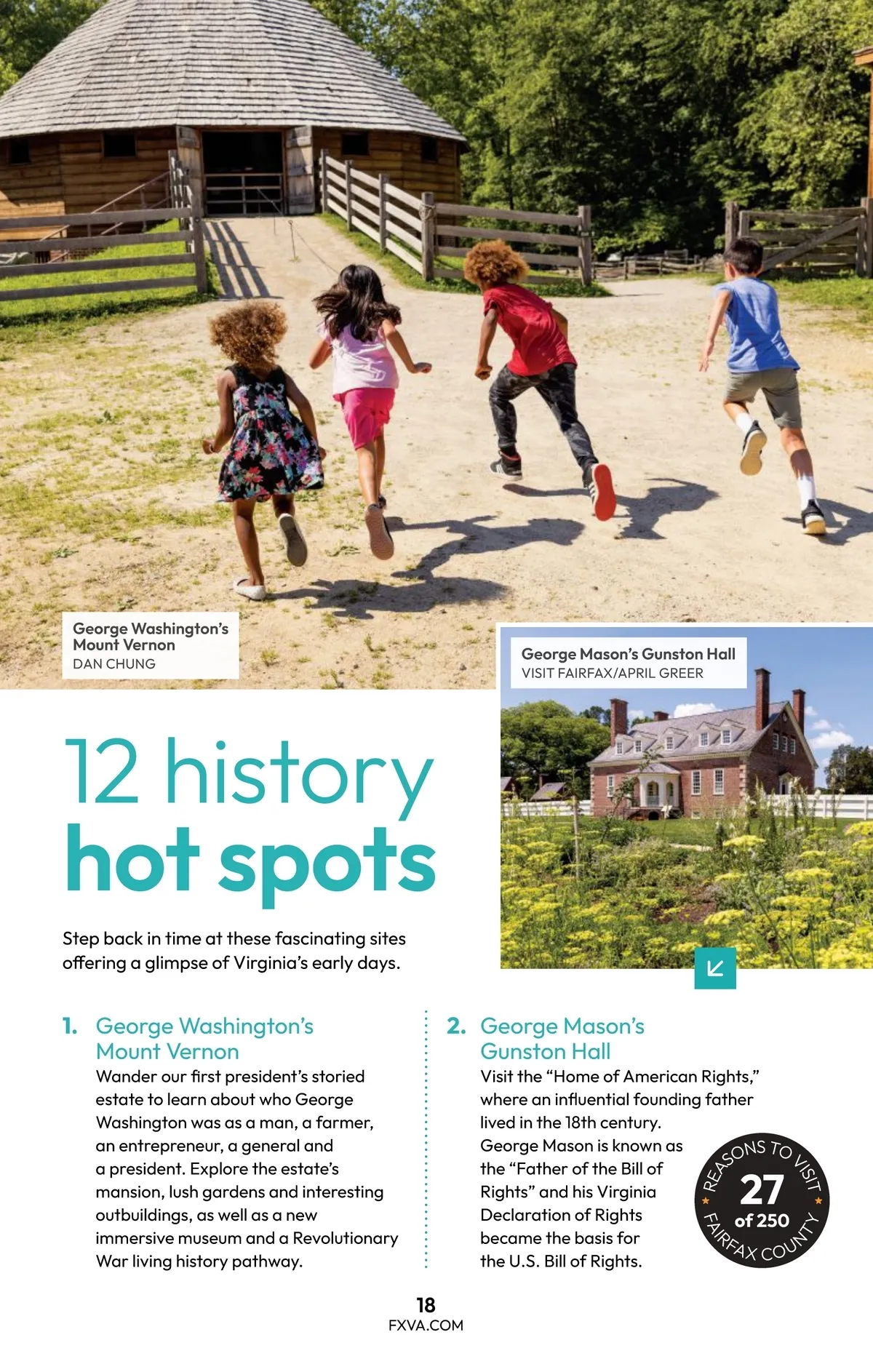
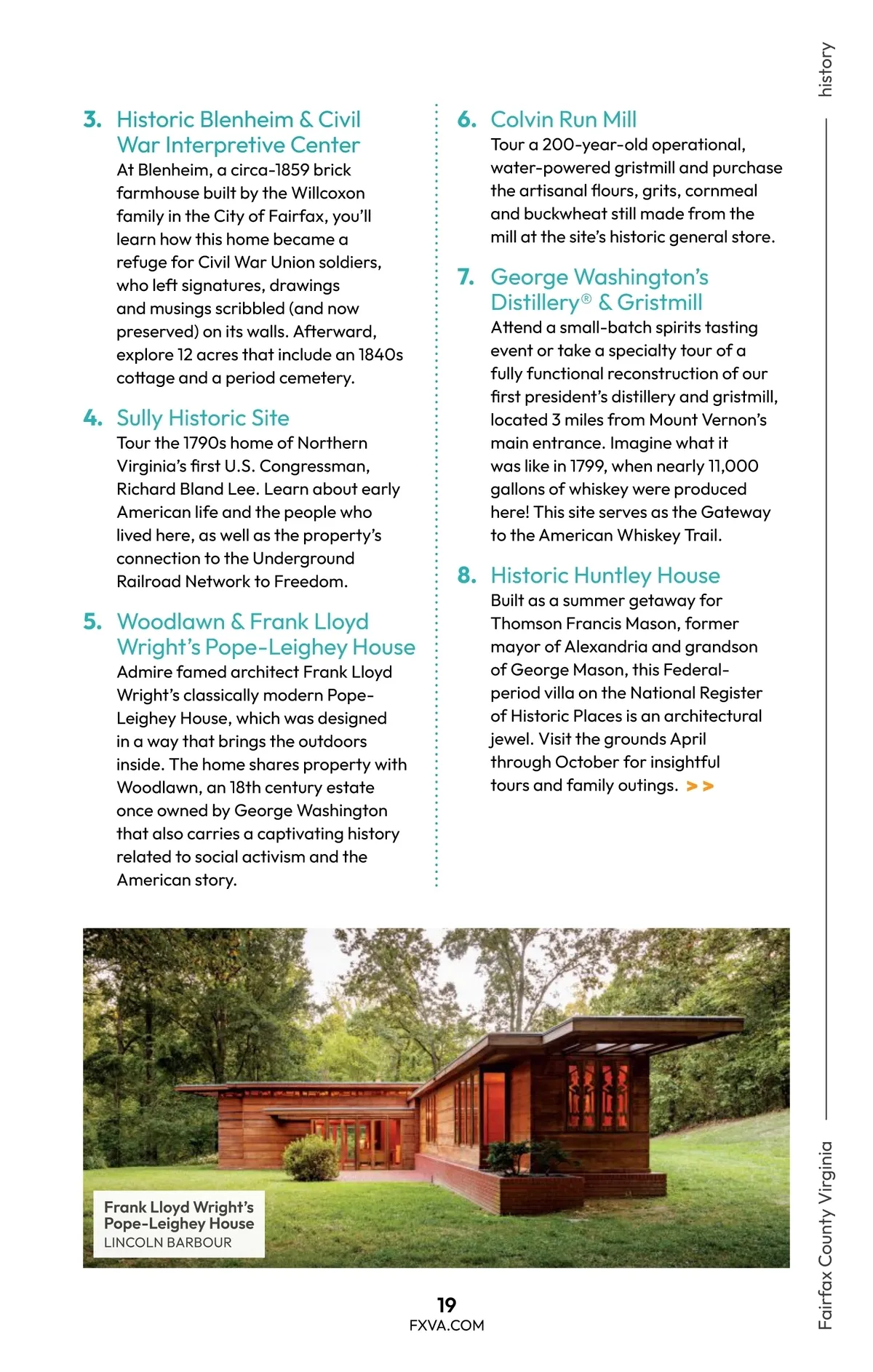
3. Historic Blenheim & Civil War Interpretive Center 6. Colvin Run Mill At Blenheim, a circa-1859 brick farmhouse built by the Willcoxon family in the City of Fairfax, you’ll learn how this home became a refuge for Civil War Union soldiers, who left signatures, drawings and musings scribbled (and now preserved) on its walls. Afterward, explore 12 acres that include an 1840s cottage and a period cemetery. Tour the 1790s home of Northern Virginia’s first U.S. Congressman, Richard Bland Lee. Learn about early American life and the people who lived here, as well as the property’s connection to the Underground Railroad Network to Freedom. Tour a 200-year-old operational, water-powered gristmill and purchase the artisanal flours, grits, cornmeal and buckwheat still made from the mill at the site’s historic general store. 7. George Washington’s Distillery® & Gristmill 4. Sully Historic Site Attend a small-batch spirits tasting event or take a specialty tour of a fully functional reconstruction of our first president’s distillery and gristmill, located 3 miles from Mount Vernon’s main entrance. Imagine what it was like in 1799, when nearly 11,000 gallons of whiskey were produced here! This site serves as the Gateway to the American Whiskey Trail. Built as a summer getaway for Thomson Francis Mason, former mayor of Alexandria and grandson of George Mason, this Federal-period villa on the National Register of Historic Places is an architectural jewel. Visit the grounds April through October for insightful tours and family outings. >> 8. Historic Huntley House 5. Woodlawn & Frank Lloyd Wright’s Pope-Leighey House Admire famed architect Frank Lloyd Wright’s classically modern Pope-Leighey House, which was designed in a way that brings the outdoors inside. The home shares property with Woodlawn, an 18th century estate once owned by George Washington that also carries a captivating history related to social activism and the American story. Frank Lloyd Wright’s Pope-Leighey House LINCOLN BARBOUR FXVA.COM 19 Fairfax County Virginia history
Fairfax County Official Visitors Guide 2026 Fairfax County Official Visitors Guide: Page 19