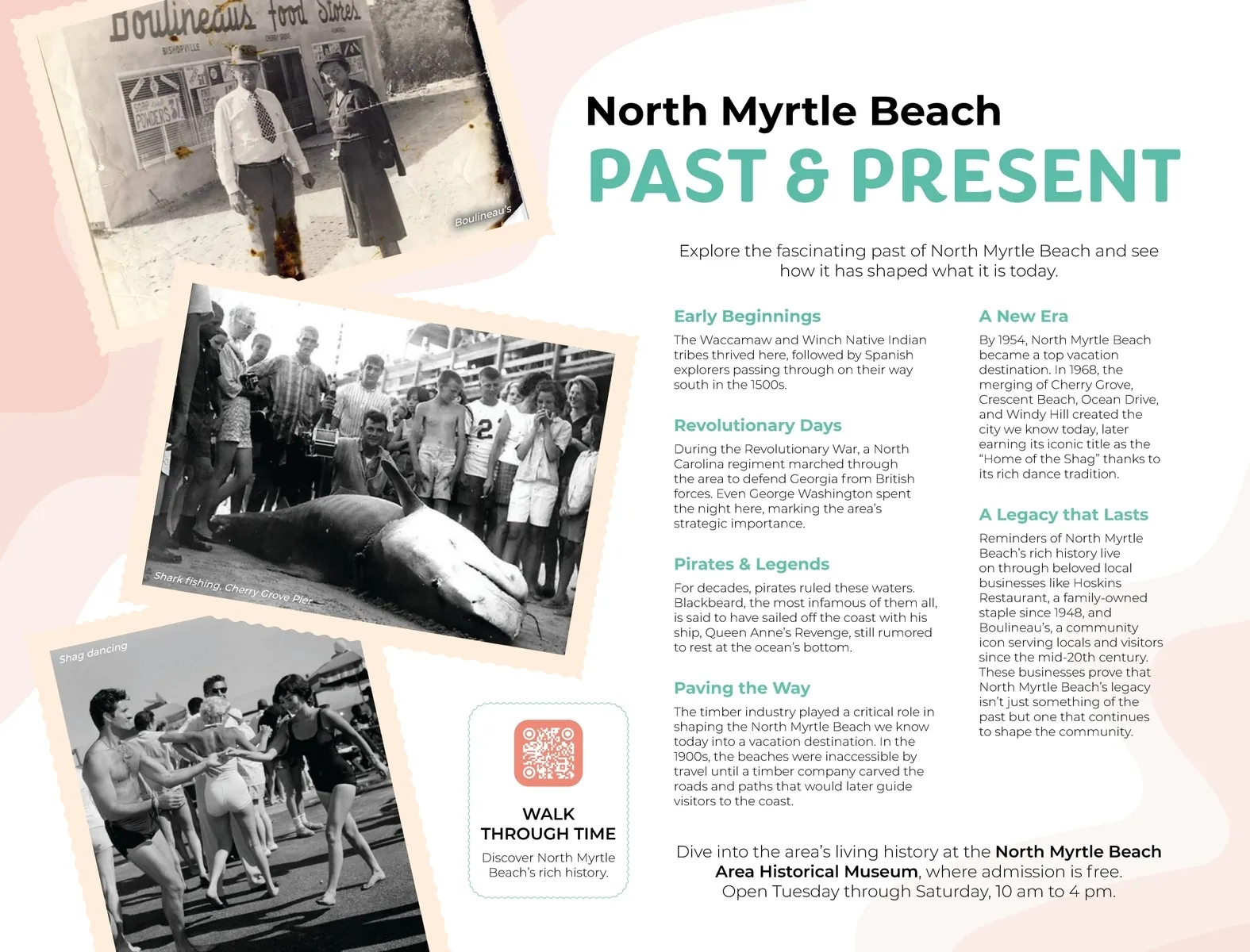
North Myrtle Beach Boulin s eau’ PAST & PRESENT Explore the fascinating past of North Myrtle Beach and see how it has shaped what it is today. Early Beginnings The Waccamaw and Winch Native Indian tribes thrived here, followed by Spanish explorers passing through on their way south in the 1500s. A New Era By 1954, North Myrtle Beach became a top vacation destination. In 1968, the merging of Cherry Grove, Crescent Beach, Ocean Drive, and Windy Hill created the city we know today, later earning its iconic title as the “Home of the Shag” thanks to its rich dance tradition. Revolutionary Days During the Revolutionary War, a North Carolina regiment marched through the area to defend Georgia from British forces. Even George Washington spent the night here, marking the area’s strategic importance. A Legacy that Lasts Reminders of North Myrtle Beach’s rich history live on through beloved local businesses like Hoskins Restaurant, a family-owned staple since 1948, and Boulineau’s, a community icon serving locals and visitors since the mid-20th century. These businesses prove that North Myrtle Beach’s legacy isn’t just something of the past but one that continues to shape the community. Shark fi shin Pirates & Legends g, Cher ry Grov e Pier Shag dancin g For decades, pirates ruled these waters. Blackbeard, the most infamous of them all, is said to have sailed off the coast with his ship, Queen Anne’s Revenge, still rumored to rest at the ocean’s bottom. Paving the Way The timber industry played a critical role in shaping the North Myrtle Beach we know today into a vacation destination. In the 1900s, the beaches were inaccessible by travel until a timber company carved the roads and paths that would later guide visitors to the coast. WALK THROUGH TIME Discover North Myrtle Beach’s rich history. Dive into the area’s living history at the North Myrtle Beach Area Historical Museum , where admission is free. Open Tuesday through Saturday, 10 am to 4 pm.
North Myrtle Beach - Official Visitor Guide 2026 North Myrtle Beach Visitors Guide: Page 62