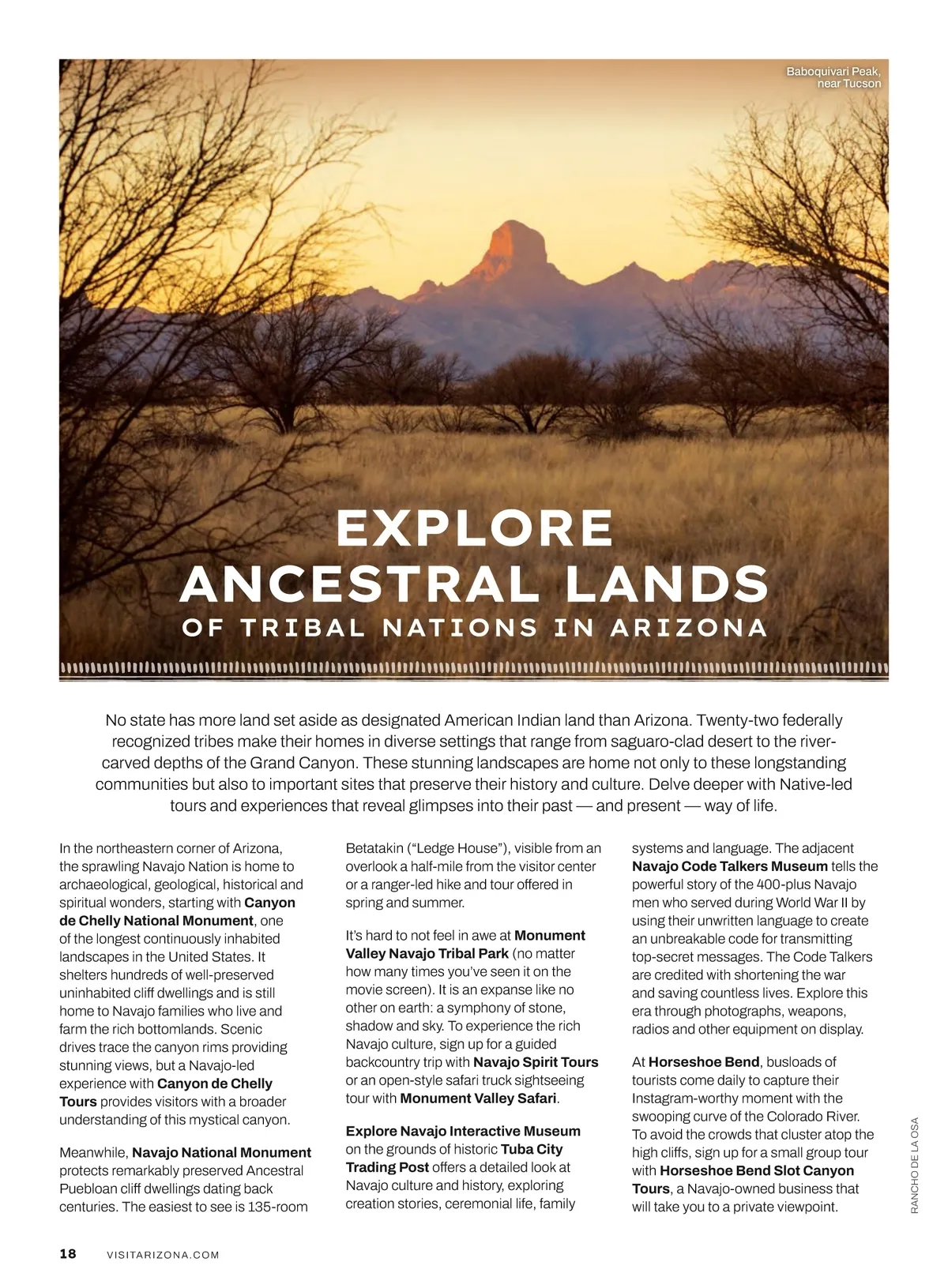
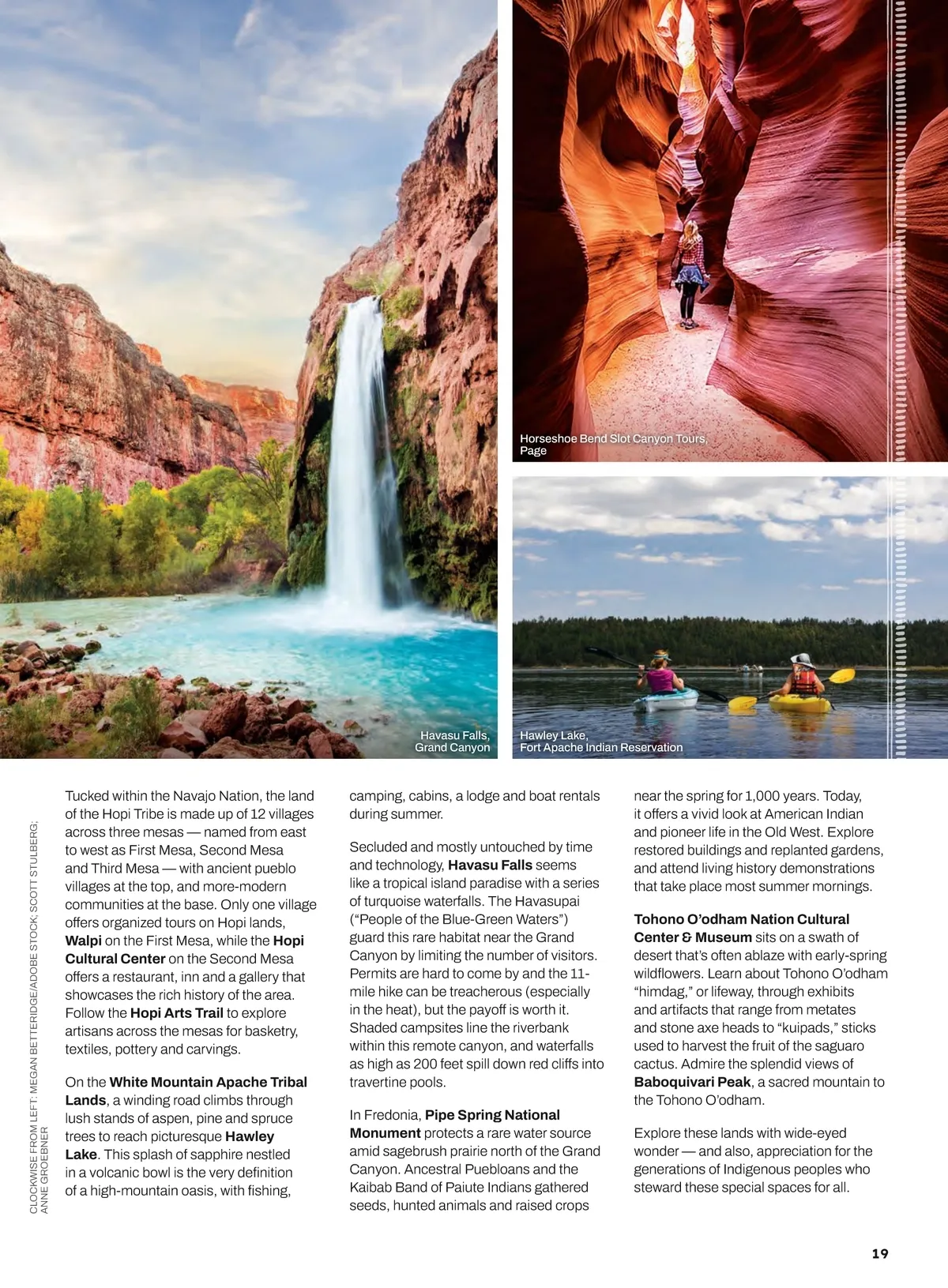
Horseshoe Bend Slot Canyon Tours, Page Havasu Falls, Grand Canyon Hawley Lake, Fort Apache Indian Reservation CLOCKWISE FROM LEFT: MEGAN BETTERIDGE/ADOBE STOCK; SCOTT STULBERG; ANNE GROEBNER Tucked within the Navajo Nation, the land of the Hopi Tribe is made up of 12 villages across three mesas — named from east to west as First Mesa, Second Mesa and Third Mesa — with ancient pueblo villages at the top, and more-modern communities at the base. Only one village offers organized tours on Hopi lands, Walpi on the First Mesa, while the Hopi Cultural Center on the Second Mesa offers a restaurant, inn and a gallery that showcases the rich history of the area. Follow the Hopi Arts Trail to explore artisans across the mesas for basketry, textiles, pottery and carvings. On the White Mountain Apache Tribal Lands , a winding road climbs through lush stands of aspen, pine and spruce trees to reach picturesque Hawley Lake . This splash of sapphire nestled in a volcanic bowl is the very definition of a high-mountain oasis, with fishing, camping, cabins, a lodge and boat rentals during summer. Secluded and mostly untouched by time and technology, Havasu Falls seems like a tropical island paradise with a series of turquoise waterfalls. The Havasupai (“People of the Blue-Green Waters”) guard this rare habitat near the Grand Canyon by limiting the number of visitors. Permits are hard to come by and the 11-mile hike can be treacherous (especially in the heat), but the payoff is worth it. Shaded campsites line the riverbank within this remote canyon, and waterfalls as high as 200 feet spill down red cliffs into travertine pools. In Fredonia, Pipe Spring National Monument protects a rare water source amid sagebrush prairie north of the Grand Canyon. Ancestral Puebloans and the Kaibab Band of Paiute Indians gathered seeds, hunted animals and raised crops near the spring for 1,000 years. Today, it offers a vivid look at American Indian and pioneer life in the Old West. Explore restored buildings and replanted gardens, and attend living history demonstrations that take place most summer mornings. Tohono O’odham Nation Cultural Center & Museum sits on a swath of desert that’s often ablaze with early-spring wildflowers. Learn about Tohono O’odham “himdag,” or lifeway, through exhibits and artifacts that range from metates and stone axe heads to “kuipads,” sticks used to harvest the fruit of the saguaro cactus. Admire the splendid views of Baboquivari Peak , a sacred mountain to the Tohono O’odham. Explore these lands with wide-eyed wonder — and also, appreciation for the generations of Indigenous peoples who steward these special spaces for all. 19
Arizona Official State Travel Guide Arizona 2025-26: Page 19