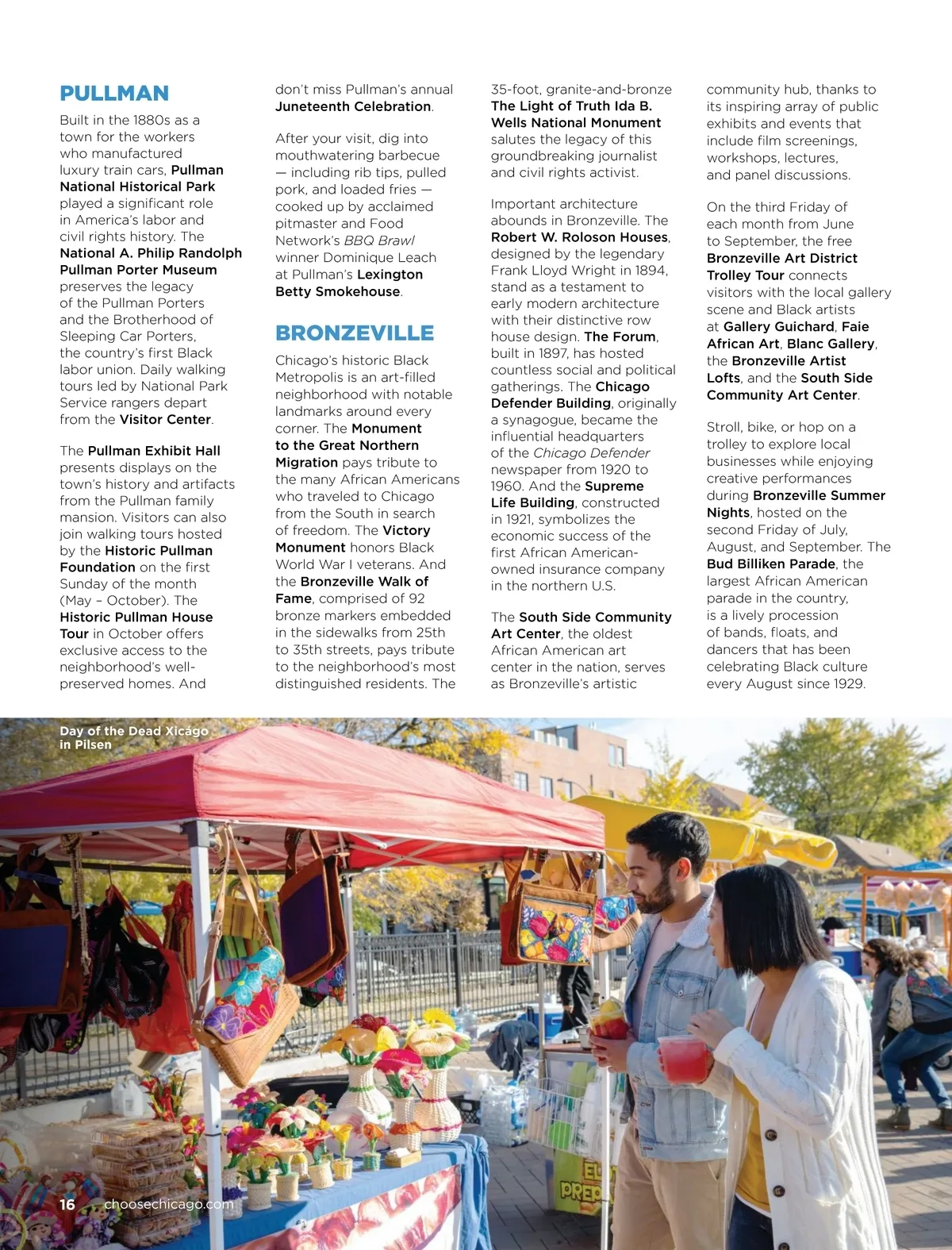
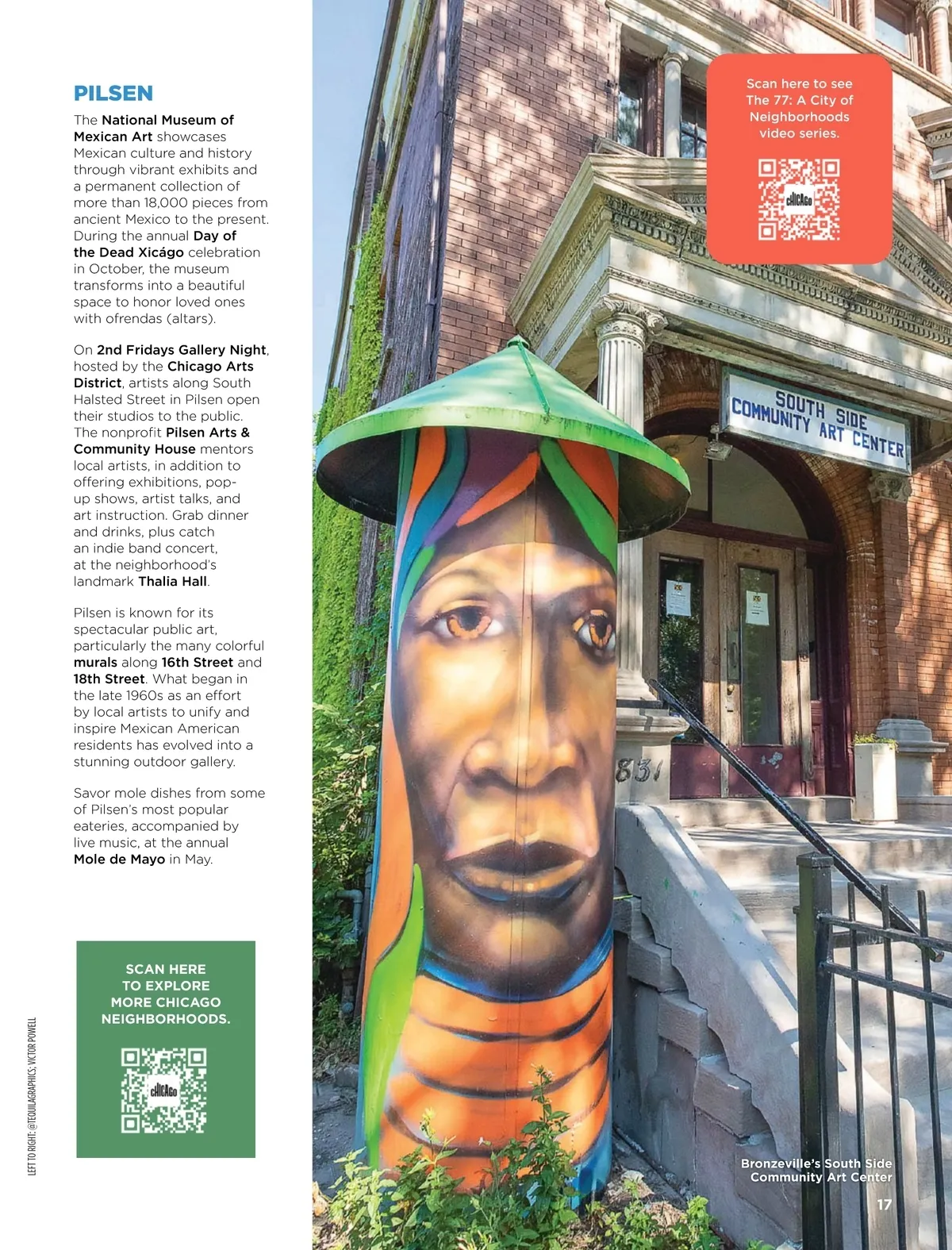
PULLMAN Built in the 1880s as a town for the workers who manufactured luxury train cars, Pullman National Historical Park played a significant role in America’s labor and civil rights history. The National A. Philip Randolph Pullman Porter Museum preserves the legacy of the Pullman Porters and the Brotherhood of Sleeping Car Porters, the country’s first Black labor union. Daily walking tours led by National Park Service rangers depart from the Visitor Center . The Pullman Exhibit Hall presents displays on the town’s history and artifacts from the Pullman family mansion. Visitors can also join walking tours hosted by the Historic Pullman Foundation on the first Sunday of the month (May – October). The Historic Pullman House Tour in October offers exclusive access to the neighborhood’s well-preserved homes. And Day of the Dead Xicágo in Pilsen don’t miss Pullman’s annual Juneteenth Celebration . After your visit, dig into mouthwatering barbecue — including rib tips, pulled pork, and loaded fries — cooked up by acclaimed pitmaster and Food Network’s BBQ Brawl winner Dominique Leach at Pullman’s Lexington Betty Smokehouse . 35-foot, granite-and-bronze The Light of Truth Ida B. Wells National Monument salutes the legacy of this groundbreaking journalist and civil rights activist. Important architecture abounds in Bronzeville. The Robert W. Roloson Houses , designed by the legendary Frank Lloyd Wright in 1894, stand as a testament to early modern architecture with their distinctive row house design. The Forum , built in 1897, has hosted countless social and political gatherings. The Chicago Defender Building , originally a synagogue, became the influential headquarters of the Chicago Defender newspaper from 1920 to 1960. And the Supreme Life Building , constructed in 1921, symbolizes the economic success of the first African American-owned insurance company in the northern U.S. The South Side Community Art Center , the oldest African American art center in the nation, serves as Bronzeville’s artistic community hub, thanks to its inspiring array of public exhibits and events that include film screenings, workshops, lectures, and panel discussions. On the third Friday of each month from June to September, the free Bronzeville Art District Trolley Tour connects visitors with the local gallery scene and Black artists at Gallery Guichard , Faie African Art , Blanc Gallery , the Bronzeville Artist Lofts , and the South Side Community Art Center . Stroll, bike, or hop on a trolley to explore local businesses while enjoying creative performances during Bronzeville Summer Nights , hosted on the second Friday of July, August, and September. The Bud Billiken Parade , the largest African American parade in the country, is a lively procession of bands, floats, and dancers that has been celebrating Black culture every August since 1929. BRONZEVILLE Chicago’s historic Black Metropolis is an art-filled neighborhood with notable landmarks around every corner. The Monument to the Great Northern Migration pays tribute to the many African Americans who traveled to Chicago from the South in search of freedom. The Victory Monument honors Black World War I veterans. And the Bronzeville Walk of Fame , comprised of 92 bronze markers embedded in the sidewalks from 25th to 35th streets, pays tribute to the neighborhood’s most distinguished residents. The 16 choosechicago.com
Chicago Visitors Guide 2025: Page 16