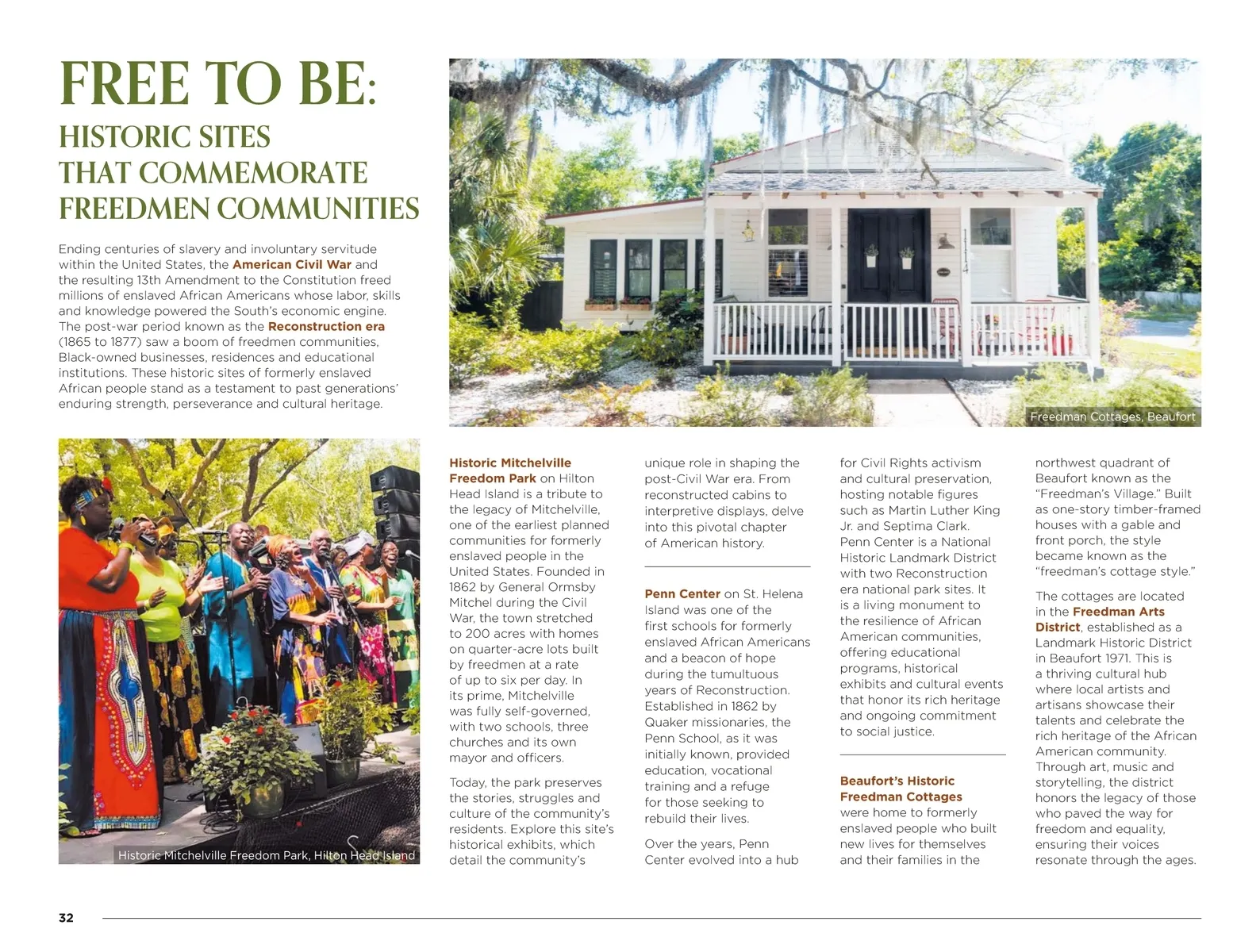
FREE TO BE: HISTORIC SITES THAT COMMEMORATE FREEDMEN COMMUNITIES Ending centuries of slavery and involuntary servitude within the United States, the American Civil War and the resulting 13th Amendment to the Constitution freed millions of enslaved African Americans whose labor, skills and knowledge powered the South’s economic engine. The post-war period known as the Reconstruction era (1865 to 1877) saw a boom of freedmen communities, Black-owned businesses, residences and educational institutions. These historic sites of formerly enslaved African people stand as a testament to past generations’ enduring strength, perseverance and cultural heritage. Freedman Cottages, Beaufort Historic Mitchelville Freedom Park on Hilton Head Island is a tribute to the legacy of Mitchelville, one of the earliest planned communities for formerly enslaved people in the United States. Founded in 1862 by General Ormsby Mitchel during the Civil War, the town stretched to 200 acres with homes on quarter-acre lots built by freedmen at a rate of up to six per day. In its prime, Mitchelville was fully self-governed, with two schools, three churches and its own mayor and officers. Today, the park preserves the stories, struggles and culture of the community’s residents. Explore this site’s historical exhibits, which detail the community’s unique role in shaping the post-Civil War era. From reconstructed cabins to interpretive displays, delve into this pivotal chapter of American history. Penn Center on St. Helena Island was one of the first schools for formerly enslaved African Americans and a beacon of hope during the tumultuous years of Reconstruction. Established in 1862 by Quaker missionaries, the Penn School, as it was initially known, provided education, vocational training and a refuge for those seeking to rebuild their lives. Over the years, Penn Center evolved into a hub for Civil Rights activism and cultural preservation, hosting notable figures such as Martin Luther King Jr. and Septima Clark. Penn Center is a National Historic Landmark District with two Reconstruction era national park sites. It is a living monument to the resilience of African American communities, offering educational programs, historical exhibits and cultural events that honor its rich heritage and ongoing commitment to social justice. northwest quadrant of Beaufort known as the “Freedman’s Village.” Built as one-story timber-framed houses with a gable and front porch, the style became known as the “freedman’s cottage style.” The cottages are located in the Freedman Arts District , established as a Landmark Historic District in Beaufort 1971. This is a thriving cultural hub where local artists and artisans showcase their talents and celebrate the rich heritage of the African American community. Through art, music and storytelling, the district honors the legacy of those who paved the way for freedom and equality, ensuring their voices resonate through the ages. Historic Mitchelville Freedom Park, Hilton Head Island Beaufort’s Historic Freedman Cottages were home to formerly enslaved people who built new lives for themselves and their families in the 32
South Carolina Vacation Guide SC 2025: Page 32