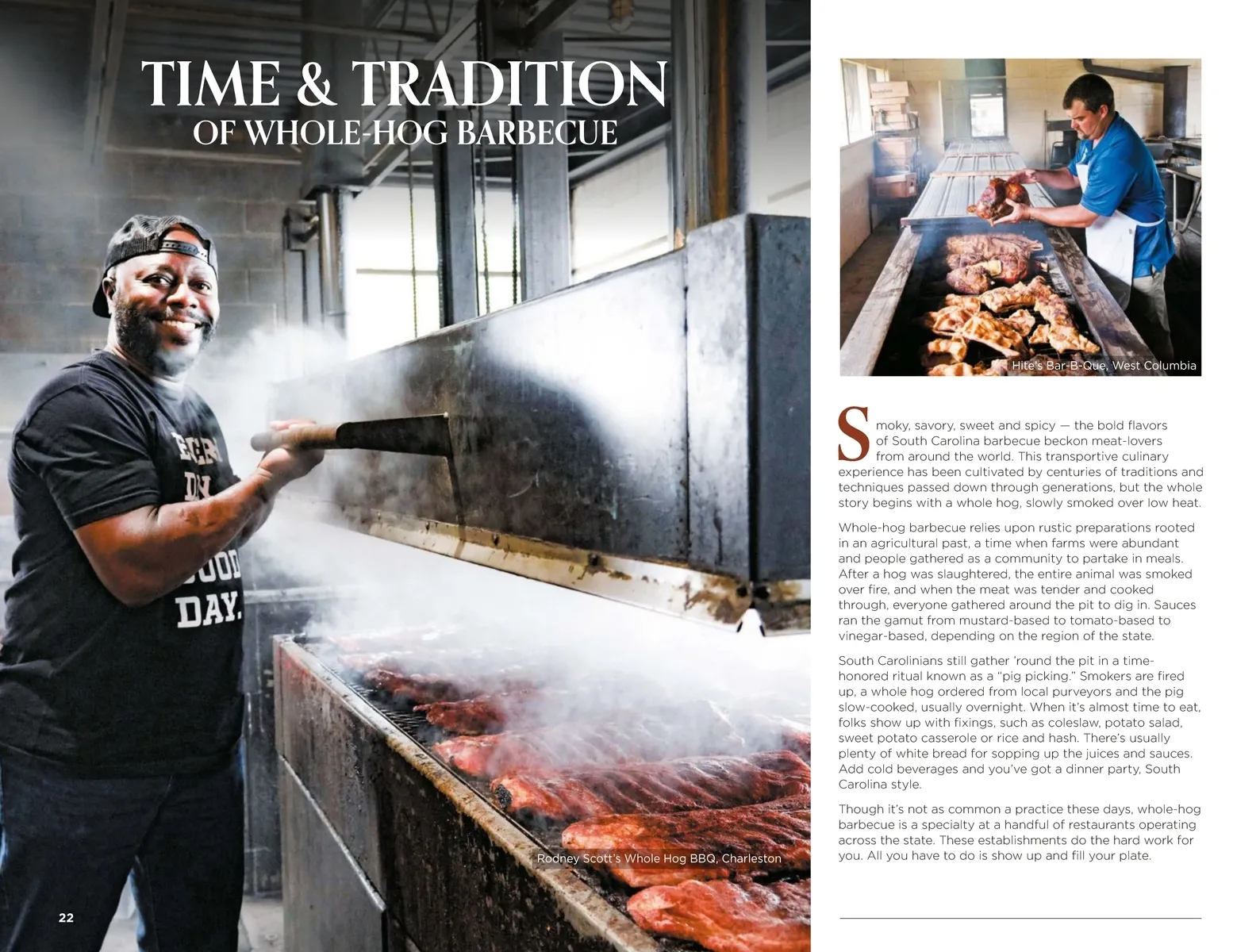
TIME & TRADITION OF WHOLE-HOG BARBECUE Hite’s Bar-B-Que, West Columbia S moky, savory, sweet and spicy — the bold flavors of South Carolina barbecue beckon meat-lovers from around the world. This transportive culinary experience has been cultivated by centuries of traditions and techniques passed down through generations, but the whole story begins with a whole hog, slowly smoked over low heat. Whole-hog barbecue relies upon rustic preparations rooted in an agricultural past, a time when farms were abundant and people gathered as a community to partake in meals. After a hog was slaughtered, the entire animal was smoked over fire, and when the meat was tender and cooked through, everyone gathered around the pit to dig in. Sauces ran the gamut from mustard-based to tomato-based to vinegar-based, depending on the region of the state. South Carolinians still gather ’round the pit in a time-honored ritual known as a “pig picking.” Smokers are fired up, a whole hog ordered from local purveyors and the pig slow-cooked, usually overnight. When it’s almost time to eat, folks show up with fixings, such as coleslaw, potato salad, sweet potato casserole or rice and hash. There’s usually plenty of white bread for sopping up the juices and sauces. Add cold beverages and you’ve got a dinner party, South Carolina style. Though it’s not as common a practice these days, whole-hog barbecue is a specialty at a handful of restaurants operating across the state. These establishments do the hard work for you. All you have to do is show up and fill your plate. Rodney Scott’s Whole Hog BBQ, Charleston 22
South Carolina Vacation Guide SC 2025: Page 22