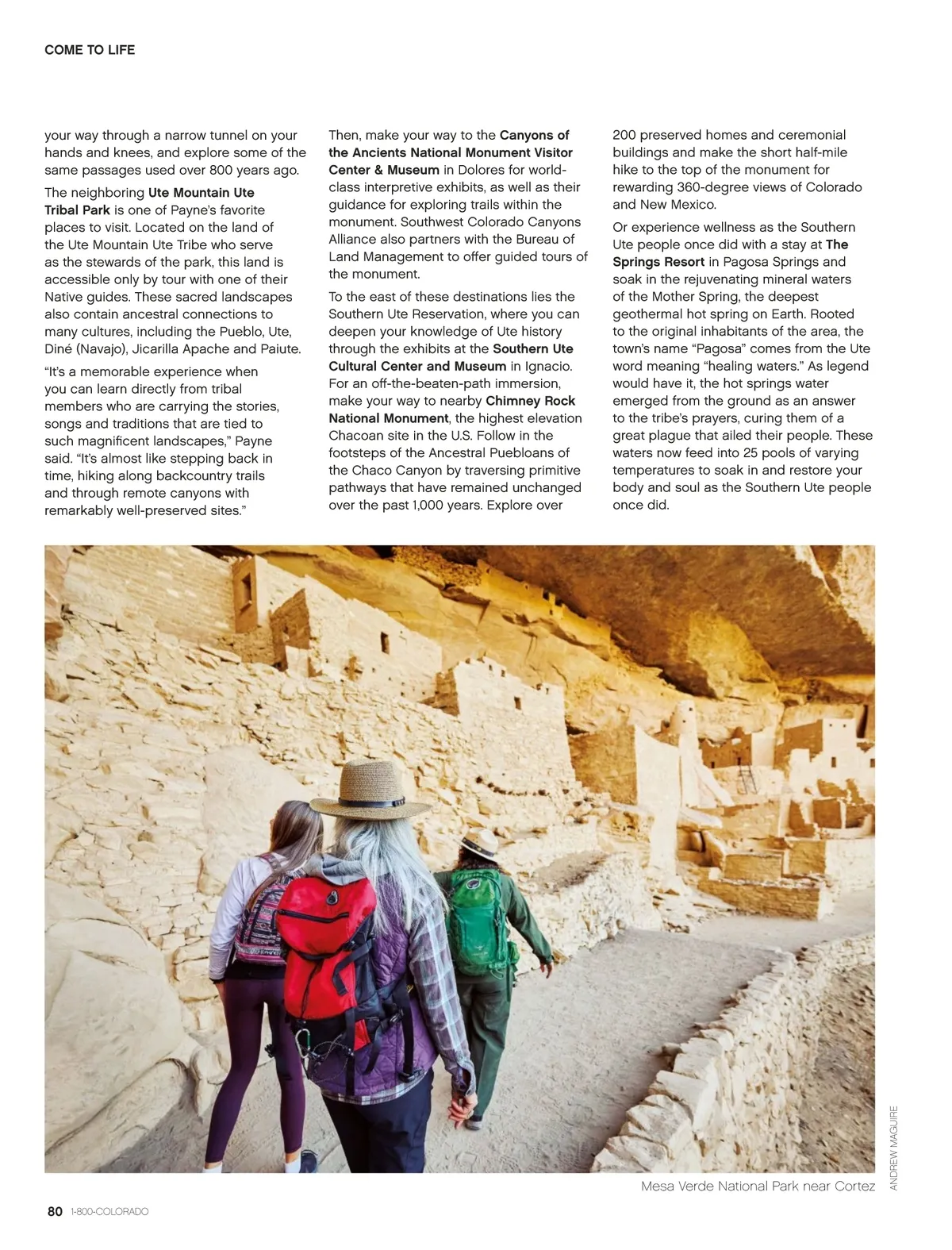
COME TO LIFE your way through a narrow tunnel on your hands and knees, and explore some of the same passages used over 800 years ago. The neighboring Ute Mountain Ute Tribal Park is one of Payne’s favorite places to visit. Located on the land of the Ute Mountain Ute Tribe who serve as the stewards of the park, this land is accessible only by tour with one of their Native guides. These sacred landscapes also contain ancestral connections to many cultures, including the Pueblo, Ute, Diné (Navajo), Jicarilla Apache and Paiute. “It’s a memorable experience when you can learn directly from tribal members who are carrying the stories, songs and traditions that are tied to such magnificent landscapes,” Payne said. “It’s almost like stepping back in time, hiking along backcountry trails and through remote canyons with remarkably well-preserved sites.” Then, make your way to the Canyons of the Ancients National Monument Visitor Center & Museum in Dolores for world-class interpretive exhibits, as well as their guidance for exploring trails within the monument. Southwest Colorado Canyons Alliance also partners with the Bureau of Land Management to offer guided tours of the monument. To the east of these destinations lies the Southern Ute Reservation, where you can deepen your knowledge of Ute history through the exhibits at the Southern Ute Cultural Center and Museum in Ignacio. For an off-the-beaten-path immersion, make your way to nearby Chimney Rock National Monument , the highest elevation Chacoan site in the U.S. Follow in the footsteps of the Ancestral Puebloans of the Chaco Canyon by traversing primitive pathways that have remained unchanged over the past 1,000 years. Explore over 200 preserved homes and ceremonial buildings and make the short half-mile hike to the top of the monument for rewarding 360-degree views of Colorado and New Mexico. Or experience wellness as the Southern Ute people once did with a stay at The Springs Resort in Pagosa Springs and soak in the rejuvenating mineral waters of the Mother Spring, the deepest geothermal hot spring on Earth. Rooted to the original inhabitants of the area, the town’s name “Pagosa” comes from the Ute word meaning “healing waters.” As legend would have it, the hot springs water emerged from the ground as an answer to the tribe’s prayers, curing them of a great plague that ailed their people. These waters now feed into 25 pools of varying temperatures to soak in and restore your body and soul as the Southern Ute people once did. Mesa Verde National Park near Cortez 80 1-800-COLORADO ANDREW MAGUIRE
Colorado Official State Vacation Guide 2025: Page 80