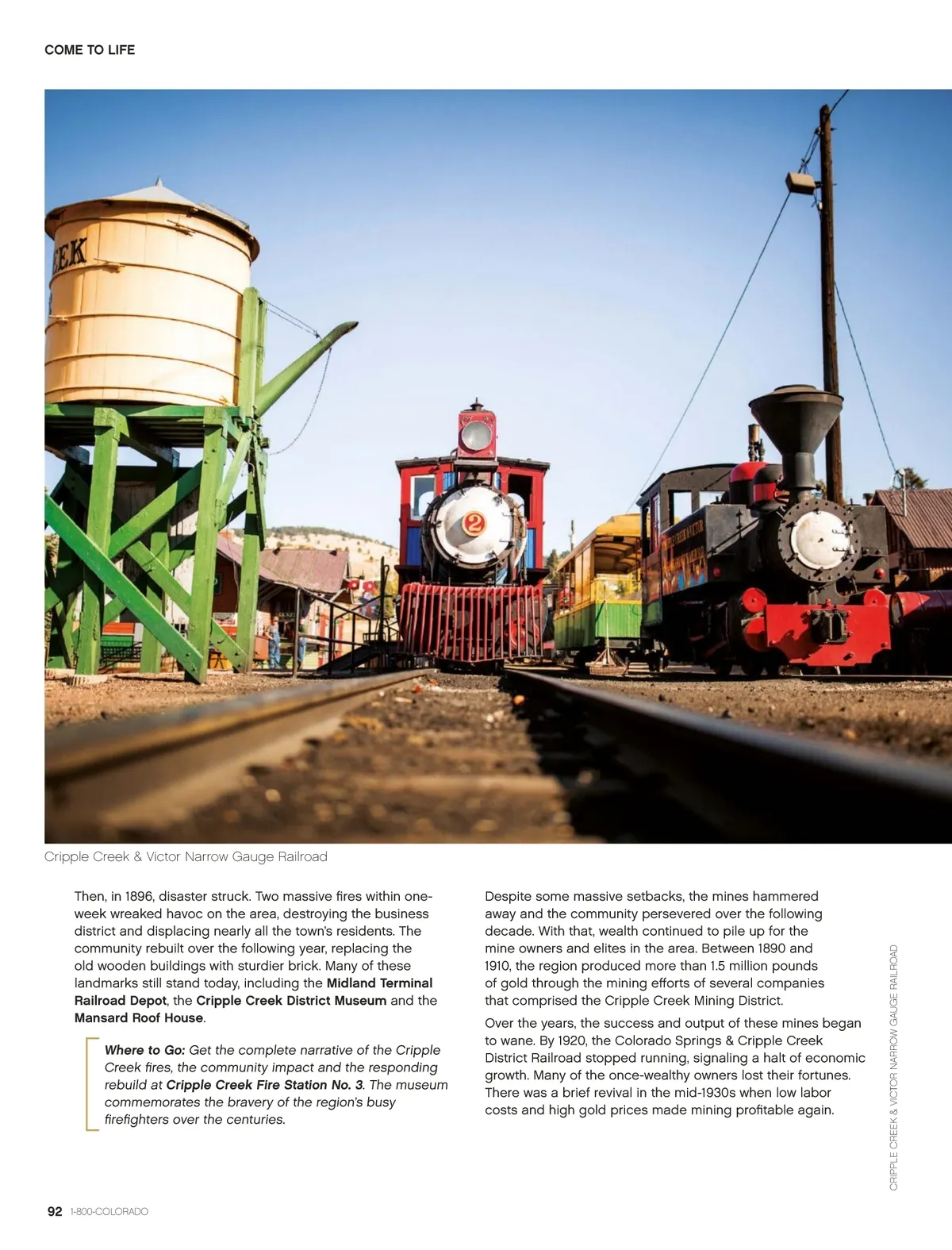
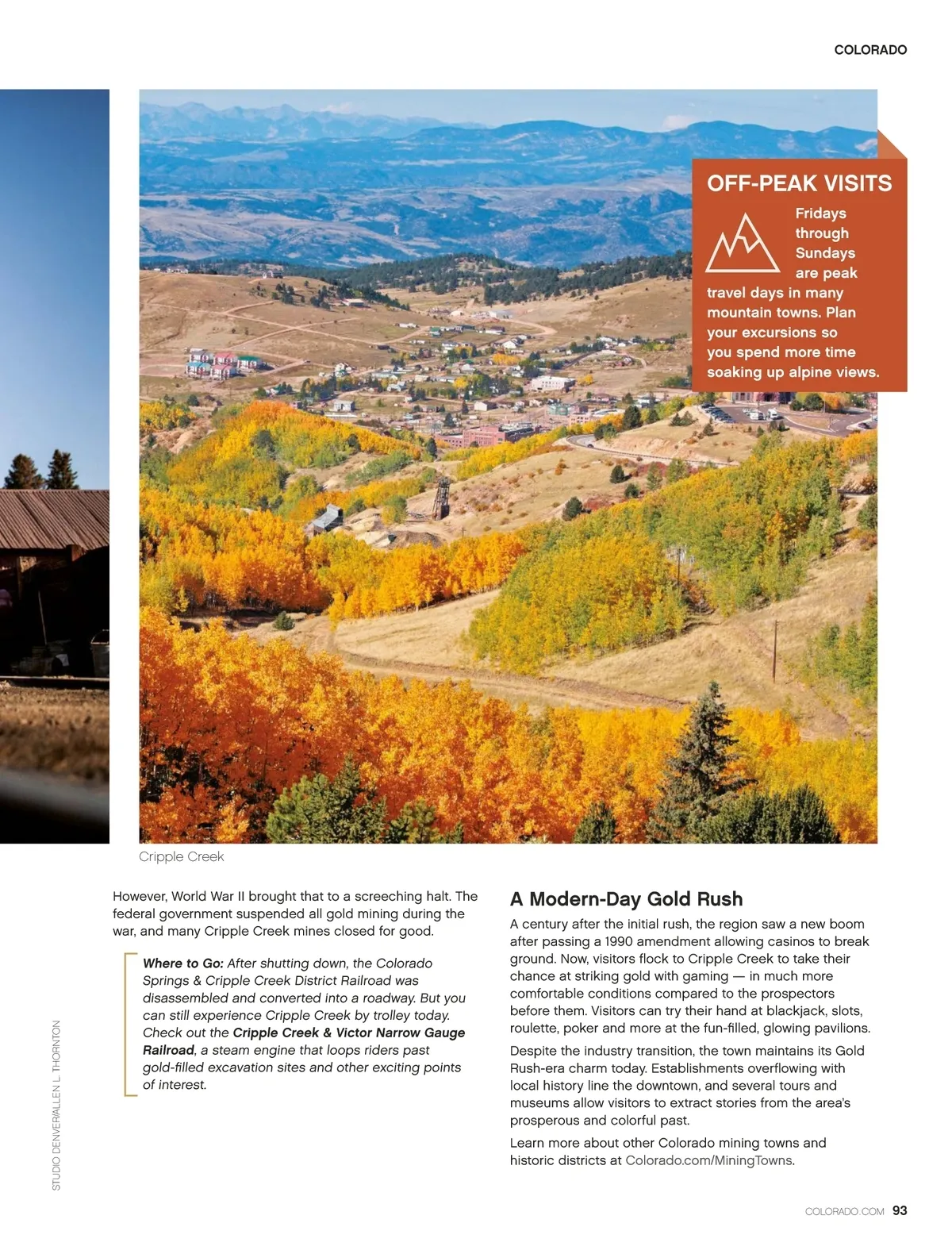
COME TO LIFE Cripple Creek & Victor Narrow Gauge Railroad Then, in 1896, disaster struck. Two massive fires within one-week wreaked havoc on the area, destroying the business district and displacing nearly all the town’s residents. The community rebuilt over the following year, replacing the old wooden buildings with sturdier brick. Many of these landmarks still stand today, including the Midland Terminal Railroad Depot , the Cripple Creek District Museum and the Mansard Roof House . Despite some massive setbacks, the mines hammered away and the community persevered over the following decade. With that, wealth continued to pile up for the mine owners and elites in the area. Between 1890 and 1910, the region produced more than 1.5 million pounds of gold through the mining efforts of several companies that comprised the Cripple Creek Mining District. Over the years, the success and output of these mines began to wane. By 1920, the Colorado Springs & Cripple Creek District Railroad stopped running, signaling a halt of economic growth. Many of the once-wealthy owners lost their fortunes. There was a brief revival in the mid-1930s when low labor costs and high gold prices made mining profitable again. Where to Go: Get the complete narrative of the Cripple Creek fires, the community impact and the responding rebuild at Cripple Creek Fire Station No. 3 . The museum commemorates the bravery of the region’s busy firefighters over the centuries. 92 1-800-COLORADO CRIPPLE CREEK & VICTOR NARROW GAUGE RAILROAD
Colorado Official State Vacation Guide 2024: Page 92