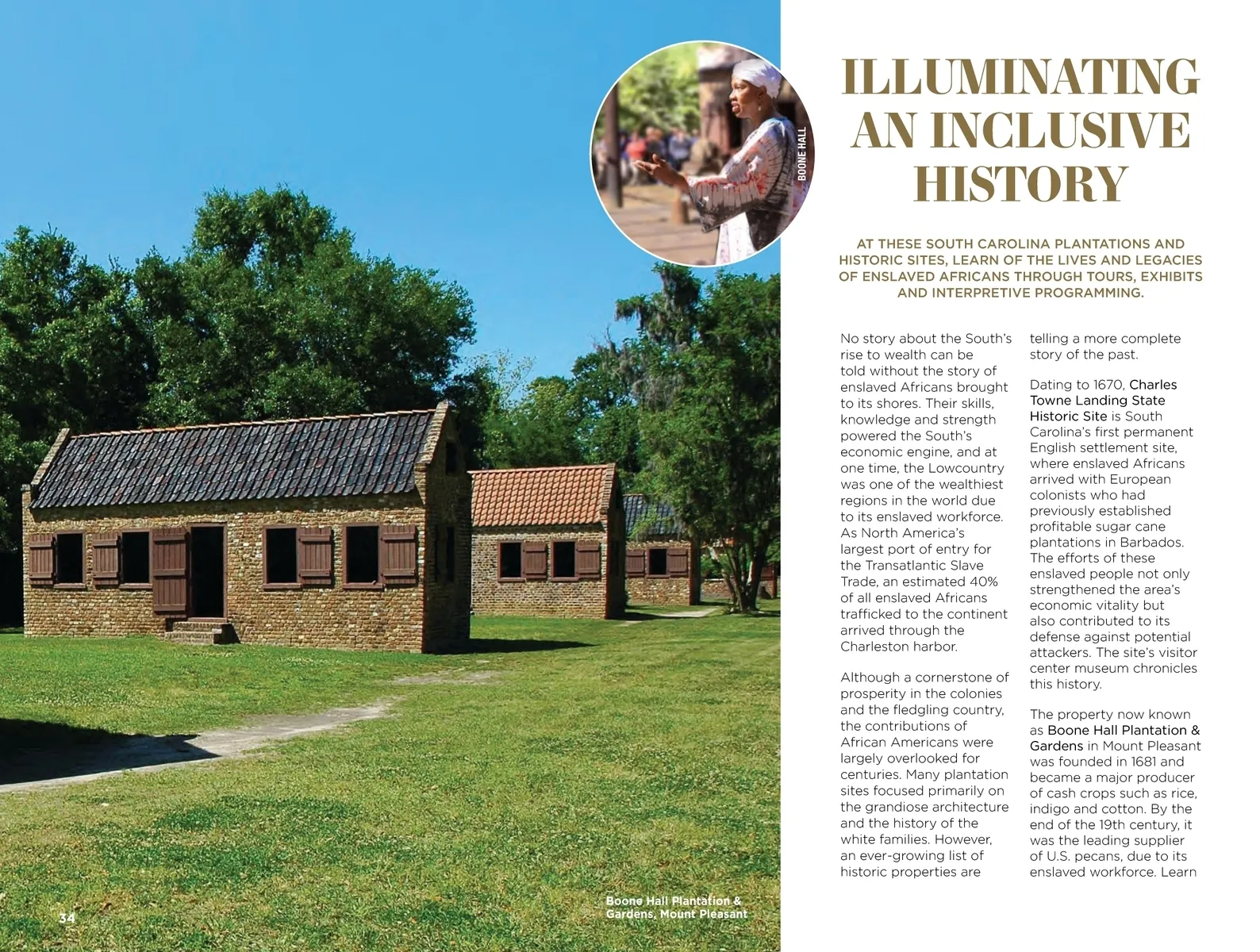
ILLUMINATING AN INCLUSIVE HISTORY AT THESE SOUTH CAROLINA PLANTATIONS AND HISTORIC SITES, LEARN OF THE LIVES AND LEGACIES OF ENSLAVED AFRICANS THROUGH TOURS, EXHIBITS AND INTERPRETIVE PROGRAMMING. No story about the South’s rise to wealth can be told without the story of enslaved Africans brought to its shores. Their skills, knowledge and strength powered the South’s economic engine, and at one time, the Lowcountry was one of the wealthiest regions in the world due to its enslaved workforce. As North America’s largest port of entry for the Transatlantic Slave Trade, an estimated 40% of all enslaved Africans trafficked to the continent arrived through the Charleston harbor. Although a cornerstone of prosperity in the colonies and the fledgling country, the contributions of African Americans were largely overlooked for centuries. Many plantation sites focused primarily on the grandiose architecture and the history of the white families. However, an ever-growing list of historic properties are telling a more complete story of the past. Dating to 1670, Charles Towne Landing State Historic Site is South Carolina’s first permanent English settlement site, where enslaved Africans arrived with European colonists who had previously established profitable sugar cane plantations in Barbados. The efforts of these enslaved people not only strengthened the area’s economic vitality but also contributed to its defense against potential attackers. The site’s visitor center museum chronicles this history. The property now known as Boone Hall Plantation & Gardens in Mount Pleasant was founded in 1681 and became a major producer of cash crops such as rice, indigo and cotton. By the end of the 19th century, it was the leading supplier of U.S. pecans, due to its enslaved workforce. Learn 34 Boone Hall Plantation & Gardens, Mount Pleasant BOONE HALL
South Carolina Vacation Guide SC 2024: Page 34