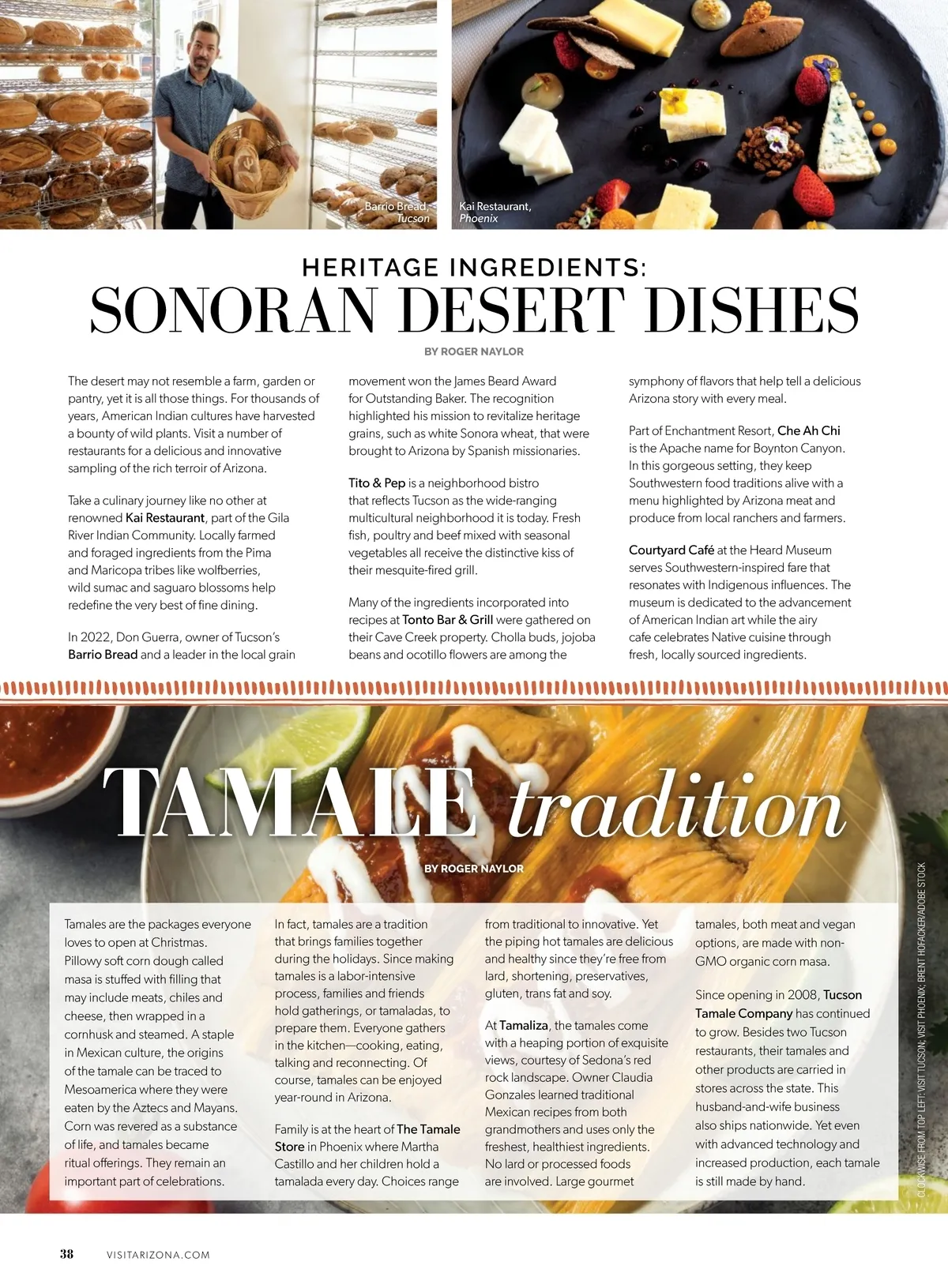
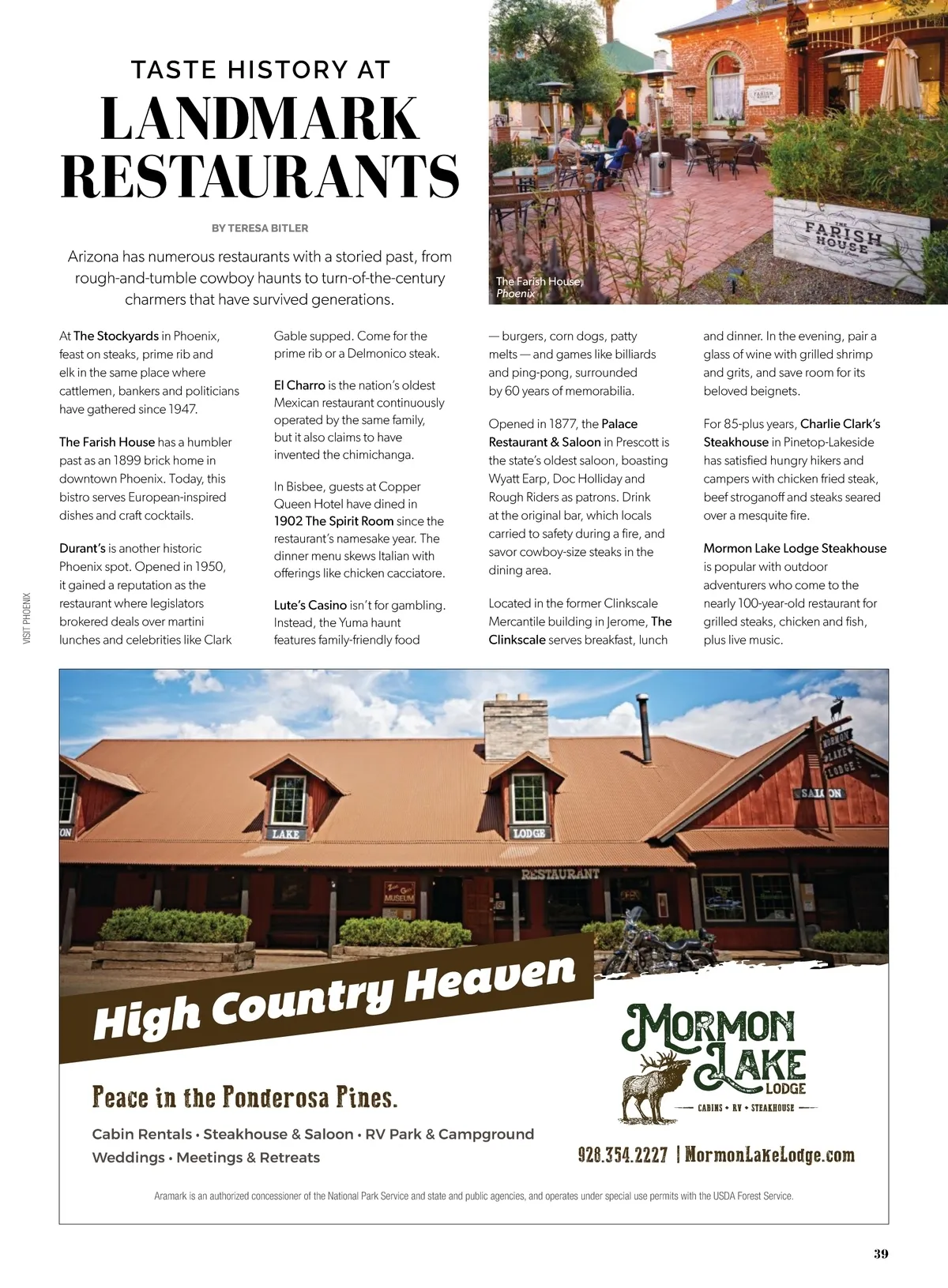
Barrio Bread, Tucson Kai Restaurant, Phoenix SONORAN DESERT DISHES BY ROGER NAYLOR HERITAGE INGREDIENTS: The desert may not resemble a farm, garden or pantry, yet it is all those things. For thousands of years, American Indian cultures have harvested a bounty of wild plants. Visit a number of restaurants for a delicious and innovative sampling of the rich terroir of Arizona. Take a culinary journey like no other at renowned Kai Restaurant , part of the Gila River Indian Community. Locally farmed and foraged ingredients from the Pima and Maricopa tribes like wolfberries, wild sumac and saguaro blossoms help redefine the very best of fine dining. In 2022, Don Guerra, owner of Tucson’s Barrio Bread and a leader in the local grain movement won the James Beard Award for Outstanding Baker. The recognition highlighted his mission to revitalize heritage grains, such as white Sonora wheat, that were brought to Arizona by Spanish missionaries. Tito & Pep is a neighborhood bistro that reflects Tucson as the wide-ranging multicultural neighborhood it is today. Fresh fish, poultry and beef mixed with seasonal vegetables all receive the distinctive kiss of their mesquite-fired grill. Many of the ingredients incorporated into recipes at Tonto Bar & Grill were gathered on their Cave Creek property. Cholla buds, jojoba beans and ocotillo flowers are among the symphony of flavors that help tell a delicious Arizona story with every meal. Part of Enchantment Resort, Che Ah Chi is the Apache name for Boynton Canyon. In this gorgeous setting, they keep Southwestern food traditions alive with a menu highlighted by Arizona meat and produce from local ranchers and farmers. Courtyard Café at the Heard Museum serves Southwestern-inspired fare that resonates with Indigenous influences. The museum is dedicated to the advancement of American Indian art while the airy cafe celebrates Native cuisine through fresh, locally sourced ingredients. BY ROGER NAYLOR Tamales are the packages everyone loves to open at Christmas. Pillowy soft corn dough called masa is stuffed with filling that may include meats, chiles and cheese, then wrapped in a cornhusk and steamed. A staple in Mexican culture, the origins of the tamale can be traced to Mesoamerica where they were eaten by the Aztecs and Mayans. Corn was revered as a substance of life, and tamales became ritual offerings. They remain an important part of celebrations. In fact, tamales are a tradition that brings families together during the holidays. Since making tamales is a labor-intensive process, families and friends hold gatherings, or tamaladas, to prepare them. Everyone gathers in the kitchen—cooking, eating, talking and reconnecting. Of course, tamales can be enjoyed year-round in Arizona. Family is at the heart of The Tamale Store in Phoenix where Martha Castillo and her children hold a tamalada every day. Choices range from traditional to innovative. Yet the piping hot tamales are delicious and healthy since they’re free from lard, shortening, preservatives, gluten, trans fat and soy. At Tamaliza , the tamales come with a heaping portion of exquisite views, courtesy of Sedona’s red rock landscape. Owner Claudia Gonzales learned traditional Mexican recipes from both grandmothers and uses only the freshest, healthiest ingredients. No lard or processed foods are involved. Large gourmet tamales, both meat and vegan options, are made with non-GMO organic corn masa. Since opening in 2008, Tucson Tamale Company has continued to grow. Besides two Tucson restaurants, their tamales and other products are carried in stores across the state. This husband-and-wife business also ships nationwide. Yet even with advanced technology and increased production, each tamale is still made by hand. 38 VISITARIZONA.COM CLOCKWISE FROM TOP LEFT: VISIT TUCSON; VISIT PHOENIX; BRENT HOFACKER/ADOBE STOCK TAMALE tradition
Arizona Official State Travel Guide Arizona 2023-24: Page 38