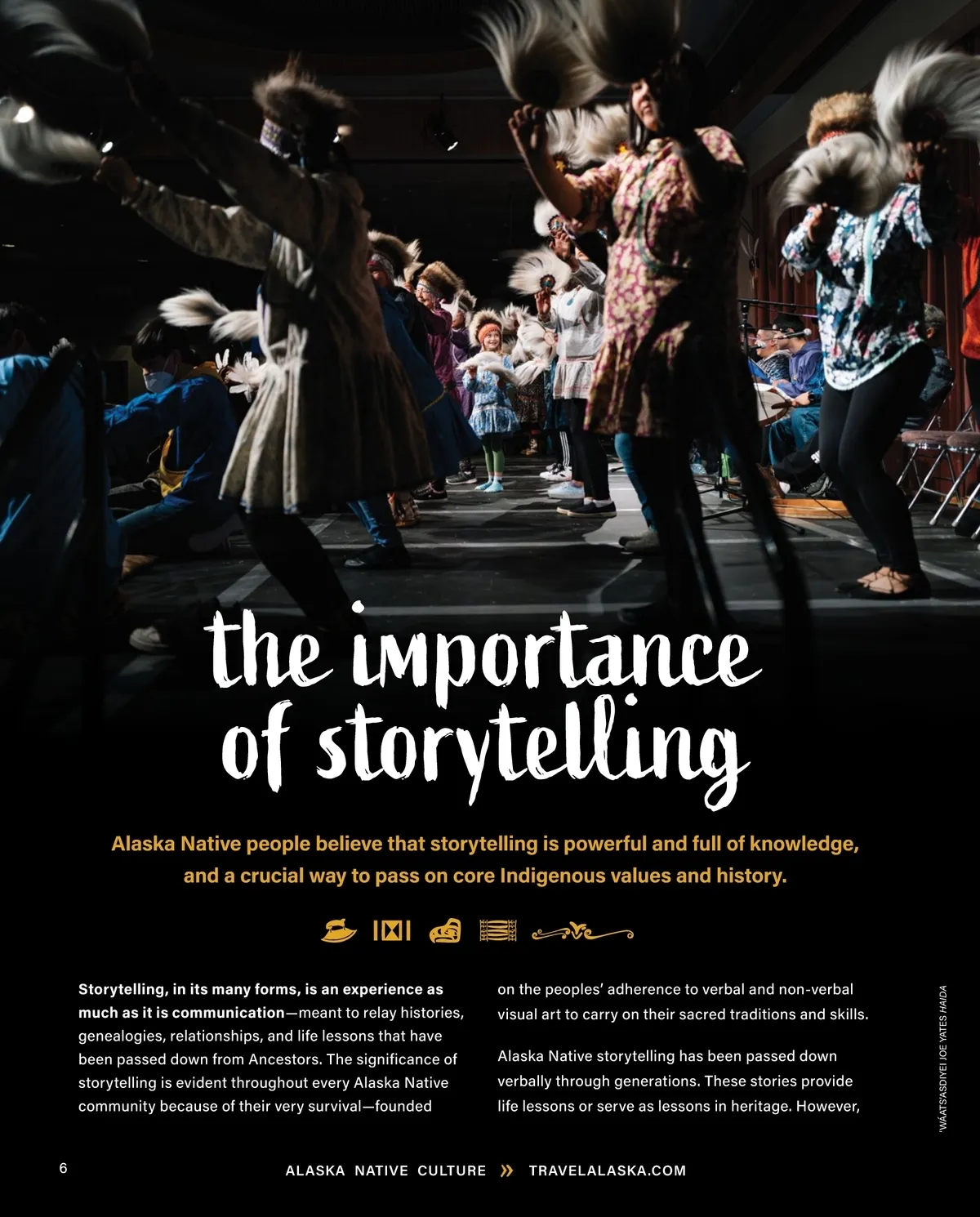
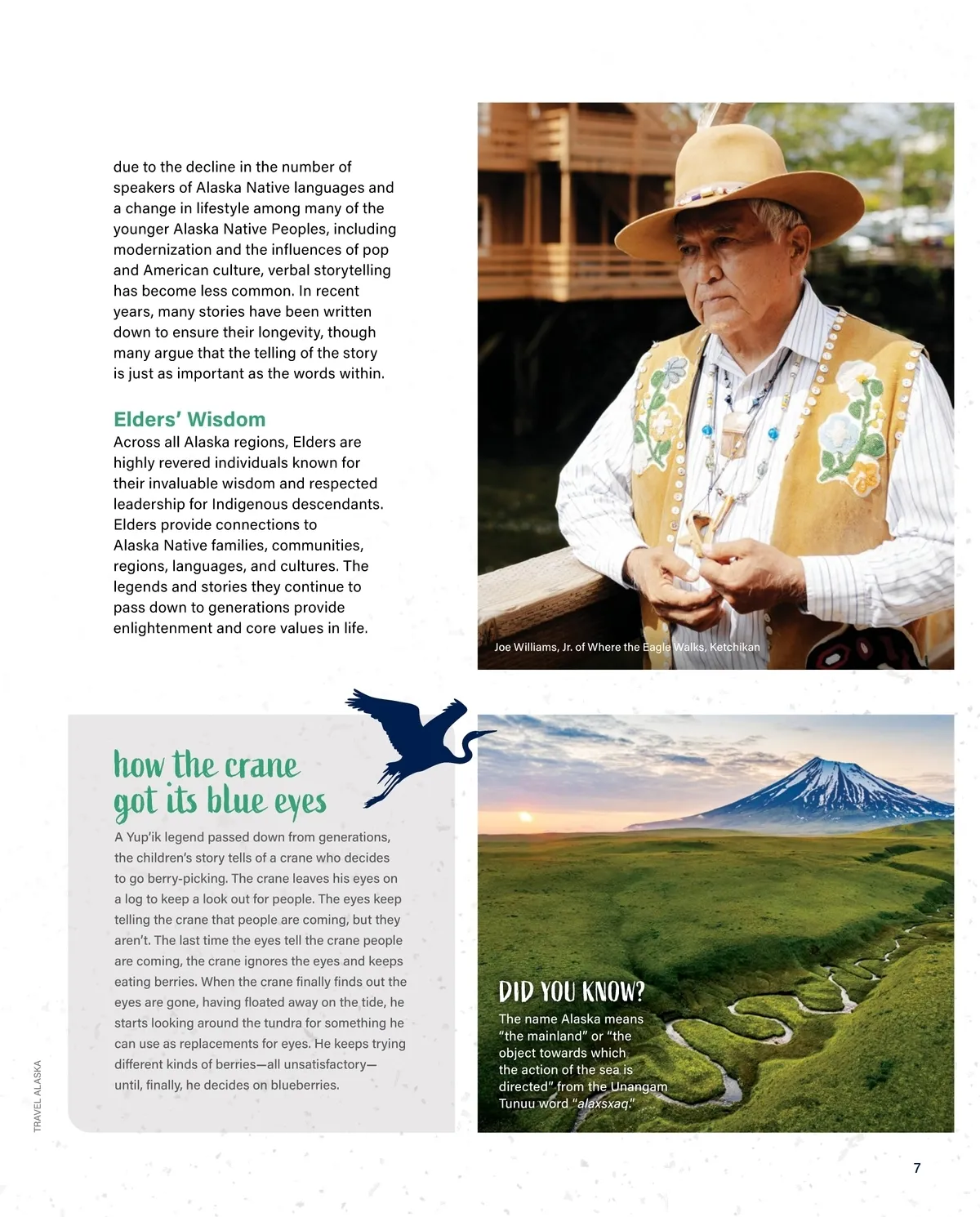
due to the decline in the number of speakers of Alaska Native languages and a change in lifestyle among many of the younger Alaska Native Peoples, including modernization and the influences of pop and American culture, verbal storytelling has become less common. In recent years, many stories have been written down to ensure their longevity, though many argue that the telling of the story is just as important as the words within. Elders’ Wisdom Across all Alaska regions, Elders are highly revered individuals known for their invaluable wisdom and respected leadership for Indigenous descendants. Elders provide connections to Alaska Native families, communities, regions, languages, and cultures. The legends and stories they continue to pass down to generations provide enlightenment and core values in life. Joe Williams, Jr. of Where the Eagle Walks, Ketchikan how the crane got its blue eyes A Yup’ik legend passed down from generations, the children’s story tells of a crane who decides to go berry-picking. The crane leaves his eyes on a log to keep a look out for people. The eyes keep telling the crane that people are coming, but they aren’t. The last time the eyes tell the crane people are coming, the crane ignores the eyes and keeps eating berries. When the crane finally finds out the eyes are gone, having floated away on the tide, he starts looking around the tundra for something he can use as replacements for eyes. He keeps trying TRAVEL ALASKA DID YOU KNOW? The name Alaska means “the mainland” or “the object towards which the action of the sea is directed” from the Unangam Tunuu word “ alaxsxaq .” different kinds of berries—all unsatisfactory— until, finally, he decides on blueberries. 7
Alaska Native Culture 2024: Page 7