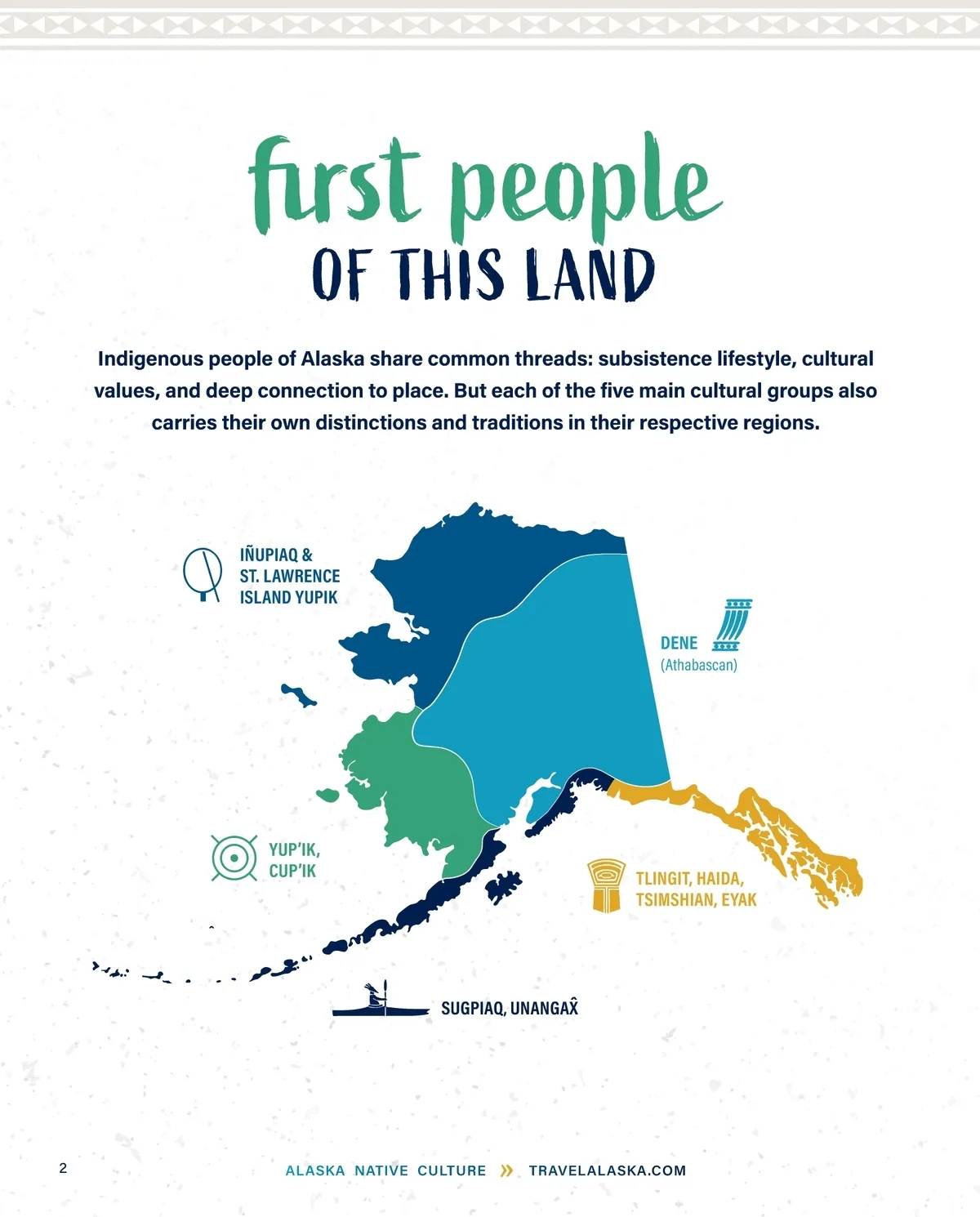
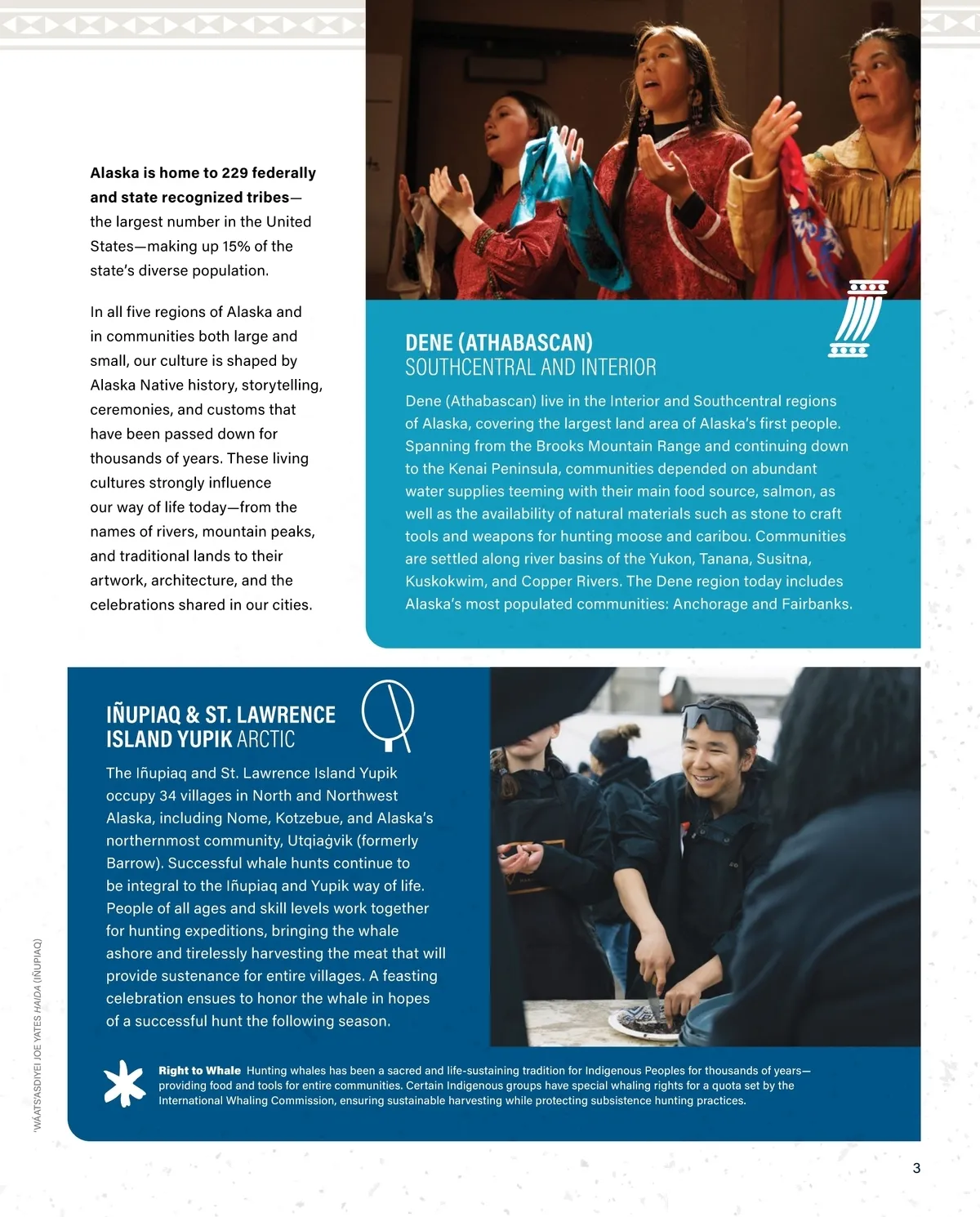
Alaska is home to 229 federally and state recognized tribes — the largest number in the United States—making up 15% of the state’s diverse population. In all five regions of Alaska and in communities both large and small, our culture is shaped by Alaska Native history, storytelling, ceremonies, and customs that have been passed down for thousands of years. These living cultures strongly influence our way of life today—from the names of rivers, mountain peaks, and traditional lands to their artwork, architecture, and the celebrations shared in our cities. DENE (ATHABASCAN) SOUTHCENTRAL AND INTERIOR Dene (Athabascan) live in the Interior and Southcentral regions of Alaska, covering the largest land area of Alaska’s first people. Spanning from the Brooks Mountain Range and continuing down to the Kenai Peninsula, communities depended on abundant water supplies teeming with their main food source, salmon, as well as the availability of natural materials such as stone to craft tools and weapons for hunting moose and caribou. Communities are settled along river basins of the Yukon, Tanana, Susitna, Kuskokwim, and Copper Rivers. The Dene region today includes Alaska’s most populated communities: Anchorage and Fairbanks. IÑUPIAQ & ST. LAWRENCE ISLAND YUPIK ARCTIC The Iñupiaq and St. Lawrence Island Yupik occupy 34 villages in North and Northwest Alaska, including Nome, Kotzebue, and Alaska’s northernmost community, Utqiaġvik (formerly Barrow). Successful whale hunts continue to be integral to the Iñupiaq and Yupik way of life. People of all ages and skill levels work together for hunting expeditions, bringing the whale ashore and tirelessly harvesting the meat that will provide sustenance for entire villages. A feasting celebration ensues to honor the whale in hopes of a successful hunt the following season. Right to Whale Hunting whales has been a sacred and life-sustaining tradition for Indigenous Peoples for thousands of years— providing food and tools for entire communities. Certain Indigenous groups have special whaling rights for a quota set by the International Whaling Commission, ensuring sustainable harvesting while protecting subsistence hunting practices. ‘WÁATS’ASDIYEI JOE YATES HAIDA (IÑUPIAQ) 3
Alaska Native Culture 2024: Page 3