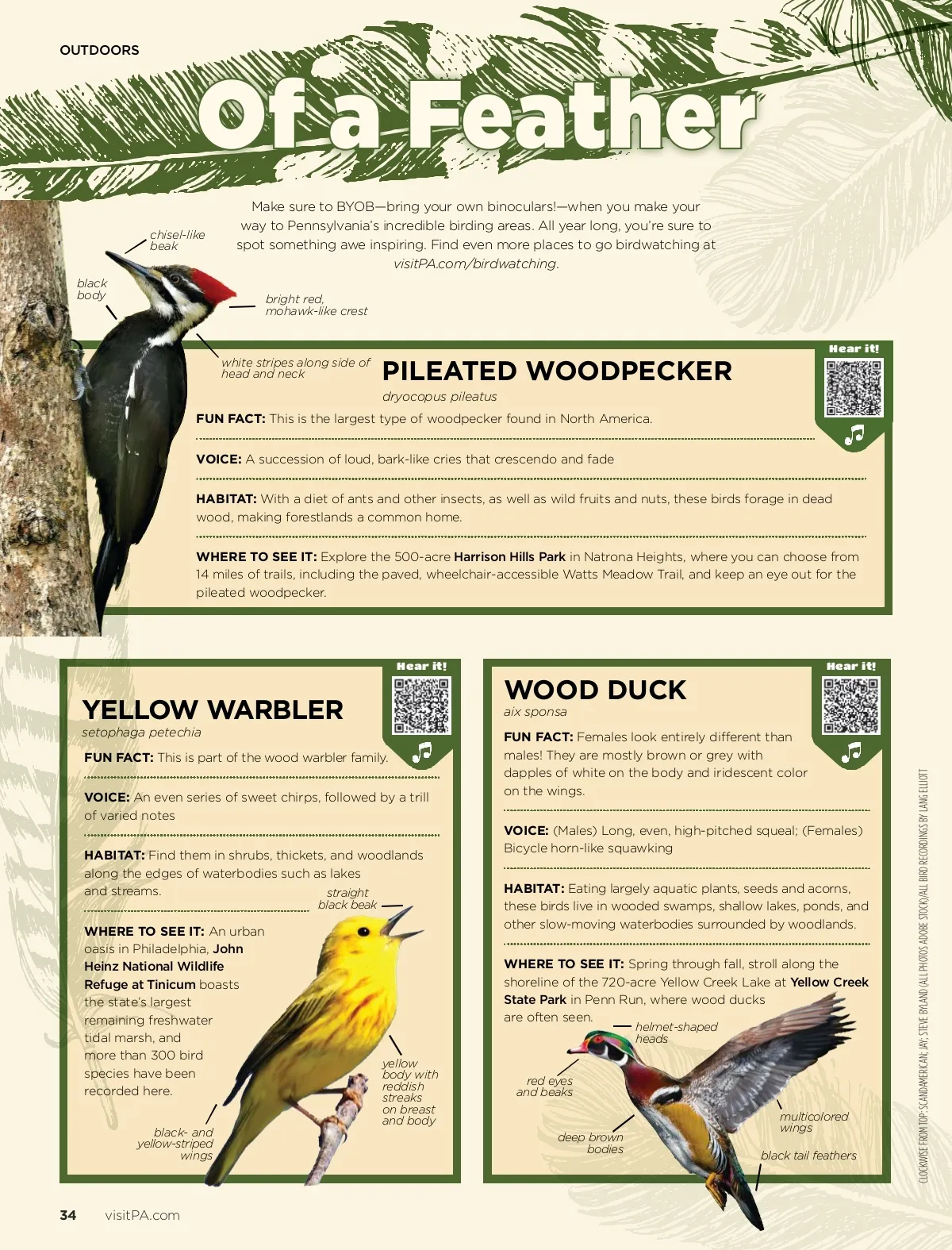
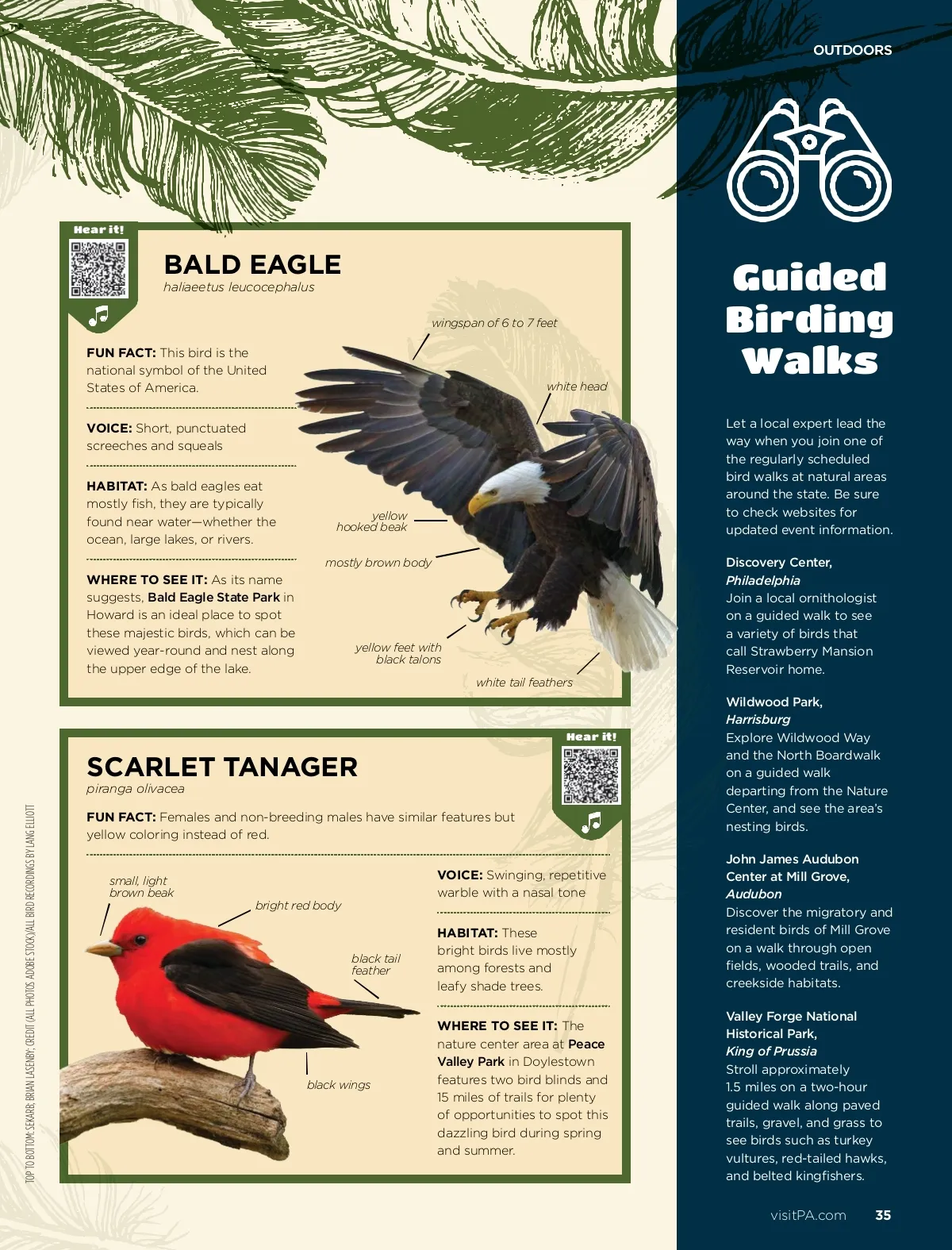
OutdOORS Of a Feather chisel-like beak Make sure to BYOB—bring your own binoculars!—when you make your way to Pennsylvania’s incredible birding areas. All year long, you’re sure to spot something awe inspiring. Find even more places to go birdwatching at visitPA.com/birdwatching . bright red, mohawk-like crest Hear it! black body white stripes along side of head and neck PILEATED WOODPECKER dryocopus pileatus FUN FACT: This is the largest type of woodpecker found in North America. VOICE: A succession of loud, bark-like cries that crescendo and fade HABITAT: With a diet of ants and other insects, as well as wild fruits and nuts, these birds forage in dead wood, making forestlands a common home. WHERE TO SEE IT: Explore the 500-acre Harrison Hills Park in Natrona Heights, where you can choose from 14 miles of trails, including the paved, wheelchair-accessible Watts Meadow Trail, and keep an eye out for the pileated woodpecker. Hear it! YELLOW WARBLER setophaga petechia WOOD DUCK aix sponsa Hear it! FUN FACT: This is part of the wood warbler family. VOICE: An even series of sweet chirps, followed by a trill of varied notes HABITAT: Find them in shrubs, thickets, and woodlands along the edges of waterbodies such as lakes and streams. straight black beak VOICE: (Males) Long, even, high-pitched squeal; (Females) Bicycle horn-like squawking HABITAT: Eating largely aquatic plants, seeds and acorns, these birds live in wooded swamps, shallow lakes, ponds, and other slow-moving waterbodies surrounded by woodlands. WHERE TO SEE IT: Spring through fall, stroll along the shoreline of the 720-acre Yellow Creek Lake at Yellow Creek State Park in Penn Run, where wood ducks are often seen. helmet-shaped heads WHERE TO SEE IT: An urban oasis in Philadelphia, John Heinz National Wildlife Refuge at tinicum boasts the state’s largest remaining freshwater tidal marsh, and more than 300 bird species have been recorded here. black-and yellow-striped wings yellow body with reddish streaks on breast and body red eyes and beaks multicolored wings black tail feathers deep brown bodies 34 visitPA.com CLOCKWISE FROM TOP: SCANDAMERICAN; JAY; STEVE BYLAND (ALL PHOTOS ADOBE STOCK)/ALL BIRD RECORDINGS BY LANG ELLIOTT FUN FACT: Females look entirely different than males! They are mostly brown or grey with dapples of white on the body and iridescent color on the wings.
Pennsylvania Happy Traveler Guide 2023: Page 34