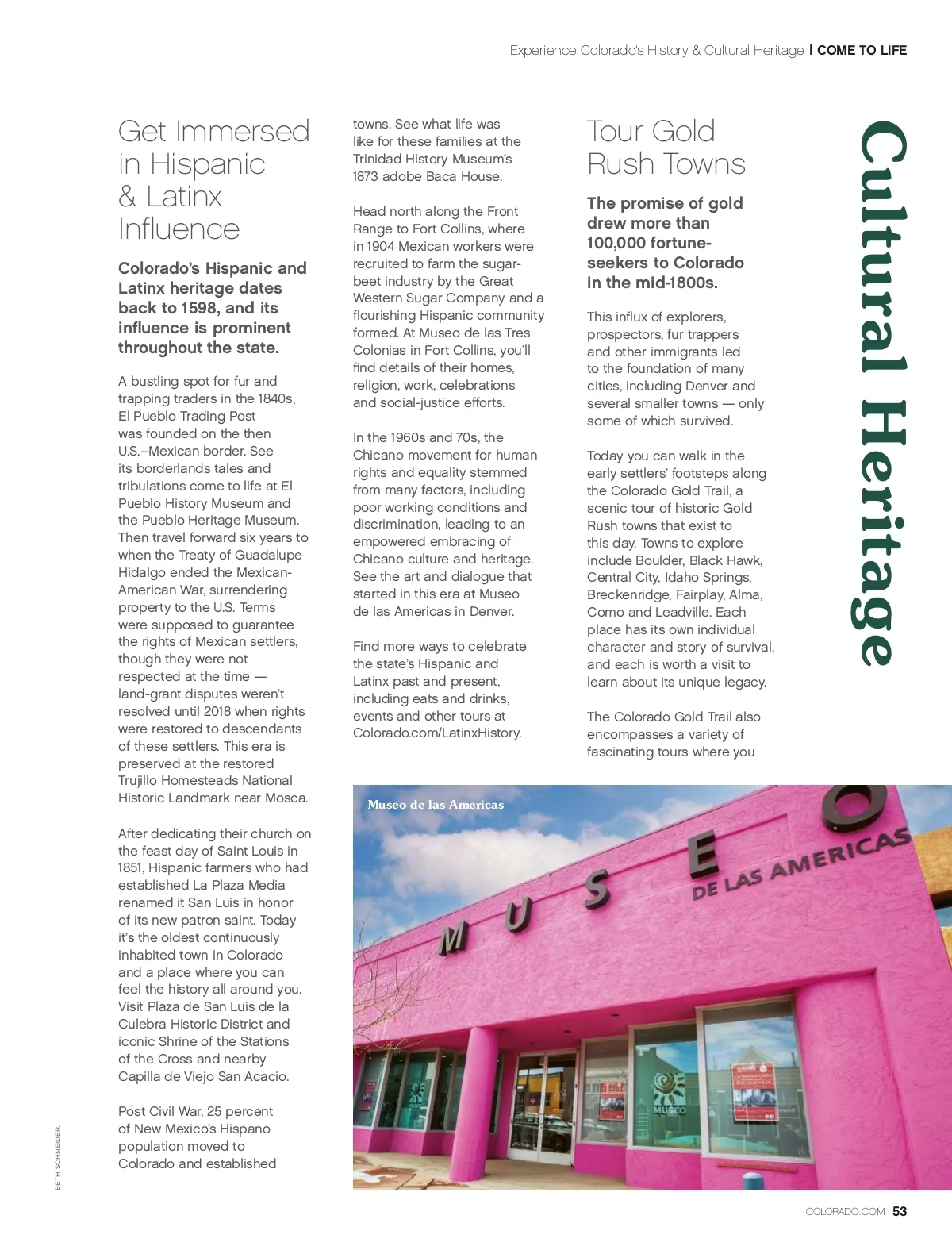
Experience Colorado’s History & Cultural Heritage | COME TO LIFE Get Immersed in Hispanic & Latinx Influence Colorado’s Hispanic and Latinx heritage dates back to 1598, and its influence is prominent throughout the state. A bustling spot for fur and trapping traders in the 1840s, El Pueblo Trading Post was founded on the then U.S.–Mexican border. See its borderlands tales and tribulations come to life at El Pueblo History Museum and the Pueblo Heritage Museum. Then travel forward six years to when the Treaty of Guadalupe Hidalgo ended the Mexican-American War, surrendering property to the U.S. Terms were supposed to guarantee the rights of Mexican settlers, though they were not respected at the time — land-grant disputes weren’t resolved until 2018 when rights were restored to descendants of these settlers. This era is preserved at the restored Trujillo Homesteads National Historic Landmark near Mosca. After dedicating their church on the feast day of Saint Louis in 1851, Hispanic farmers who had established La Plaza Media renamed it San Luis in honor of its new patron saint. Today it’s the oldest continuously inhabited town in Colorado and a place where you can feel the history all around you. Visit Plaza de San Luis de la Culebra Historic District and iconic Shrine of the Stations of the Cross and nearby Capilla de Viejo San Acacio. Post Civil War, 25 percent of New Mexico’s Hispano population moved to Colorado and established towns. See what life was like for these families at the Trinidad History Museum’s 1873 adobe Baca House. Head north along the Front Range to Fort Collins, where in 1904 Mexican workers were recruited to farm the sugar-beet industry by the Great Western Sugar Company and a flourishing Hispanic community formed. At Museo de las Tres Colonias in Fort Collins, you’ll find details of their homes, religion, work, celebrations and social-justice efforts. In the 1960s and 70s, the Chicano movement for human rights and equality stemmed from many factors, including poor working conditions and discrimination, leading to an empowered embracing of Chicano culture and heritage. See the art and dialogue that started in this era at Museo de las Americas in Denver. Find more ways to celebrate the state’s Hispanic and Latinx past and present, including eats and drinks, events and other tours at Colorado.com/LatinxHistory. Tour Gold Rush Towns The promise of gold drew more than 100,000 fortune-seekers to Colorado in the mid-1800s. This influx of explorers, prospectors, fur trappers and other immigrants led to the foundation of many cities, including Denver and several smaller towns — only some of which survived. Today you can walk in the early settlers’ footsteps along the Colorado Gold Trail, a scenic tour of historic Gold Rush towns that exist to this day. Towns to explore include Boulder, Black Hawk, Central City, Idaho Springs, Breckenridge, Fairplay, Alma, Como and Leadville. Each place has its own individual character and story of survival, and each is worth a visit to learn about its unique legacy. The Colorado Gold Trail also encompasses a variety of fascinating tours where you Cultural Heritage Museo de las Americas BETH SCHNEIDER. COLORADO . COM 53
Colorado Official State Vacation Guide 2023: Page 53