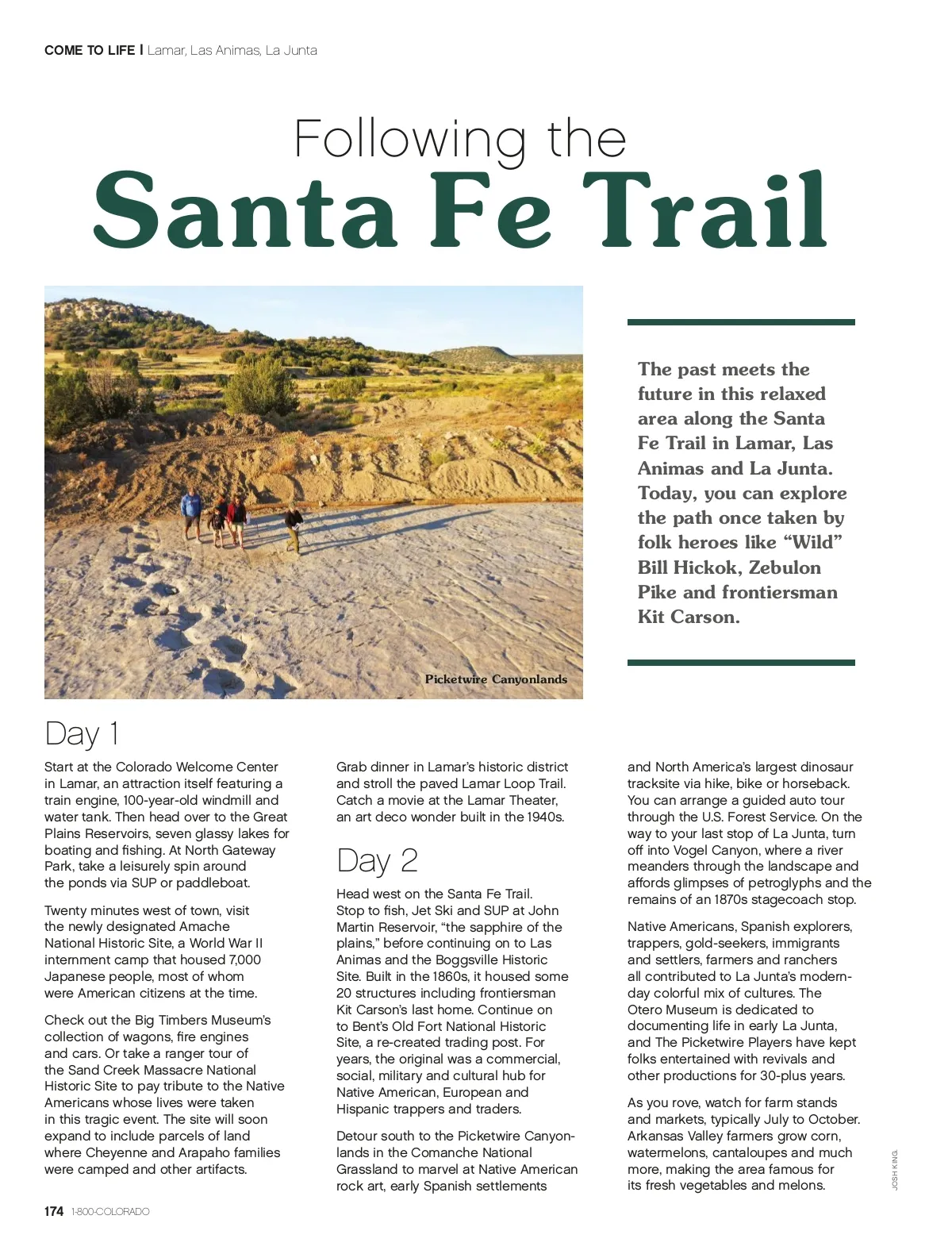
COME TO LIFE | Lamar, Las Animas, La Junta Santa Fe Trail The past meets the future in this relaxed area along the Santa Fe Trail in Lamar, Las Animas and La Junta. Today, you can explore the path once taken by folk heroes like “Wild” Bill Hickok, Zebulon Pike and frontiersman Kit Carson. Picketwire Canyon lands Following the Day 1 Start at the Colorado Welcome Center in Lamar, an attraction itself featuring a train engine, 100-year-old windmill and water tank. Then head over to the Great Plains Reservoirs, seven glassy lakes for boating and fishing. At North Gateway Park, take a leisurely spin around the ponds via SUP or paddleboat. Twenty minutes west of town, visit the newly designated Amache National Historic Site, a World War II internment camp that housed 7,000 Japanese people, most of whom were American citizens at the time. Check out the Big Timbers Museum’s collection of wagons, fire engines and cars. Or take a ranger tour of the Sand Creek Massacre National Historic Site to pay tribute to the Native Americans whose lives were taken in this tragic event. The site will soon expand to include parcels of land where Cheyenne and Arapaho families were camped and other artifacts. 174 1-800-COLORADO Grab dinner in Lamar’s historic district and stroll the paved Lamar Loop Trail. Catch a movie at the Lamar Theater, an art deco wonder built in the 1940s. Day 2 Head west on the Santa Fe Trail. Stop to fish, Jet Ski and SUP at John Martin Reservoir, “the sapphire of the plains,” before continuing on to Las Animas and the Boggsville Historic Site. Built in the 1860s, it housed some 20 structures including frontiersman Kit Carson’s last home. Continue on to Bent’s Old Fort National Historic Site, a re-created trading post. For years, the original was a commercial, social, military and cultural hub for Native American, European and Hispanic trappers and traders. Detour south to the Picketwire Canyon-lands in the Comanche National Grassland to marvel at Native American rock art, early Spanish settlements and North America’s largest dinosaur tracksite via hike, bike or horseback. You can arrange a guided auto tour through the U.S. Forest Service. On the way to your last stop of La Junta, turn off into Vogel Canyon, where a river meanders through the landscape and affords glimpses of petroglyphs and the remains of an 1870s stagecoach stop. Native Americans, Spanish explorers, trappers, gold-seekers, immigrants and settlers, farmers and ranchers all contributed to La Junta’s modern-day colorful mix of cultures. The Otero Museum is dedicated to documenting life in early La Junta, and The Picketwire Players have kept folks entertained with revivals and other productions for 30-plus years. As you rove, watch for farm stands and markets, typically July to October. Arkansas Valley farmers grow corn, watermelons, cantaloupes and much more, making the area famous for its fresh vegetables and melons. JOSH KING.
Colorado Official State Vacation Guide 2023: Page 174