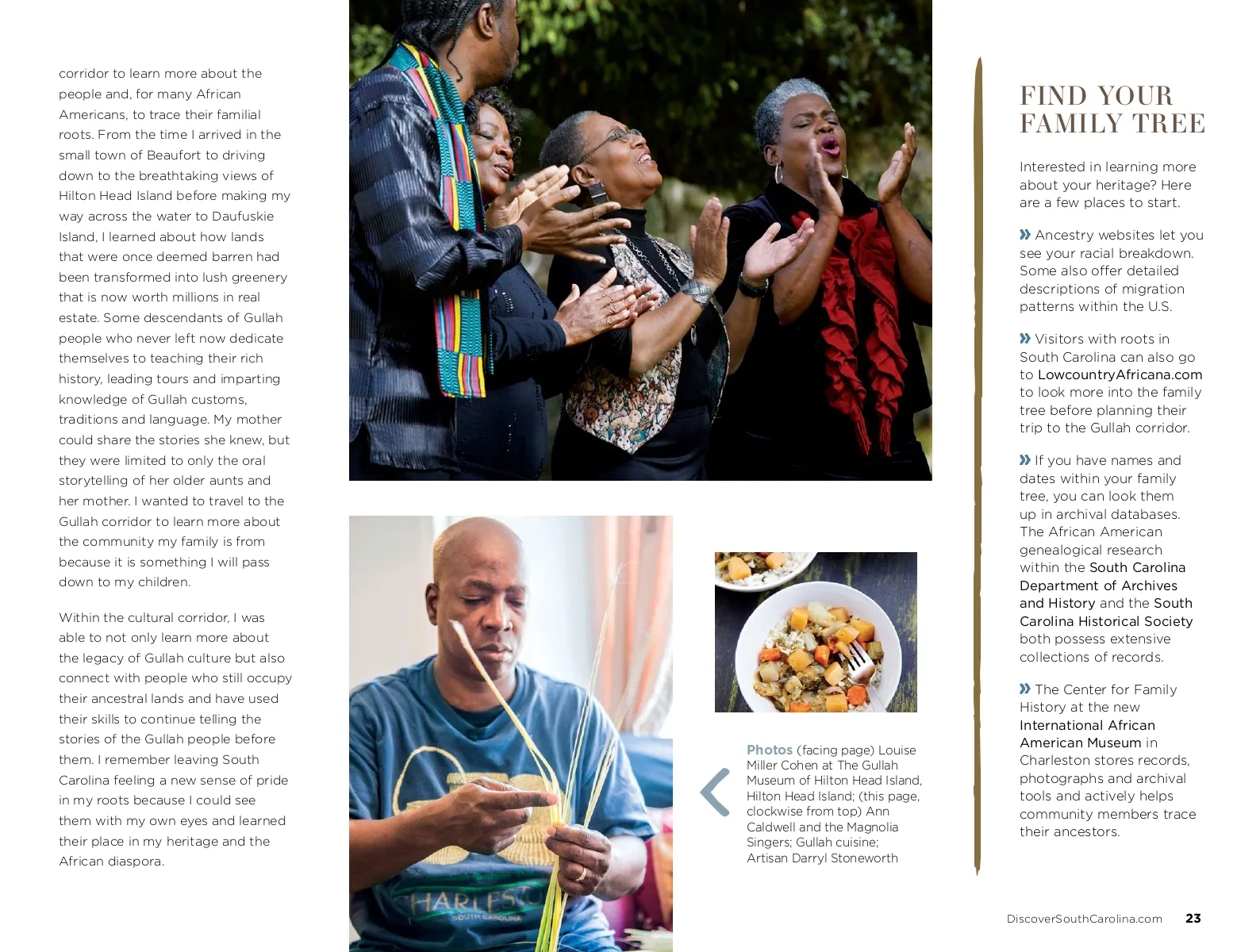
corridor to learn more about the people and, for many African Americans, to trace their familial roots. From the time I arrived in the small town of Beaufort to driving down to the breathtaking views of Hilton Head Island before making my way across the water to Daufuskie Island, I learned about how lands that were once deemed barren had been transformed into lush greenery that is now worth millions in real estate. Some descendants of Gullah people who never left now dedicate themselves to teaching their rich history, leading tours and imparting knowledge of Gullah customs, traditions and language. My mother could share the stories she knew, but they were limited to only the oral storytelling of her older aunts and her mother. I wanted to travel to the Gullah corridor to learn more about the community my family is from because it is something I will pass down to my children. Within the cultural corridor, I was able to not only learn more about the legacy of Gullah culture but also connect with people who still occupy their ancestral lands and have used their skills to continue telling the them. I remember leaving South Carolina feeling a new sense of pride in my roots because I could see them with my own eyes and learned their place in my heritage and the African diaspora. stories of the Gullah people before FIND YOUR FAMILY TREE Interested in learning more about your heritage? Here are a few places to start. Ancestry websites let you see your racial breakdown. Some also offer detailed descriptions of migration patterns within the U.S. Visitors with roots in South Carolina can also go to LowcountryAfricana.com to look more into the family tree before planning their trip to the Gullah corridor. If you have names and dates within your family tree, you can look them up in archival databases. The African American genealogical research within the South Carolina Department of Archives and History and the South Carolina Historical Society both possess extensive collections of records. The Center for Family History at the new International African American Museum in Charleston stores records, photographs and archival tools and actively helps community members trace their ancestors. > Photos (facing page) Louise Miller Cohen at The Gullah Museum of Hilton Head Island, Hilton Head Island; (this page, clockwise from top) Ann Caldwell and the Magnolia Singers; Gullah cuisine; Artisan Darryl Stoneworth DiscoverSouthCarolina.com 23
South Carolina Vacation Guide SC 2023: Page 23