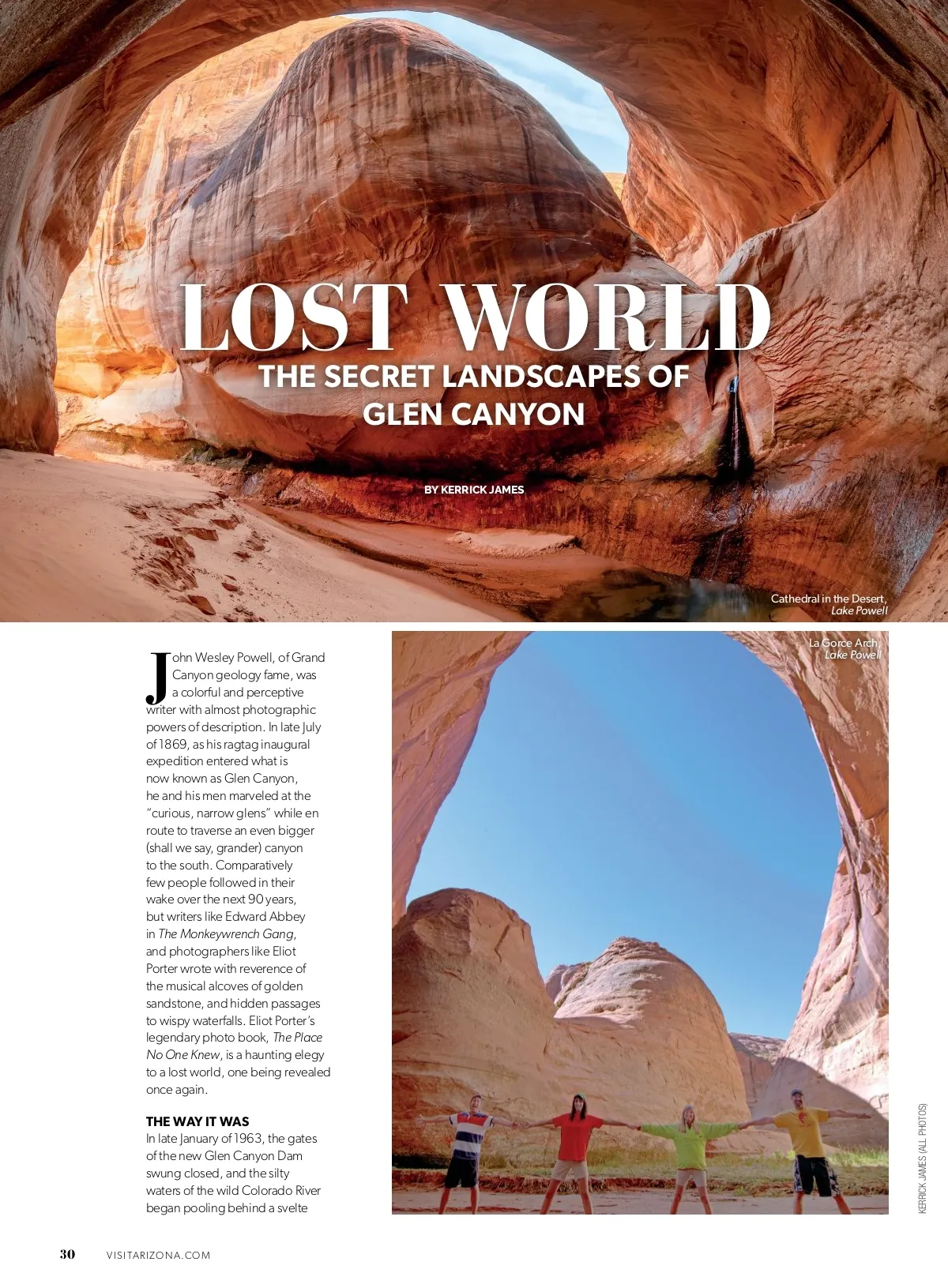
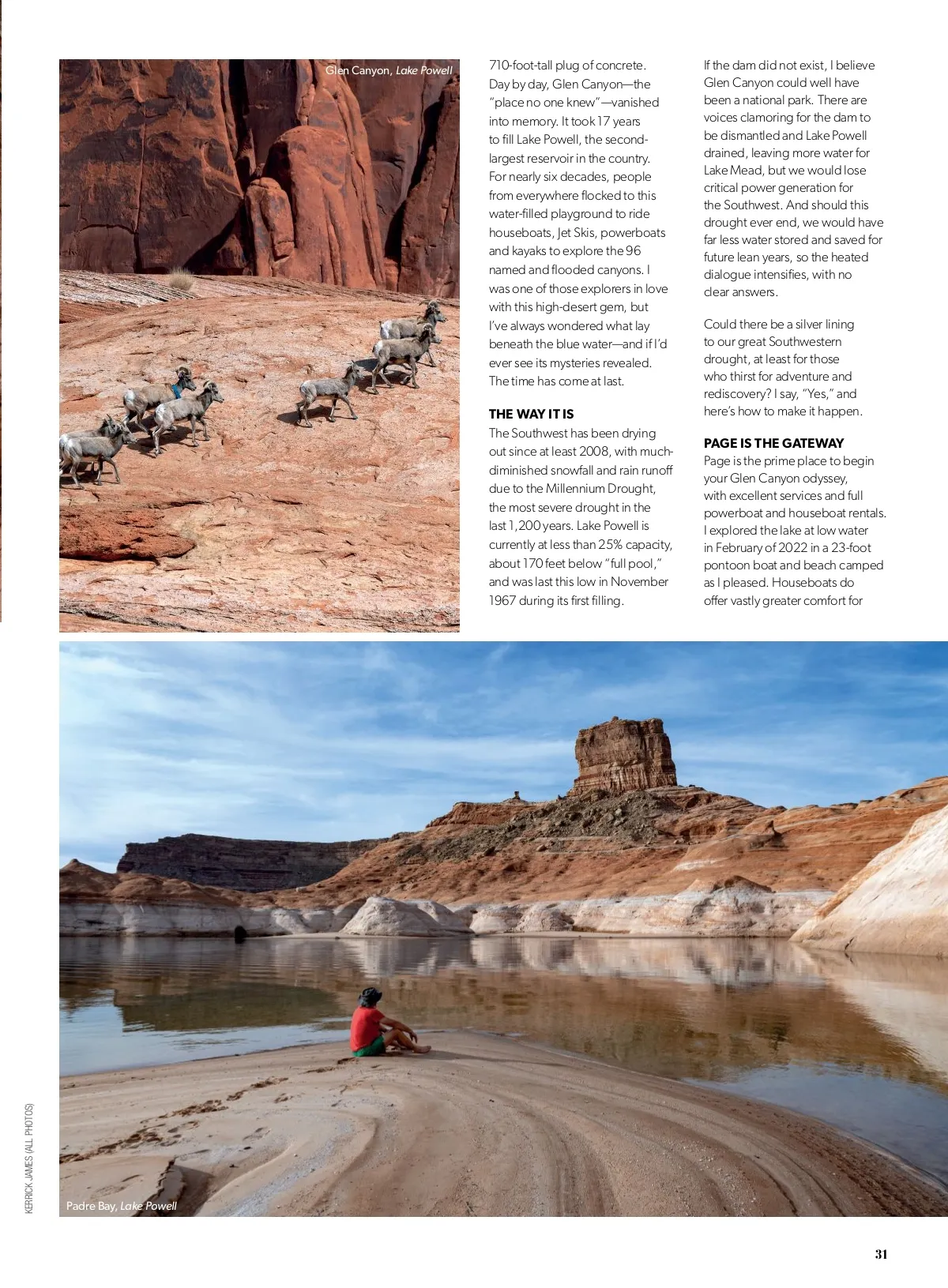
Glen Canyon, Lake Powell 710-foot-tall plug of concrete. Day by day, Glen Canyon—the “place no one knew”—vanished into memory. It took 17 years to fill Lake Powell, the second-largest reservoir in the country. For nearly six decades, people from everywhere flocked to this water-filled playground to ride houseboats, Jet Skis, powerboats and kayaks to explore the 96 named and flooded canyons. I was one of those explorers in love with this high-desert gem, but I’ve always wondered what lay beneath the blue water—and if I’d ever see its mysteries revealed. The time has come at last. THE WAY IT IS The Southwest has been drying out since at least 2008, with much-diminished snowfall and rain runoff due to the Millennium Drought, the most severe drought in the last 1,200 years. Lake Powell is currently at less than 25% capacity, about 170 feet below “full pool,” and was last this low in November 1967 during its first filling. If the dam did not exist, I believe Glen Canyon could well have been a national park. There are voices clamoring for the dam to be dismantled and Lake Powell drained, leaving more water for Lake Mead, but we would lose critical power generation for the Southwest. And should this drought ever end, we would have far less water stored and saved for future lean years, so the heated dialogue intensifies, with no clear answers. Could there be a silver lining to our great Southwestern drought, at least for those who thirst for adventure and rediscovery? I say, “Yes,” and here’s how to make it happen. PAGE IS THE GATEWAY Page is the prime place to begin your Glen Canyon odyssey, with excellent services and full powerboat and houseboat rentals. I explored the lake at low water in February of 2022 in a 23-foot pontoon boat and beach camped as I pleased. Houseboats do offer vastly greater comfort for KERRICK JAMES (ALL PHOTOS) Padre Bay, Lake Powell 31
Arizona Official State Travel Guide Arizona 2022-23: Page 31