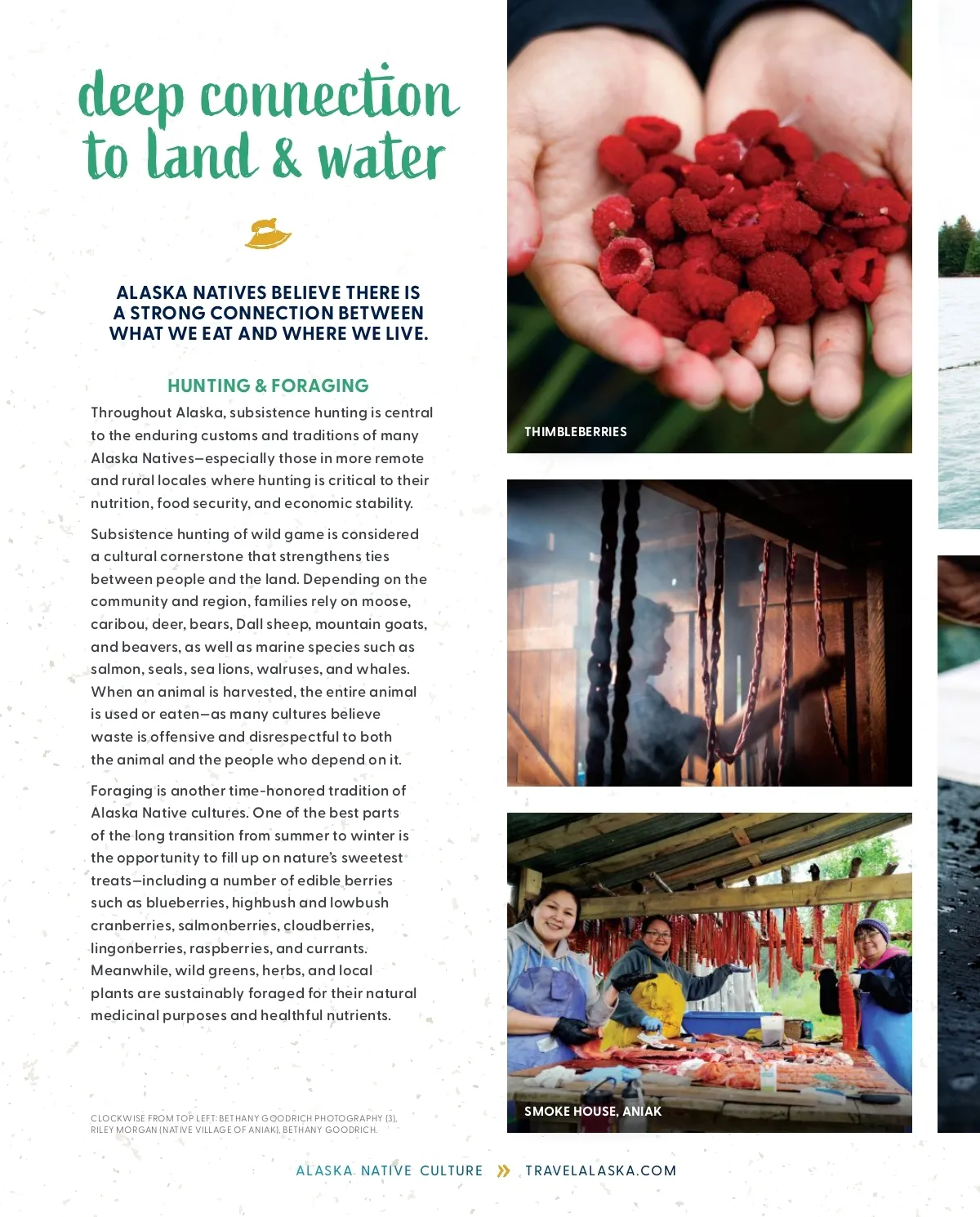
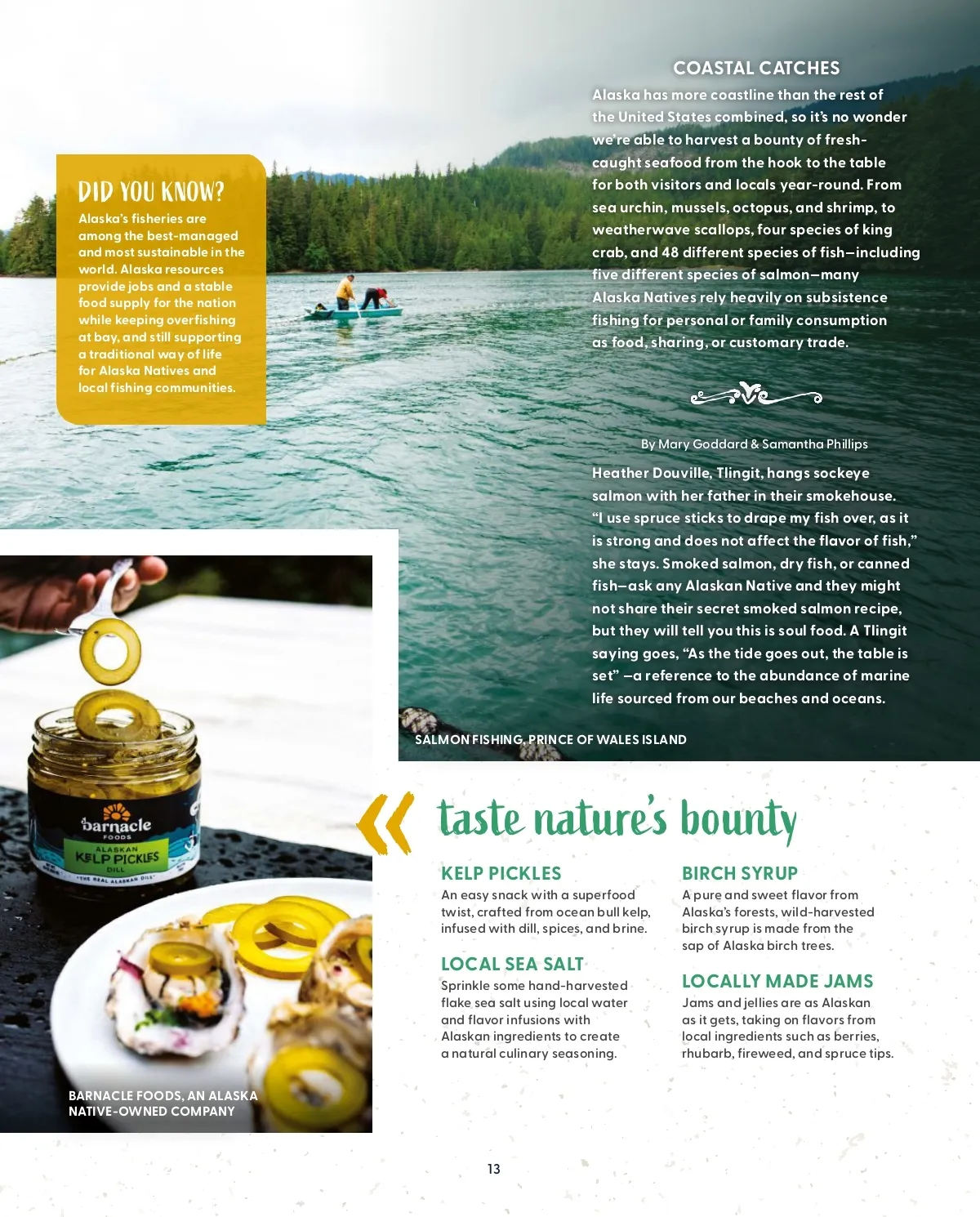
deep connection to land & water ALASKA NATIVES BELIEVE THERE IS A STRONG CONNECTION BETWEEN WHAT WE EAT AND WHERE WE LIVE. HUNTING & FORAGING Throughout Alaska, subsistence hunting is central to the enduring customs and traditions of many Alaska Natives—especially those in more remote and rural locales where hunting is critical to their nutrition, food security, and economic stability. Subsistence hunting of wild game is considered a cultural cornerstone that strengthens ties between people and the land. Depending on the community and region, families rely on moose, caribou, deer, bears, Dall sheep, mountain goats, and beavers, as well as marine species such as salmon, seals, sea lions, walruses, and whales. When an animal is harvested, the entire animal is used or eaten—as many cultures believe waste is offensive and disrespectful to both the animal and the people who depend on it. Foraging is another time-honored tradition of Alaska Native cultures. One of the best parts of the long transition from summer to winter is the opportunity to fill up on nature’s sweetest treats—including a number of edible berries such as blueberries, highbush and lowbush cranberries, salmonberries, cloudberries, lingonberries, raspberries, and currants. Meanwhile, wild greens, herbs, and local plants are sustainably foraged for their natural medicinal purposes and healthful nutrients. THIMBLEBERRIES CLOCKWISE FROM TOP LEFT: BETHANY GOODRICH PHOTOGRAPHY (3), RILEY MORGAN (NATIVE VILLAGE OF ANIAK), BETHANY GOODRICH. SMOKE HOUSE, ANIAK ALASKA NATIVE CULTURE TRAVELALASKA.COM
Alaska Native Culture 2023: Page 12