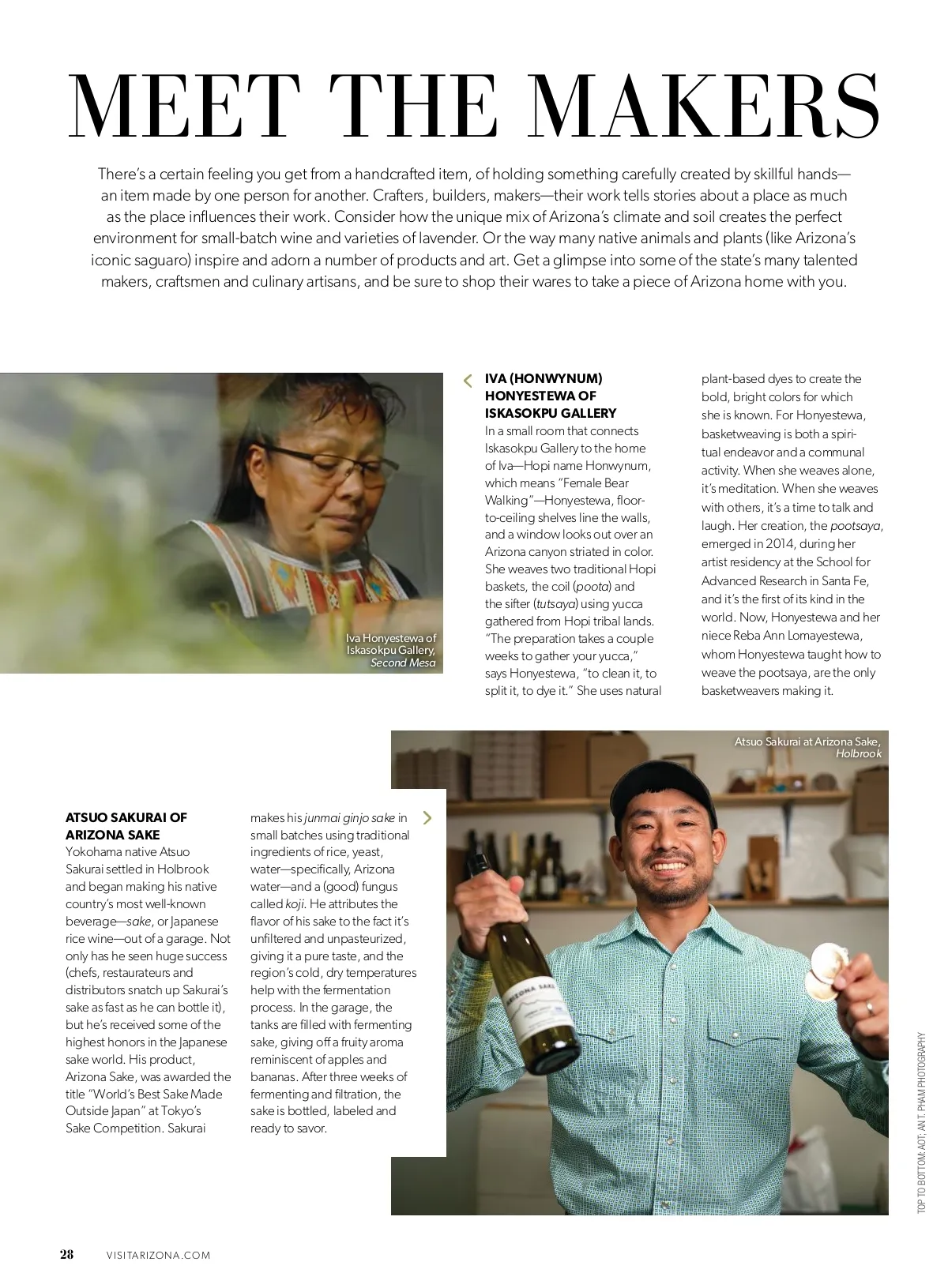
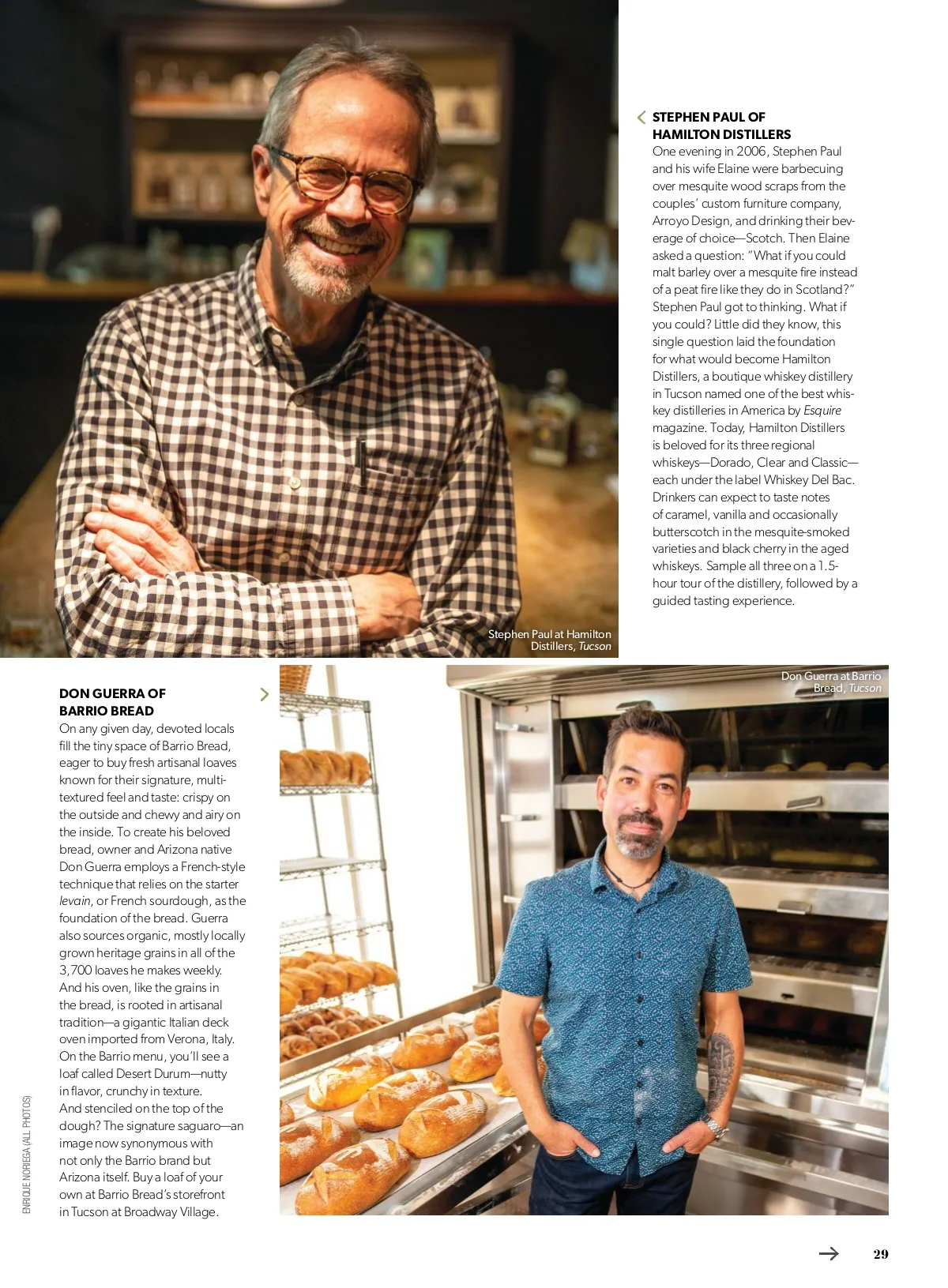
MEET THE MAKERS There’s a certain feeling you get from a handcrafted item, of holding something carefully created by skillful hands— an item made by one person for another. Crafters, builders, makers—their work tells stories about a place as much as the place influences their work. Consider how the unique mix of Arizona’s climate and soil creates the perfect environment for small-batch wine and varieties of lavender. Or the way many native animals and plants (like Arizona’s iconic saguaro) inspire and adorn a number of products and art. Get a glimpse into some of the state’s many talented makers, craftsmen and culinary artisans, and be sure to shop their wares to take a piece of Arizona home with you. IVA (HONWYNUM) HONYESTEWA OF ISKASOKPU GALLERY In a small room that connects Iskasokpu Gallery to the home of Iva—Hopi name Honwynum, which means “Female Bear Walking”—Honyestewa, floor-to-ceiling shelves line the walls, and a window looks out over an Arizona canyon striated in color. She weaves two traditional Hopi baskets, the coil ( poota ) and the sifter ( tutsaya ) using yucca gathered from Hopi tribal lands. “The preparation takes a couple weeks to gather your yucca,” says Honyestewa, “to clean it, to split it, to dye it.” She uses natural plant-based dyes to create the bold, bright colors for which she is known. For Honyestewa, basketweaving is both a spiri-tual endeavor and a communal activity. When she weaves alone, it’s meditation. When she weaves with others, it’s a time to talk and laugh. Her creation, the pootsaya , emerged in 2014, during her artist residency at the School for Advanced Research in Santa Fe, and it’s the first of its kind in the world. Now, Honyestewa and her niece Reba Ann Lomayestewa, whom Honyestewa taught how to weave the pootsaya, are the only basketweavers making it. Iva Honyestewa of Iskasokpu Gallery, Second Mesa Atsuo Sakurai at Arizona Sake, Holbrook 28 VISITARIZONA.COM TOP TO BOTTOM: AOT; AN T. PHAM PHOTOGRAPHY ATSUO SAKURAI OF ARIZONA SAKE Yokohama native Atsuo Sakurai settled in Holbrook and began making his native country’s most well-known beverage— sake , or Japanese rice wine—out of a garage. Not only has he seen huge success (chefs, restaurateurs and distributors snatch up Sakurai’s sake as fast as he can bottle it), but he’s received some of the highest honors in the Japanese sake world. His product, Arizona Sake, was awarded the title “World’s Best Sake Made Outside Japan” at Tokyo’s Sake Competition. Sakurai makes his junmai ginjo sake in small batches using traditional ingredients of rice, yeast, water—specifically, Arizona water—and a (good) fungus called koji . He attributes the flavor of his sake to the fact it’s unfiltered and unpasteurized, giving it a pure taste, and the region’s cold, dry temperatures help with the fermentation process. In the garage, the tanks are filled with fermenting sake, giving off a fruity aroma reminiscent of apples and bananas. After three weeks of fermenting and filtration, the sake is bottled, labeled and ready to savor.
Arizona Official State Travel Guide Arizona 2021-22: Page 28