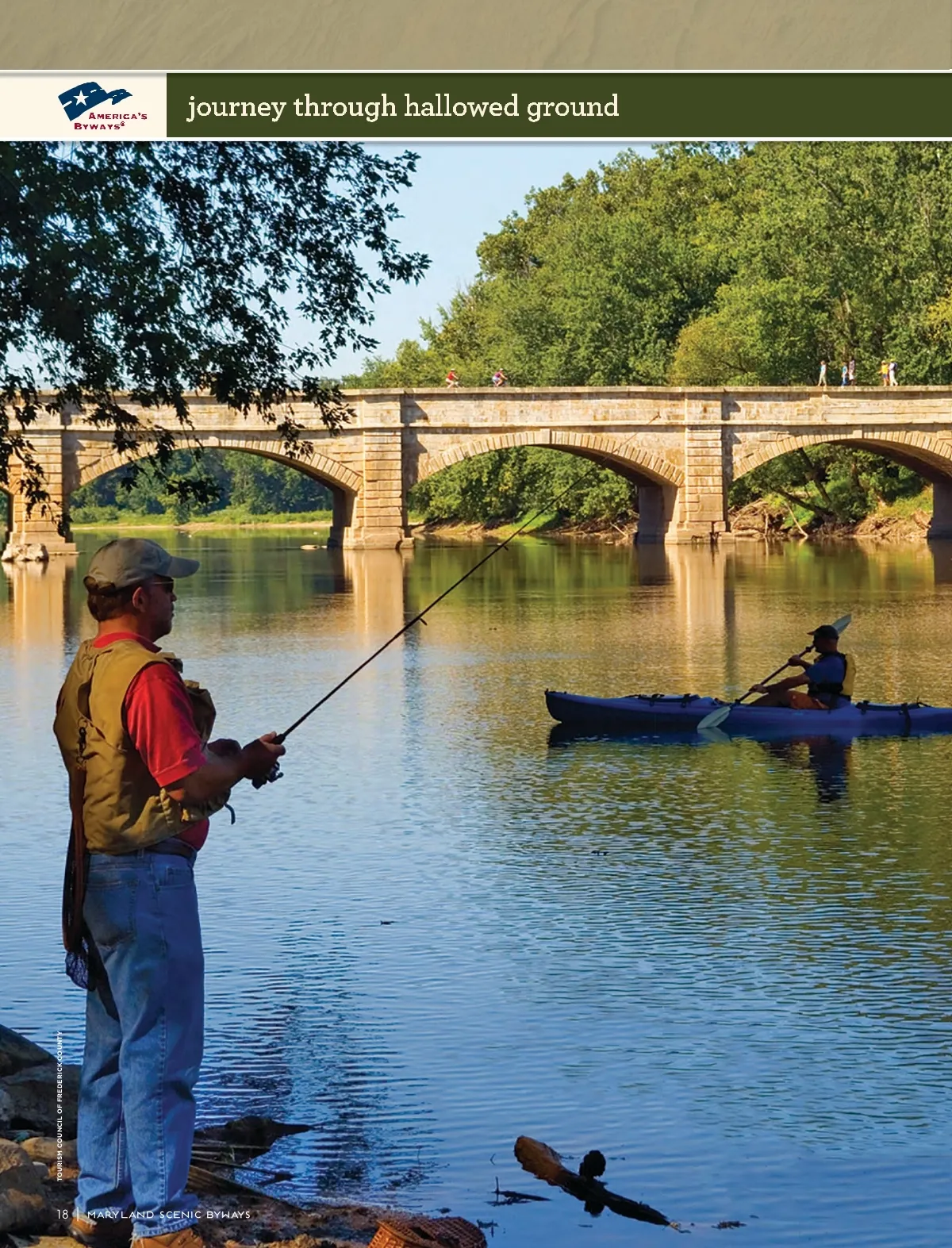
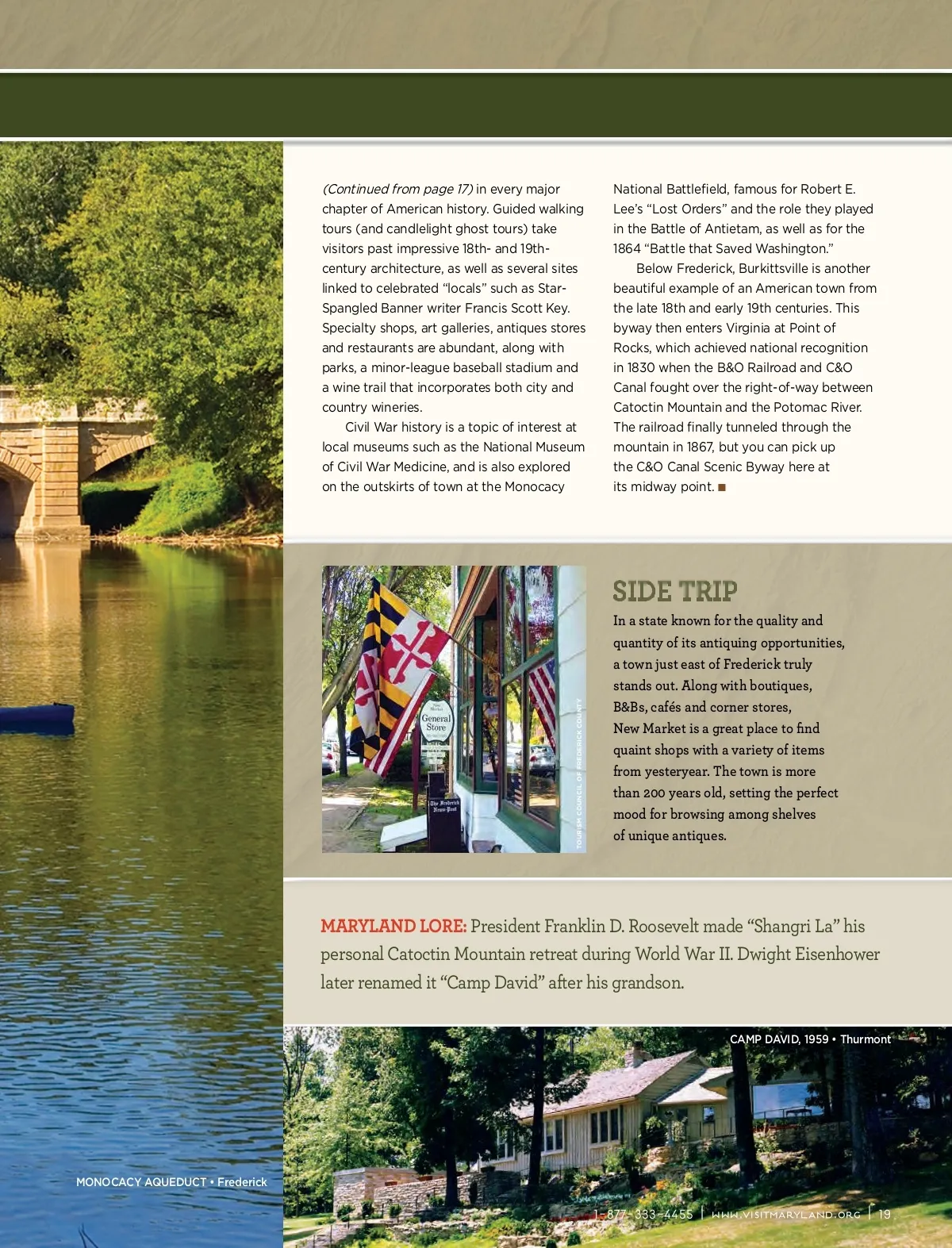
(Continued from page 17) in every major chapter of American history. Guided walking tours (and candlelight ghost tours) take visitors past impressive 18th-and 19th-century architecture, as well as several sites linked to celebrated “locals” such as Star-Spangled Banner writer Francis Scott Key. Specialty shops, art galleries, antiques stores and restaurants are abundant, along with parks, a minor-league baseball stadium and a wine trail that incorporates both city and country wineries. Civil War history is a topic of interest at local museums such as the National Museum of Civil War Medicine, and is also explored on the outskirts of town at the Monocacy National Battlefi eld, famous for Robert E. Lee’s “Lost Orders” and the role they played in the Battle of Antietam, as well as for the 1864 “Battle that Saved Washington.” Below Frederick, Burkittsville is another beautiful example of an American town from the late 18th and early 19th centuries. This byway then enters Virginia at Point of Rocks, which achieved national recognition in 1830 when the B&O Railroad and C&O Canal fought over the right-of-way between Catoctin Mountain and the Potomac River. The railroad fi nally tunneled through the mountain in 1867, but you can pick up the C&O Canal Scenic Byway here at its midway point. ■ SIDE TRIP MARYLAND LORE: President Franklin D. Roosevelt made “Shangri La” his personal Catoctin Mountain retreat during World War II. Dwight Eisenhower later renamed it “Camp David” after his grandson. CAMP DAVID, 1959 • Thurmont MONOCACY AQUEDUCT • Frederick TOURISM COUNCIL OF FREDERICK COUNTY In a state known for the quality and quantity of its antiquing opportunities, a town just east of Frederick truly stands out. Along with boutiques, B&Bs, cafés and corner stores, New Market is a great place to fi nd quaint shops with a variety of items from yesteryear. The town is more than 200 years old, setting the perfect mood for browsing among shelves of unique antiques. 1-877-333-4455 | www.visitmaryland.org | 19
MD Scenic Byways Digital Guide: Page 19