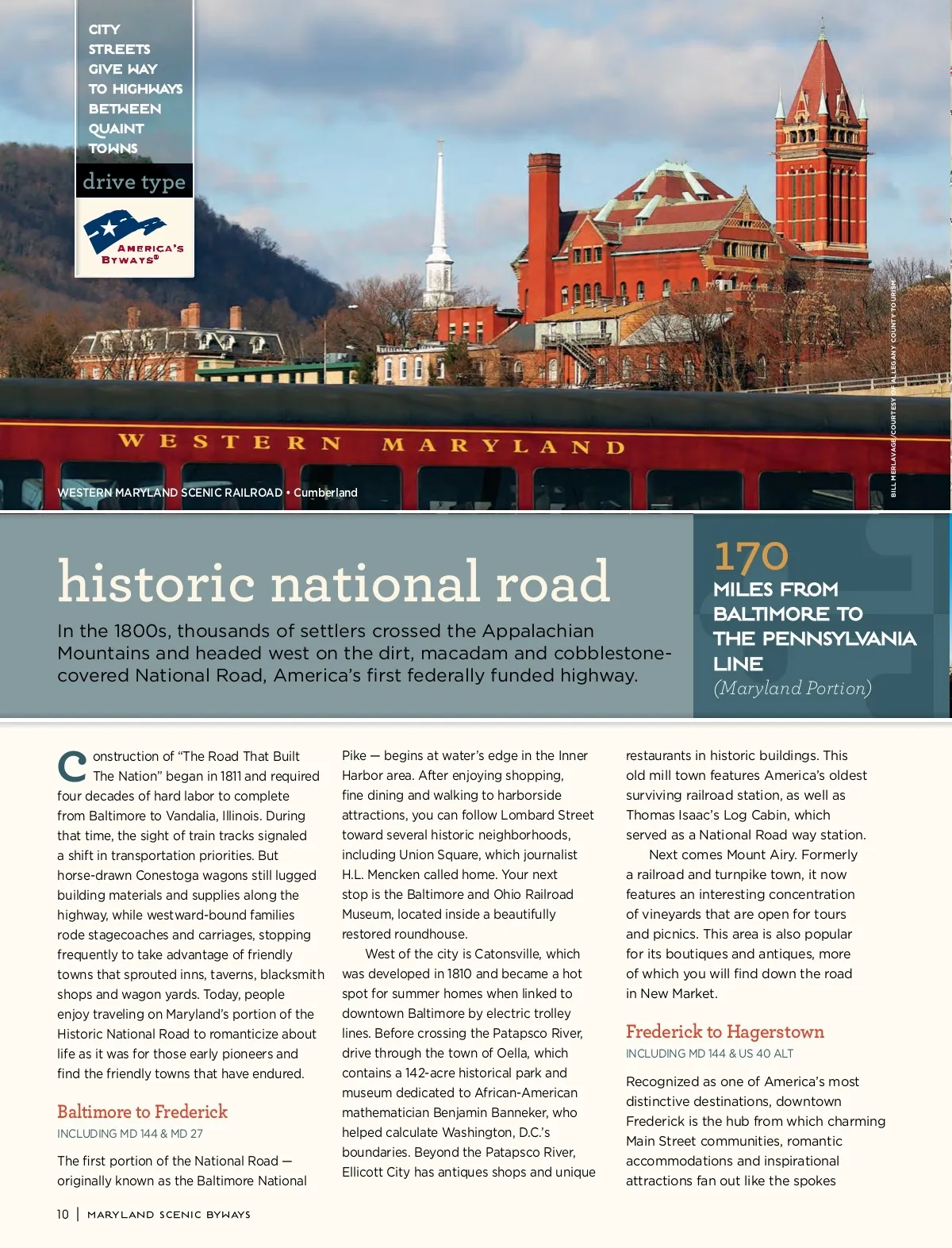
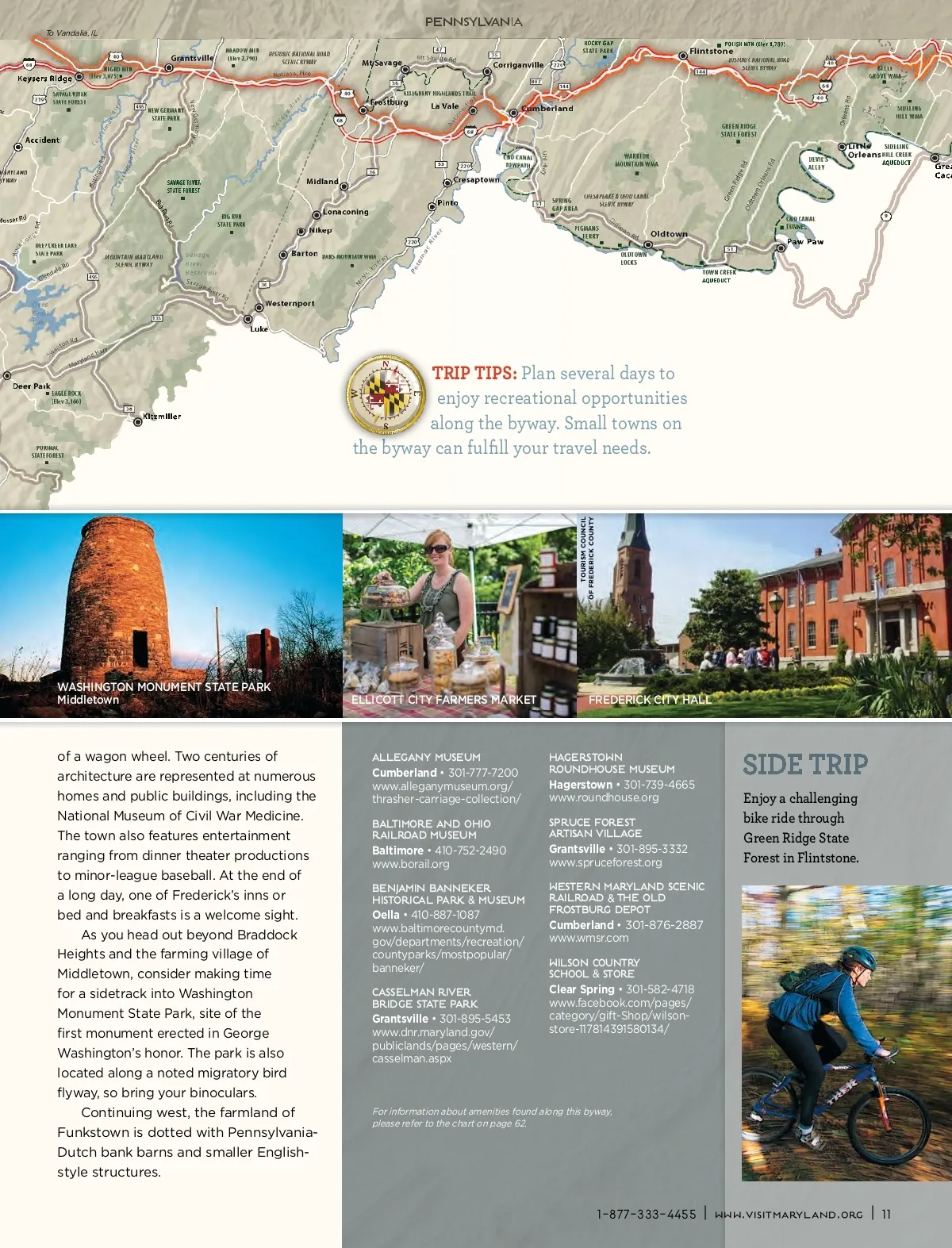
drive type city streets give way to highways between quaint towns R MOUNTAIN M SCENIC B M WESTERN MARYLAND SCENIC RAILROAD • Cumberland historic national road In the 1800s, thousands of settlers crossed the Appalachian Mountains and headed west on the dirt, macadam and cobblestone-covered National Road, America’s fi rst federally funded highway. 170 miles from baltimore to the pennsylvania line (Maryland Portion) c onstruction of “The Road That Built The Nation” began in 1811 and required four decades of hard labor to complete from Baltimore to Vandalia, Illinois. During that time, the sight of train tracks signaled a shift in transportation priorities. But horse-drawn Conestoga wagons still lugged building materials and supplies along the highway, while westward-bound families rode stagecoaches and carriages, stopping frequently to take advantage of friendly towns that sprouted inns, taverns, blacksmith shops and wagon yards. Today, people enjoy traveling on Maryland’s portion of the Historic National Road to romanticize about life as it was for those early pioneers and fi nd the friendly towns that have endured. Pike — begins at water’s edge in the Inner Harbor area. After enjoying shopping, fi ne dining and walking to harborside attractions, you can follow Lombard Street toward several historic neighborhoods, including Union Square, which journalist H.L. Mencken called home. Your next stop is the Baltimore and Ohio Railroad Museum, located inside a beautifully restored roundhouse. West of the city is Catonsville, which was developed in 1810 and became a hot spot for summer homes when linked to downtown Baltimore by electric trolley lines. Before crossing the Patapsco River, drive through the town of Oella, which contains a 142-acre historical park and museum dedicated to African-American mathematician Benjamin Banneker, who helped calculate Washington, D.C.’s boundaries. Beyond the Patapsco River, Ellicott City has antiques shops and unique restaurants in historic buildings. This old mill town features America’s oldest surviving railroad station, as well as Thomas Isaac’s Log Cabin, which served as a National Road way station. Next comes Mount Airy. Formerly a railroad and turnpike town, it now features an interesting concentration of vineyards that are open for tours and picnics. This area is also popular for its boutiques and antiques, more of which you will fi nd down the road in New Market. Frederick to Hagerstown INCLUDING MD 144 & US 40 ALT Recognized as one of America’s most distinctive destinations, downtown Frederick is the hub from which charming Main Street communities, romantic accommodations and inspirational attractions fan out like the spokes Baltimore to Frederick INCLUDING MD 144 & MD 27 The fi rst portion of the National Road — originally known as the Baltimore National 10 | maryland scenic byways BILL MERLAVAGE/COURTESY OF ALLEGANY COUNTY TOURISM
MD Scenic Byways Digital Guide: Page 10