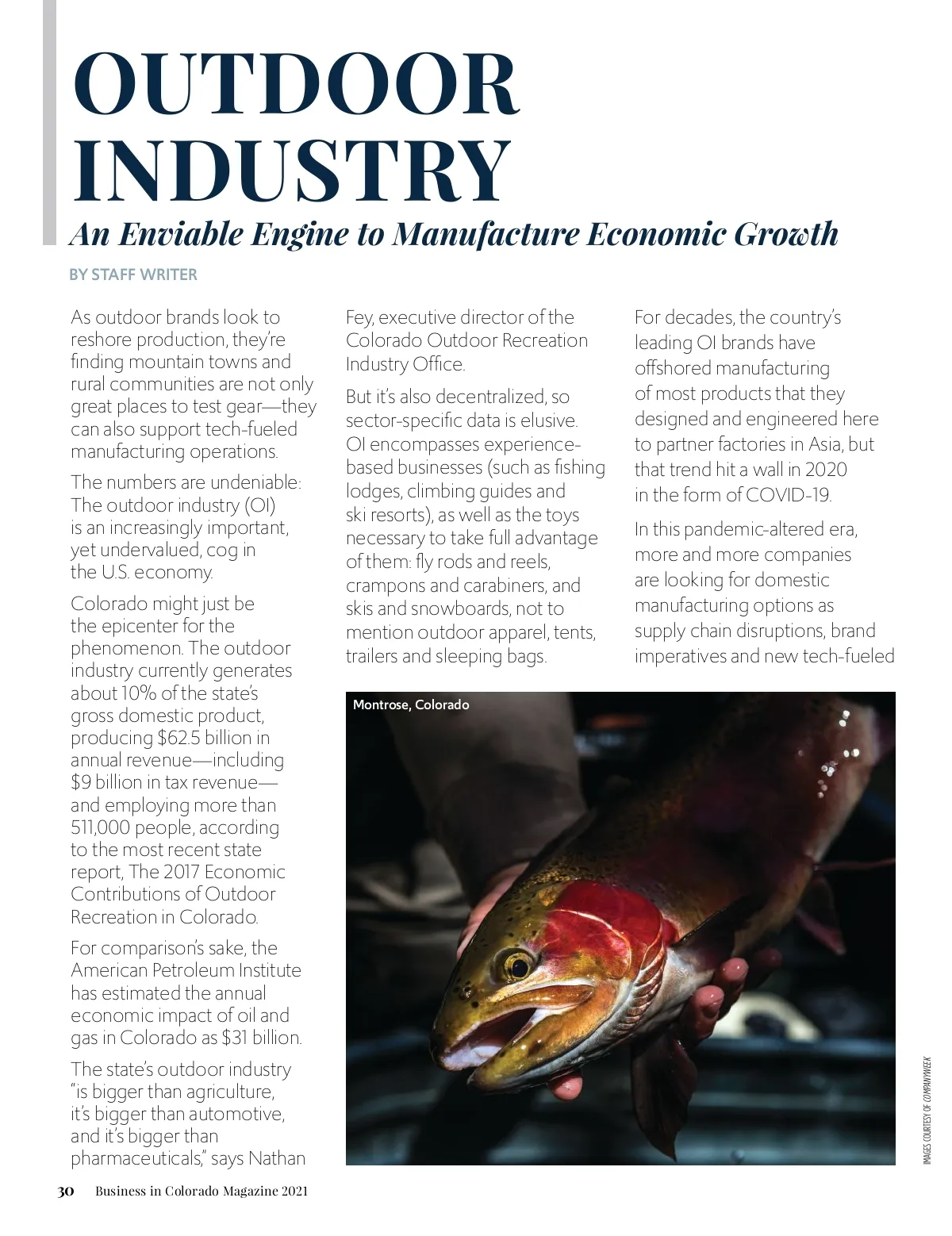
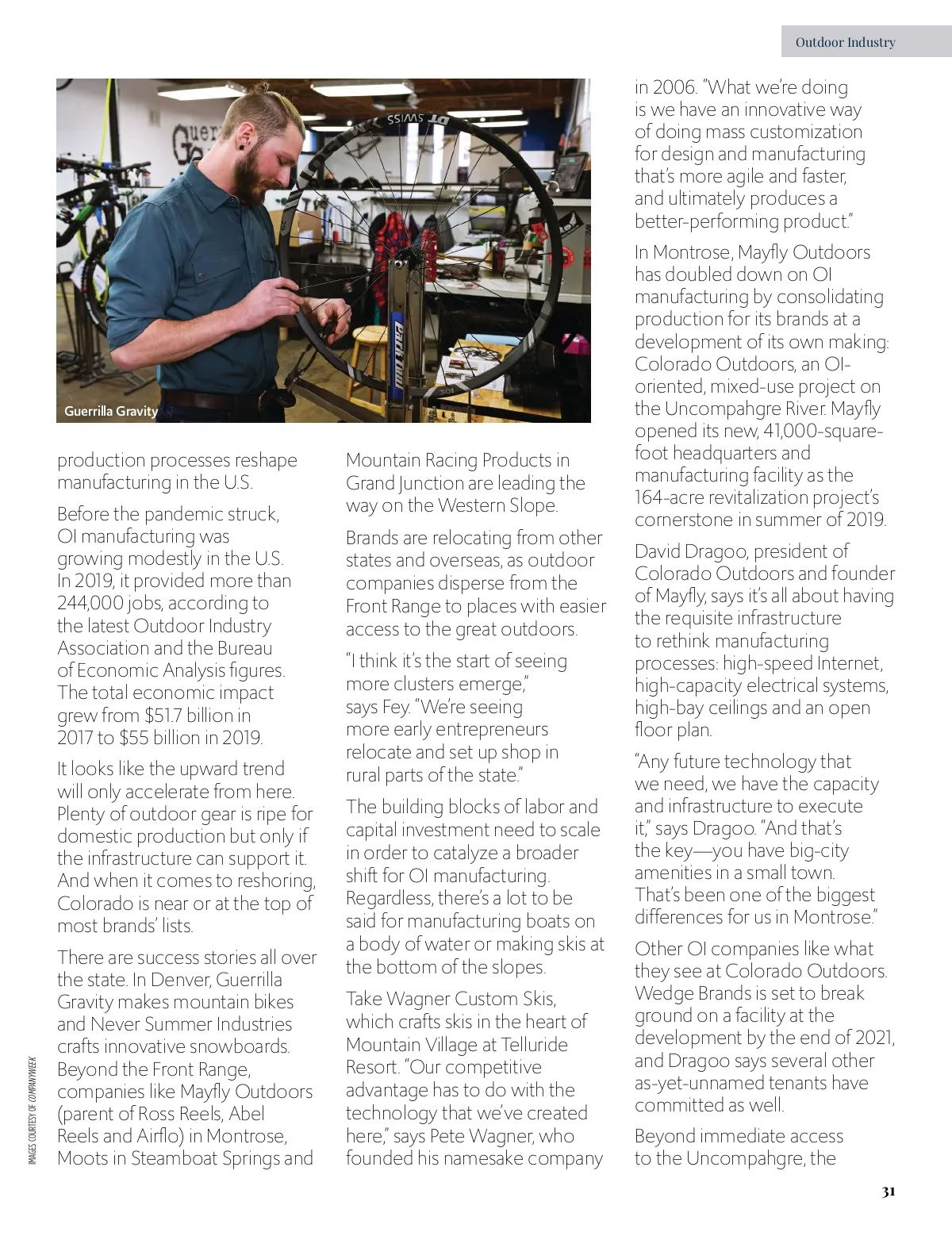
An Enviable Engine to Manufacture Economic Growth BY STAFF WRITER OUTDOOR INDUSTRY As outdoor brands look to reshore production, they’re finding mountain towns and rural communities are not only great places to test gear—they can also support tech-fueled manufacturing operations. The numbers are undeniable: The outdoor industry (OI) is an increasingly important, yet undervalued, cog in the U.S. economy. Colorado might just be the epicenter for the phenomenon. The outdoor industry currently generates about 10% of the state’s gross domestic product, producing $62.5 billion in annual revenue—including $9 billion in tax revenue— and employing more than 511,000 people, according to the most recent state report, The 2017 Economic Contributions of Outdoor Recreation in Colorado. For comparison’s sake, the American Petroleum Institute has estimated the annual economic impact of oil and gas in Colorado as $31 billion. The state’s outdoor industry “is bigger than agriculture, it’s bigger than automotive, and it’s bigger than pharmaceuticals,” says Nathan 30 Business in Colorado Magazine 2021 Fey, executive director of the Colorado Outdoor Recreation Industry Office. But it’s also decentralized, so sector-specific data is elusive. OI encompasses experience-based businesses (such as fishing lodges, climbing guides and ski resorts), as well as the toys necessary to take full advantage of them: fly rods and reels, crampons and carabiners, and skis and snowboards, not to mention outdoor apparel, tents, trailers and sleeping bags. Montrose, Colorado For decades, the country’s leading OI brands have offshored manufacturing of most products that they designed and engineered here to partner factories in Asia, but that trend hit a wall in 2020 in the form of COVID-19. In this pandemic-altered era, more and more companies are looking for domestic manufacturing options as supply chain disruptions, brand imperatives and new tech-fueled IMAGES COURTESY OF COMPANYWEEK
Business in Colorado May 2021: Page 30