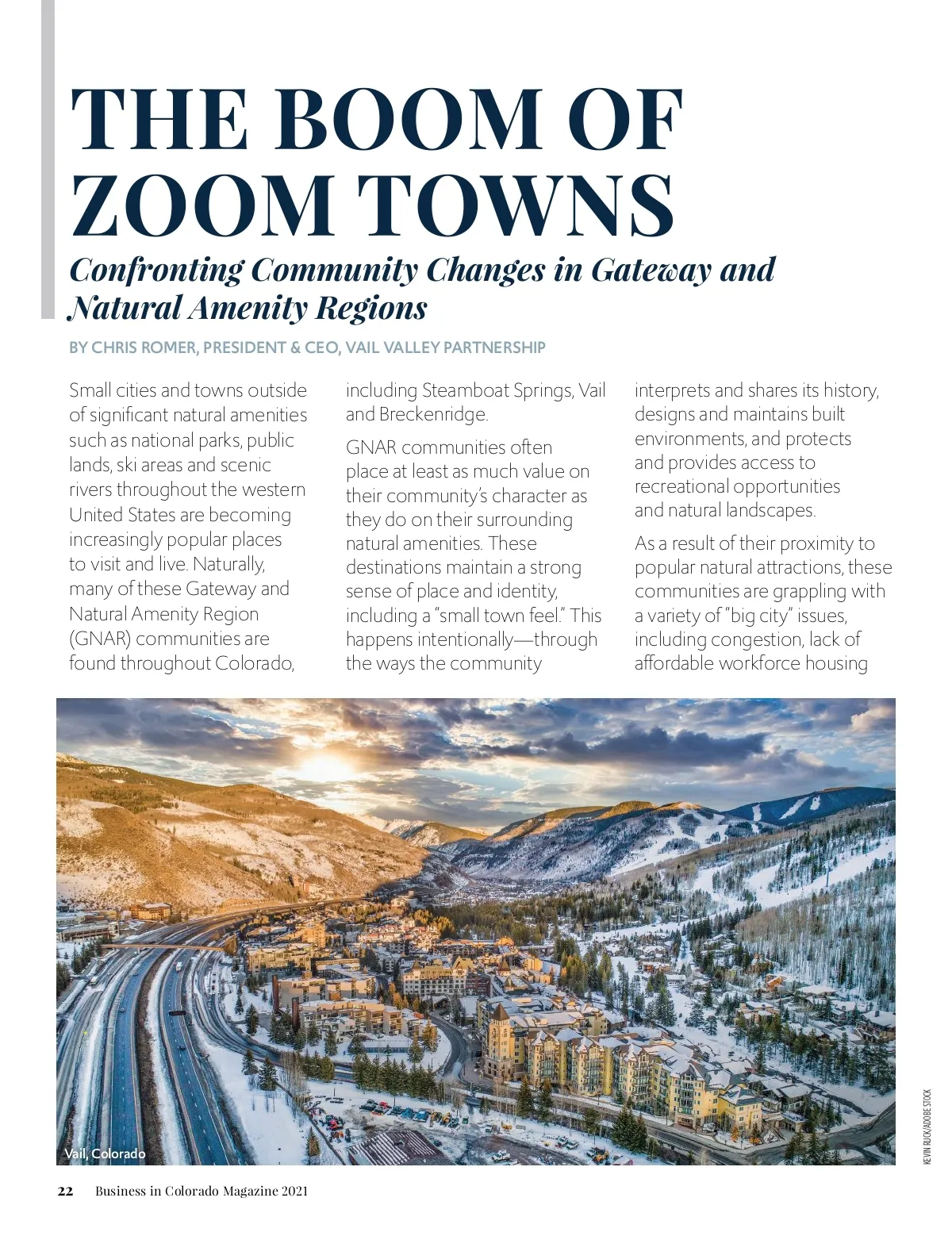
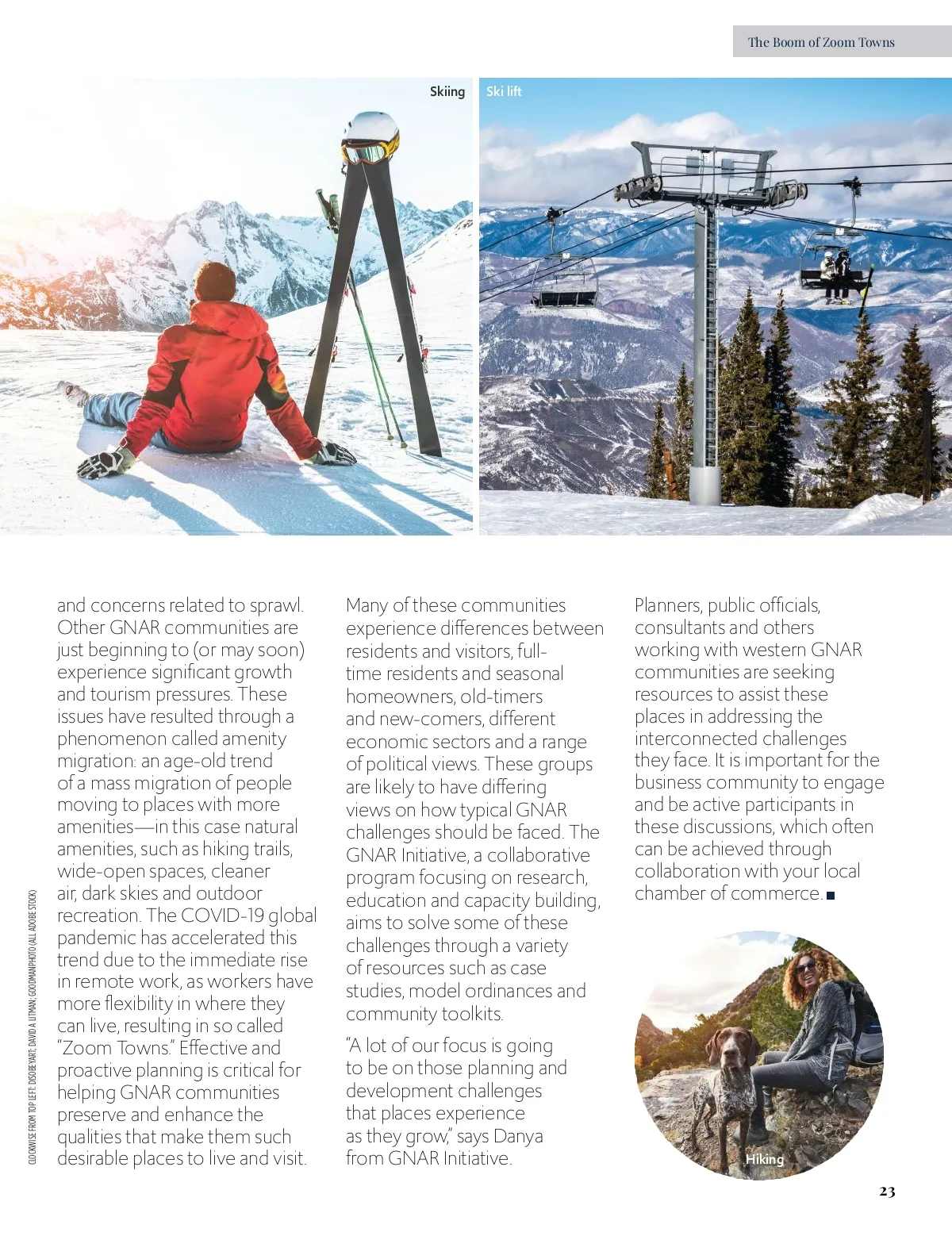
The Boom of Zoom Towns Skiing Ski lift and concerns related to sprawl. Other GNAR communities are just beginning to (or may soon) experience significant growth and tourism pressures. These issues have resulted through a phenomenon called amenity migration: an age-old trend of a mass migration of people moving to places with more amenities—in this case natural amenities, such as hiking trails, wide-open spaces, cleaner air, dark skies and outdoor recreation. The COVID-19 global pandemic has accelerated this trend due to the immediate rise in remote work, as workers have more flexibility in where they can live, resulting in so called “Zoom Towns.” Effective and proactive planning is critical for helping GNAR communities preserve and enhance the qualities that make them such desirable places to live and visit. CLOCKWISE FROM TOP LEFT: DISOBEYART; DAVID A LITMAN; GOODMANPHOTO (ALL ADOBE STOCK) Many of these communities experience differences between residents and visitors, full-time residents and seasonal homeowners, old-timers and new-comers, different economic sectors and a range of political views. These groups are likely to have differing views on how typical GNAR challenges should be faced. The GNAR Initiative, a collaborative program focusing on research, education and capacity building, aims to solve some of these challenges through a variety of resources such as case studies, model ordinances and community toolkits. “A lot of our focus is going to be on those planning and development challenges that places experience as they grow,” says Danya from GNAR Initiative. Planners, public officials, consultants and others working with western GNAR communities are seeking resources to assist these places in addressing the interconnected challenges they face. It is important for the business community to engage and be active participants in these discussions, which often can be achieved through collaboration with your local chamber of commerce. Hiking 23
Business in Colorado May 2021: Page 23