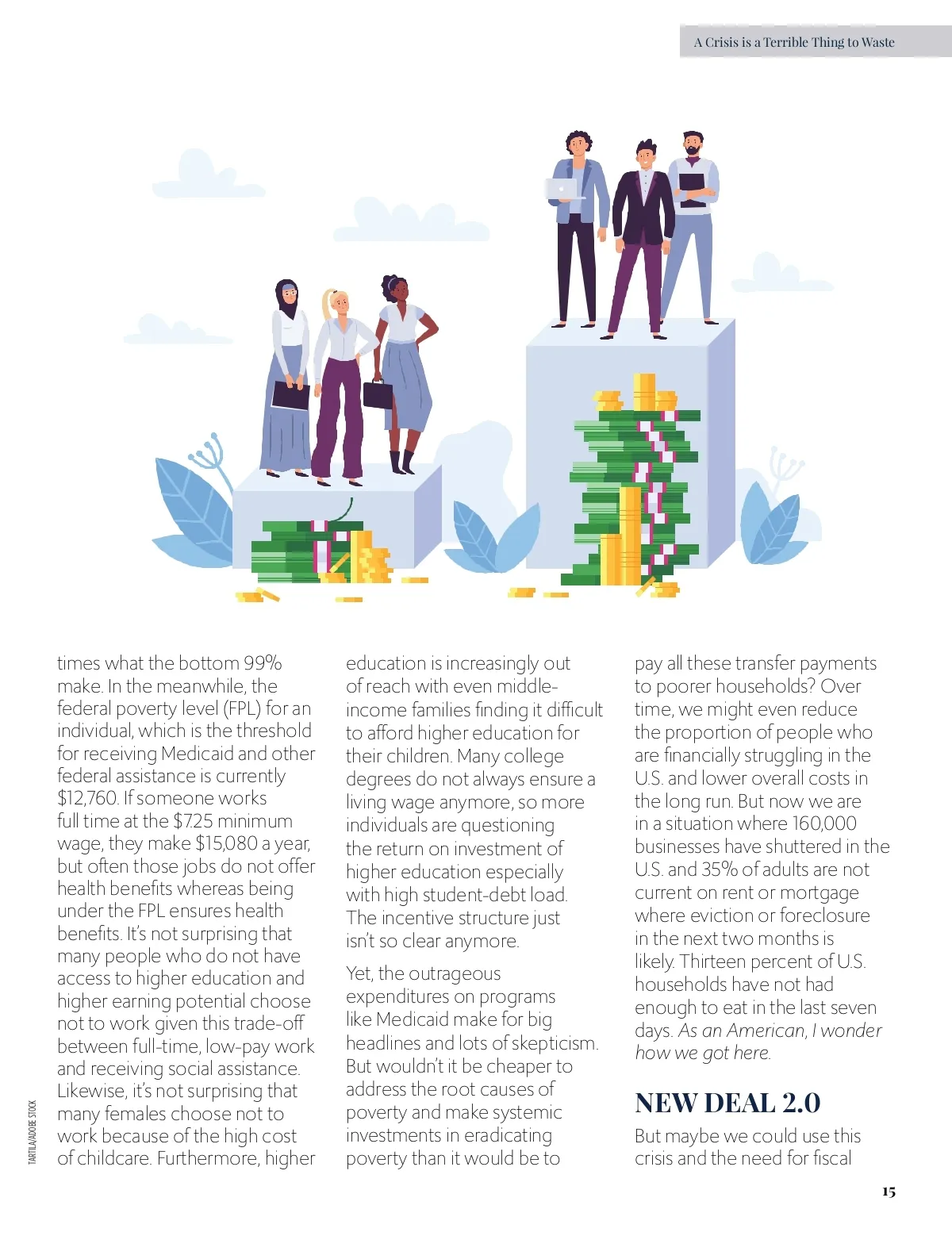
A Crisis is a Terrible Thing to Waste times what the bottom 99% make. In the meanwhile, the federal poverty level (FPL) for an individual, which is the threshold for receiving Medicaid and other federal assistance is currently $12,760. If someone works full time at the $7.25 minimum wage, they make $15,080 a year, but often those jobs do not offer health benefits whereas being under the FPL ensures health benefits. It’s not surprising that many people who do not have access to higher education and higher earning potential choose not to work given this trade-off between full-time, low-pay work and receiving social assistance. Likewise, it’s not surprising that many females choose not to work because of the high cost of childcare. Furthermore, higher education is increasingly out of reach with even middle-income families finding it difficult to afford higher education for their children. Many college degrees do not always ensure a living wage anymore, so more individuals are questioning the return on investment of higher education especially with high student-debt load. The incentive structure just isn’t so clear anymore. Yet, the outrageous expenditures on programs like Medicaid make for big headlines and lots of skepticism. But wouldn’t it be cheaper to address the root causes of poverty and make systemic investments in eradicating poverty than it would be to pay all these transfer payments to poorer households? Over time, we might even reduce the proportion of people who are financially struggling in the U.S. and lower overall costs in the long run. But now we are in a situation where 160,000 businesses have shuttered in the U.S. and 35% of adults are not current on rent or mortgage where eviction or foreclosure in the next two months is likely. Thirteen percent of U.S. households have not had enough to eat in the last seven days. As an American, I wonder how we got here. TARTILA/ADOBE STOCK NEW DEAL 2.0 But maybe we could use this crisis and the need for fiscal 15
Business in Colorado May 2021: Page 15