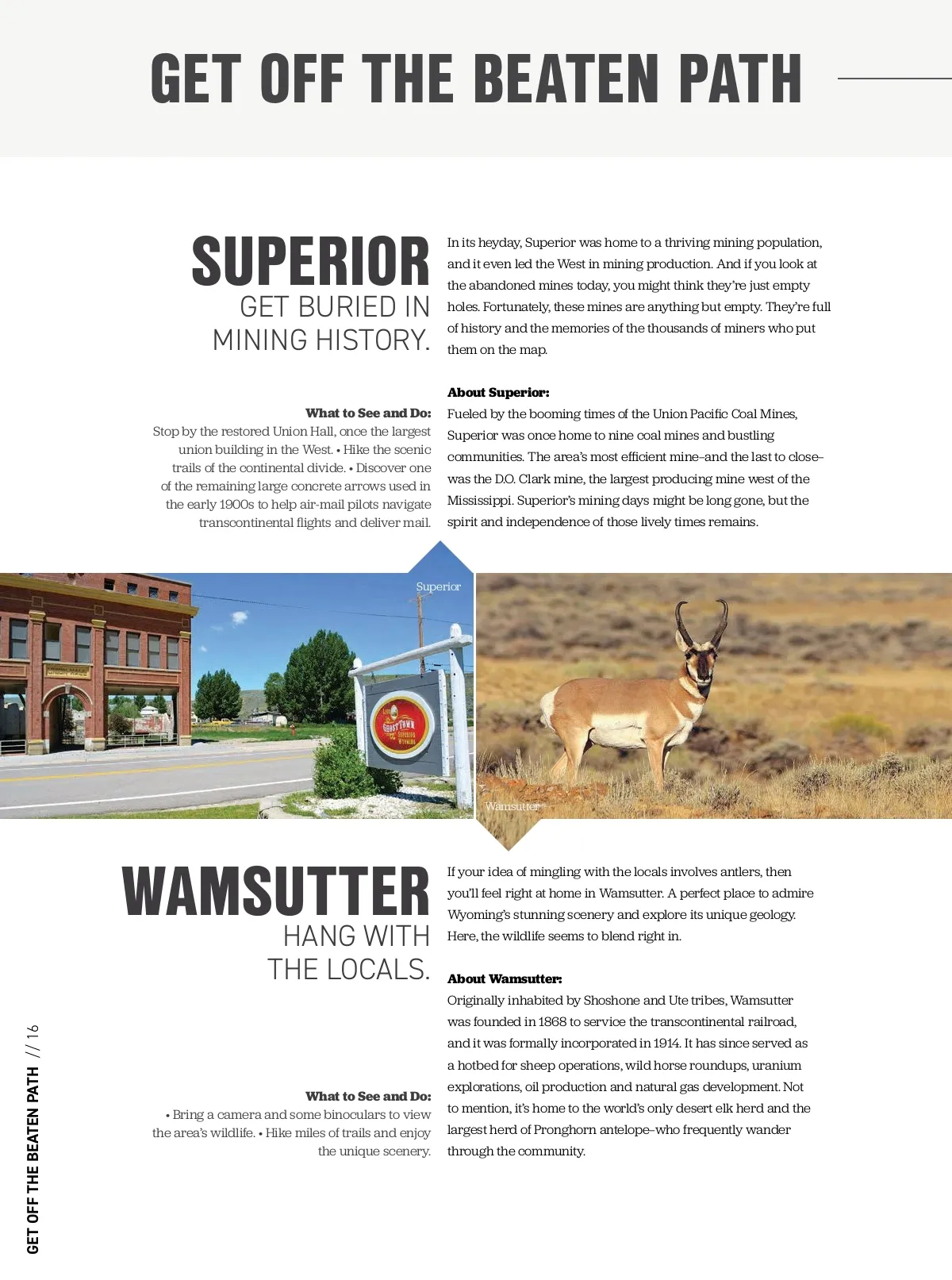
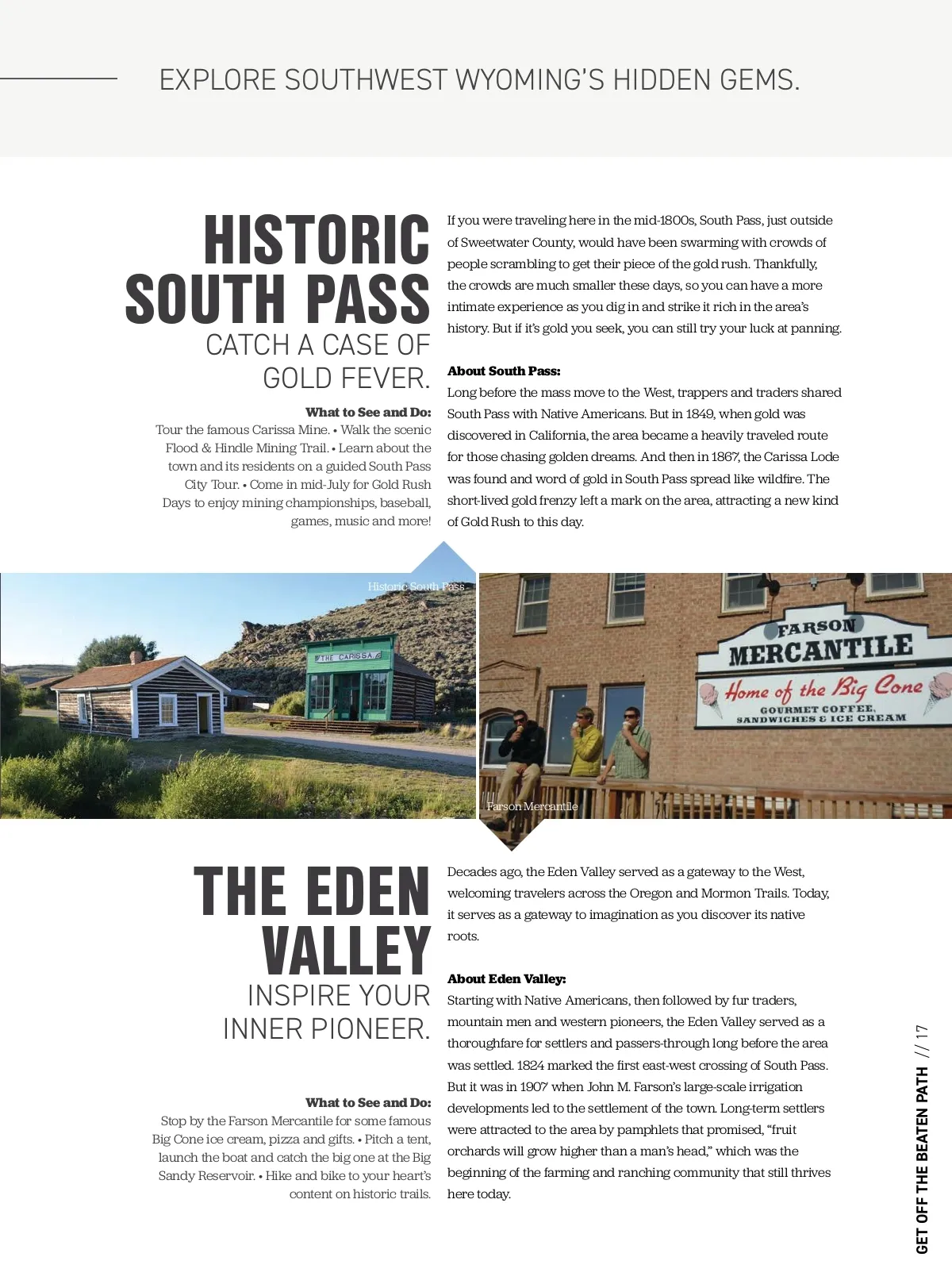
GET OFF THE BEATEN PATH SUPERIOR GET BURIED IN In its heyday, Superior was home to a thriving mining population, and it even led the West in mining production. And if you look at the abandoned mines today, you might think they’re just empty holes. Fortunately, these mines are anything but empty. They’re full of history and the memories of the thousands of miners who put them on the map. About Superior: What to See and Do: Stop by the restored Union Hall, once the largest union building in the West. • Hike the scenic trails of the continental divide. • Discover one of the remaining large concrete arrows used in the early 1900s to help air-mail pilots navigate transcontinental flights and deliver mail. Fueled by the booming times of the Union Pacific Coal Mines, Superior was once home to nine coal mines and bustling communities. The area’s most efficient mine—and the last to close— was the D.O. Clark mine, the largest producing mine west of the Mississippi. Superior’s mining days might be long gone, but the spirit and independence of those lively times remains. MINING HISTORY. Superior Wamsutter WAMSUTTER HANG WITH GET OFF THE BEATEN PATH // 16 If your idea of mingling with the locals involves antlers, then you’ll feel right at home in Wamsutter. A perfect place to admire Wyoming’s stunning scenery and explore its unique geology. Here, the wildlife seems to blend right in. About Wamsutter: Originally inhabited by Shoshone and Ute tribes, Wamsutter was founded in 1868 to service the transcontinental railroad, and it was formally incorporated in 1914. It has since served as a hotbed for sheep operations, wild horse roundups, uranium explorations, oil production and natural gas development. Not to mention, it’s home to the world’s only desert elk herd and the largest herd of Pronghorn antelope—who frequently wander through the community. THE LOCALS. What to See and Do: • Bring a camera and some binoculars to view the area’s wildlife. • Hike miles of trails and enjoy the unique scenery.
Sweetwater County Official Travel Guide 2021 Sweetwater Official Travel Guide: Page 16