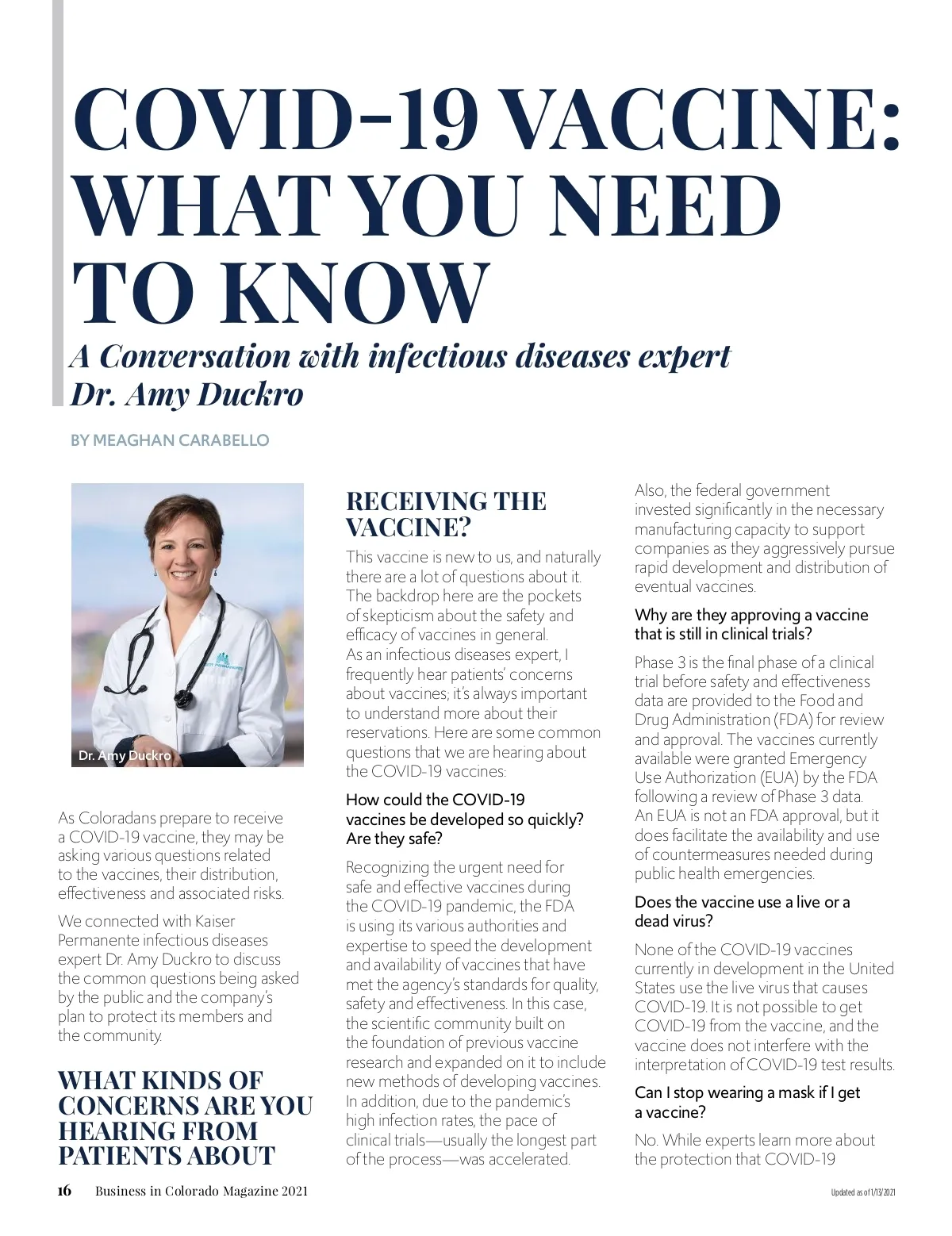
COVID-19 Vaccine: What You Need To Know vaccines provide under real-life conditions, it will be important for everyone to continue using all the tools available to control the spread of this virus, like covering your mouth and nose with a mask, washing hands often, staying at least 6 feet away from others and avoiding gatherings. People who are vaccinated may still be able to carry and transmit the virus to those who are not immunized. It will take awhile for us to be able to vaccinate enough people to generate “herd immunity,” a point at which we may be able to return to a pre-COVID lifestyle. Reaching this point will only be possible if enough members of our communities opt-in to be vaccinated. In addition to what we’ll learn about the effectiveness of the vaccine and the durability of immunity that follows, other factors, including how many people get vaccinated and how the virus is spreading in communities, will affect when recommendations can be changed about the wearing of masks and other preventive measures. For now, we have to stay the course. Will the vaccine require more than one injection? All but one of the COVID-19 vaccines currently in Phase 3 clinical trials require two shots. The same vaccine brand must be used for both shots; they are not interchangeable. The shots are given several weeks apart. Are the vaccines by different manufacturers/brands interchangeable? No. Vaccines studied by each of the manufacturers have varying two-shot schedules, and the vaccines cannot be switched. It is important to make sure that patients are given the same shots from the same manufacturer. Who will be eligible to receive the vaccine? The intent is ultimately to allow for everyone to receive a COVID-19 vaccine. However, everyone can’t be vaccinated at once. The federal government will oversee COVID-19 vaccine distribution in the U.S. and has Updated as of 1/13/2021 After nearly a year of experiencing the profound and detrimental impacts of COVID-19 in our communities, the availability of safe and highly effective COVID-19 vaccines offers the opportunity for us to protect ourselves and our loved ones from a serious infection and keep our communities thriving. Dr. Amy Duckro, Infectious Diseases Expert, Kaiser Permanente issued guidelines for prioritizing those populations that should receive the vaccine first. Each state will receive a proportion of the available vaccine consistent with their population. Federal health officials have indicated that health care workers will be among those prioritized, along with people most vulnerable to severe illness from the virus, such as those living in skilled nursing facilities. State health officials have the final authority to make decisions regarding the prioritization of populations within their state. How long will immunity from the vaccine last? Will it be longer than the natural immunity that comes from contracting COVID-19? The level of protection someone gains from having an infection (called natural immunity) varies. Since this virus is new, we don’t know how long natural immunity will last, but this is being studied. People who have had a COVID-19 infection may be vaccinated at any time following their recovery. Since it is expected that most people have some degree of immunity for the three months after an infection, the CDC suggests that people can choose to wait for this time period after infection to be vaccinated. Regarding vaccination, experts won’t know how long immunity lasts until there is more experience with the vaccines. There are currently no recommendations to adjust quarantine recommendations after an exposure, even following vaccination. As with wearing masks and distancing, this guidance reinforces the point that vaccines are one important aspect to controlling this pandemic. Will Kaiser Permanente be administering the vaccine to non-members? Yes. Kaiser Permanente is pleased to collaborate with state health officials in making the vaccine available to anyone who meets the criteria for each phase of prioritization in the vaccine distribution process. So, non-members will be able to receive a vaccine from Kaiser Permanente if they are eligible by the state health department guidelines. Will there be a cost to receive the vaccine? No. Kaiser Permanente will not charge for vaccination to protect against COVID-19. This is consistent with federal rules stating that vaccine doses purchased with U.S. taxpayer dollars are required to be given at no cost. HOW WILL KAISER PERMANENTE SUPPORT COLORADANS IN GETTING VACCINATED? After living with the COVID-19 pandemic for 10 very difficult months, we’re encouraged by the arrival of vaccines that can serve as vital tools for controlling and eventually ending 17
Business in Colorado 2021 Business in Colorado: Page 17