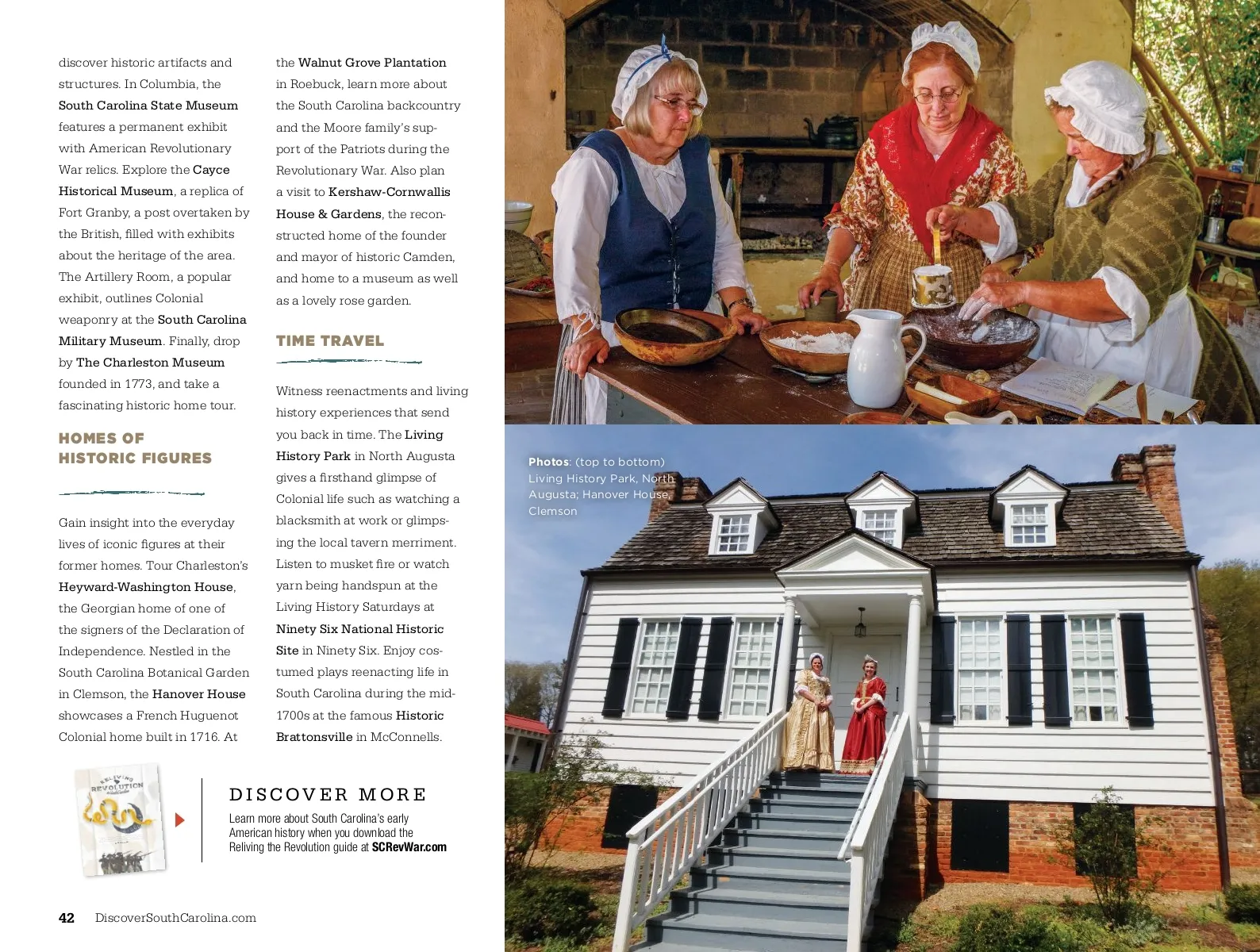
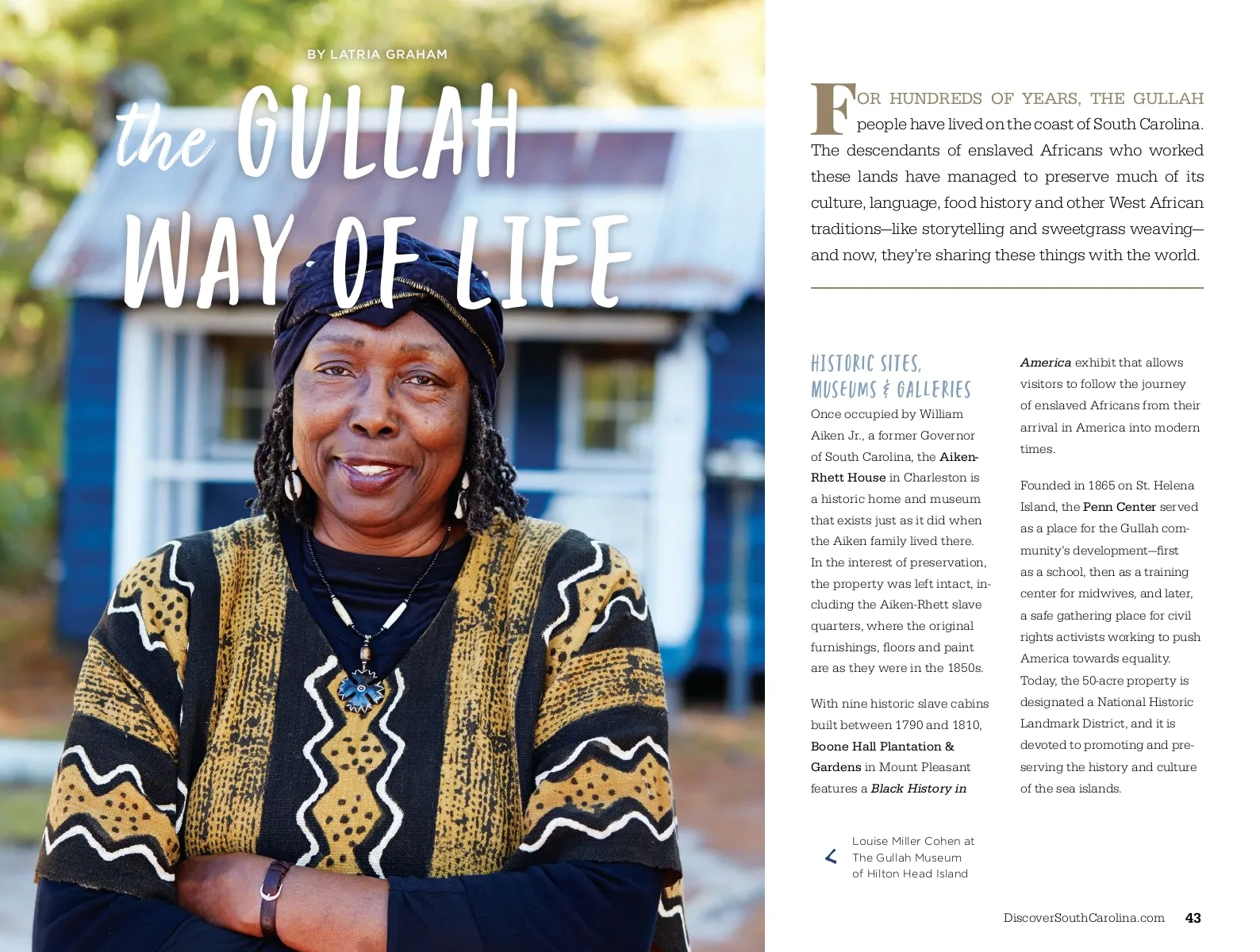
the GUlLaH BY LATRIA GRAHAM F OR HUNDREDS OF YEARS, THE GULLAH people have lived on the coast of South Carolina. The descendants of enslaved Africans who worked these lands have managed to preserve much of its culture, language, food history and other West African traditions—like storytelling and sweetgrass weaving— and now, they’re sharing these things with the world. WAY OF LIfE hIstorIc Sites, MusEuMs & GalLEries Once occupied by William Aiken Jr., a former Governor of South Carolina, the Aiken-Rhett House in Charleston is a historic home and museum that exists just as it did when the Aiken family lived there. In the interest of preservation, the property was left intact, in-cluding the Aiken-Rhett slave quarters, where the original furnishings, floors and paint are as they were in the 1850s. With nine historic slave cabins built between 1790 and 1810, Boone Hall Plantation & Gardens in Mount Pleasant features a Black History in America exhibit that allows visitors to follow the journey of enslaved Africans from their arrival in America into modern times. Founded in 1865 on St. Helena Island, the Penn Center served as a place for the Gullah com-munity’s development—first as a school, then as a training center for midwives, and later, a safe gathering place for civil rights activists working to push America towards equality. Today, the 50-acre property is designated a National Historic Landmark District, and it is devoted to promoting and pre-serving the history and culture of the sea islands. Louise Miller Cohen at The Gullah Museum of Hilton Head Island DiscoverSouthCarolina.com 43
South Carolina Vacation Guide 2021 SC Vacation Guide: Page 43