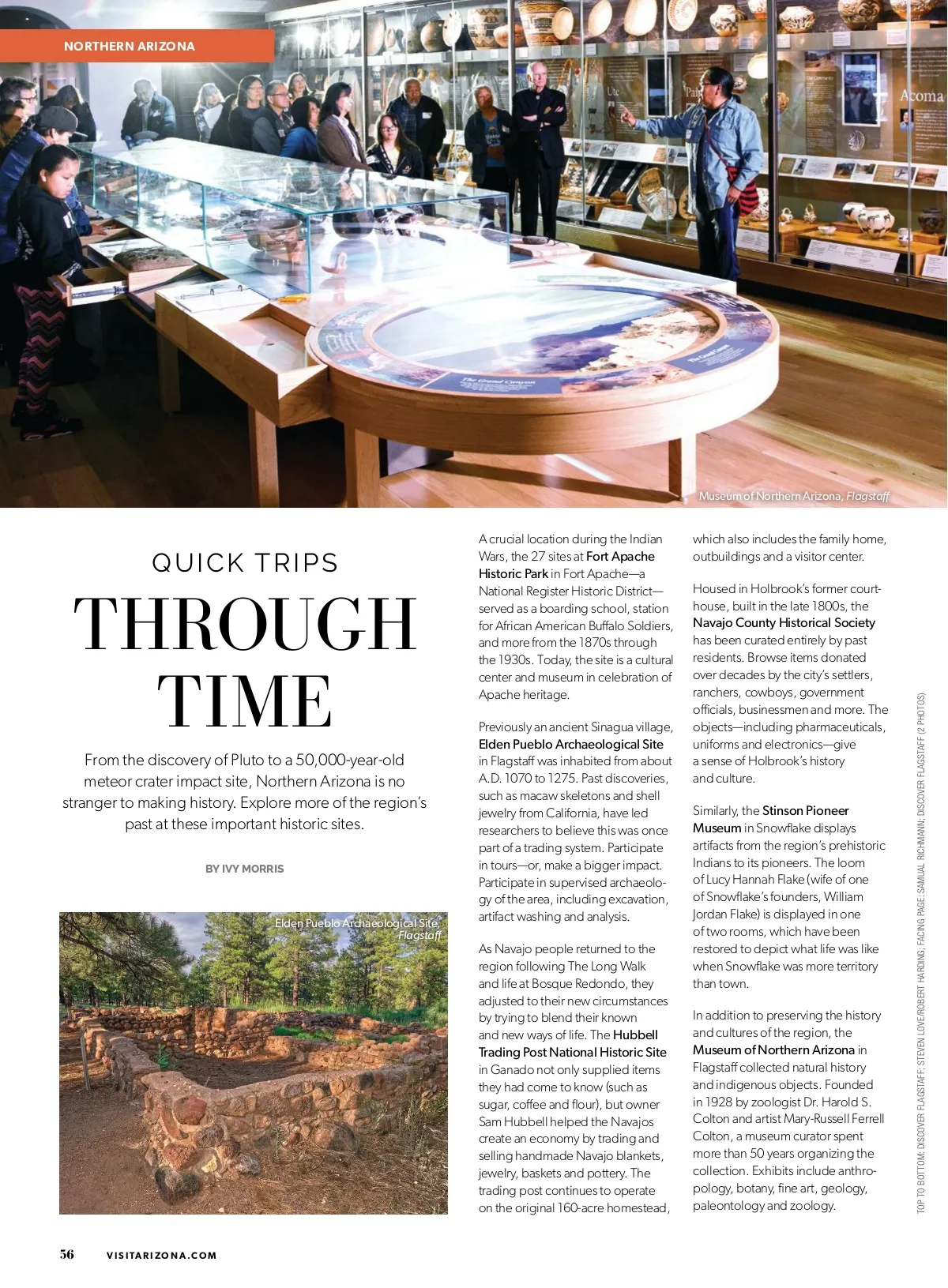
NORTHERN ARIZONA Museum of Northern Arizona, Flagstaff QUICK TRIPS From the discovery of Pluto to a 50,000-year-old meteor crater impact site, Northern Arizona is no stranger to making history. Explore more of the region’s past at these important historic sites. BY IVY MORRIS Elden Pueblo Archaeological Site, Flagstaff Previously an ancient Sinagua village, Elden Pueblo Archaeological Site in Flagstaff was inhabited from about A.D. 1070 to 1275. Past discoveries, such as macaw skeletons and shell jewelry from California, have led researchers to believe this was once part of a trading system. Participate in tours—or, make a bigger impact. Participate in supervised archaeolo-gy of the area, including excavation, artifact washing and analysis. As Navajo people returned to the region following The Long Walk and life at Bosque Redondo, they adjusted to their new circumstances by trying to blend their known and new ways of life. The Hubbell Trading Post National Historic Site in Ganado not only supplied items they had come to know (such as sugar, coffee and flour), but owner Sam Hubbell helped the Navajos create an economy by trading and selling handmade Navajo blankets, jewelry, baskets and pottery. The trading post continues to operate on the original 160-acre homestead, Similarly, the Stinson Pioneer Museum in Snowflake displays artifacts from the region’s prehistoric Indians to its pioneers. The loom of Lucy Hannah Flake (wife of one of Snowflake’s founders, William Jordan Flake) is displayed in one of two rooms, which have been restored to depict what life was like when Snowflake was more territory than town. In addition to preserving the history and cultures of the region, the Museum of Northern Arizona in Flagstaff collected natural history and indigenous objects. Founded in 1928 by zoologist Dr. Harold S. Colton and artist Mary-Russell Ferrell Colton, a museum curator spent more than 50 years organizing the collection. Exhibits include anthro-pology, botany, fine art, geology, paleontology and zoology. 56 VISITARIZONA.COM TOP TO BOTTOM: DISCOVER FLAGSTAFF; STEVEN LOVE/ROBERT HARDING; FACING PAGE: SAMUAL RICHMANN; DISCOVER FLAGSTAFF (2 PHOTOS) THROUGH TIME A crucial location during the Indian Wars, the 27 sites at Fort Apache Historic Park in Fort Apache—a National Register Historic District— served as a boarding school, station for African American Buffalo Soldiers, and more from the 1870s through the 1930s. Today, the site is a cultural center and museum in celebration of Apache heritage. which also includes the family home, outbuildings and a visitor center. Housed in Holbrook’s former court-house, built in the late 1800s, the Navajo County Historical Society has been curated entirely by past residents. Browse items donated over decades by the city’s settlers, ranchers, cowboys, government officials, businessmen and more. The objects—including pharmaceuticals, uniforms and electronics—give a sense of Holbrook’s history and culture.
Arizona Official State Travel Guide Arizona 2020-21: Page 56