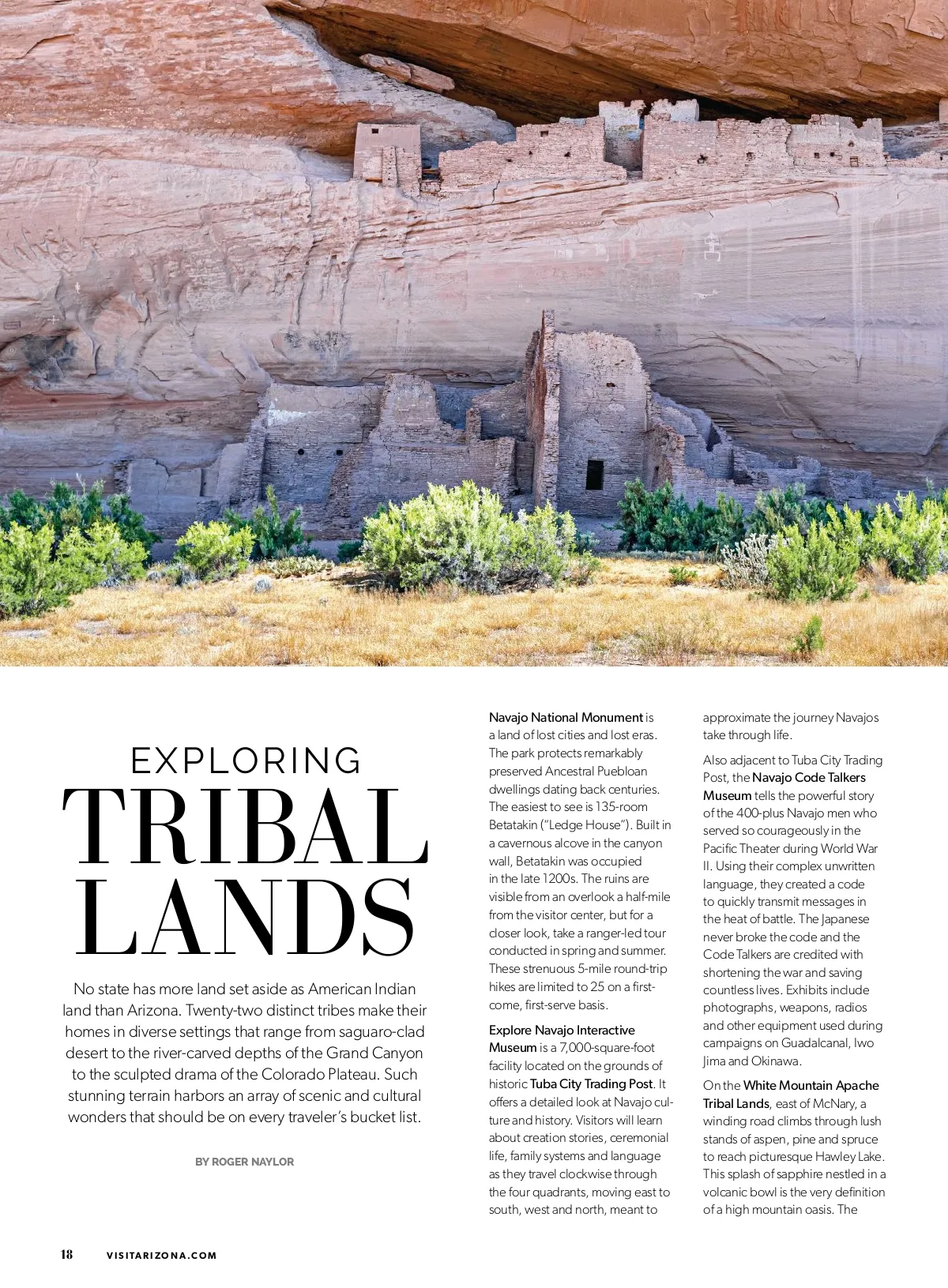
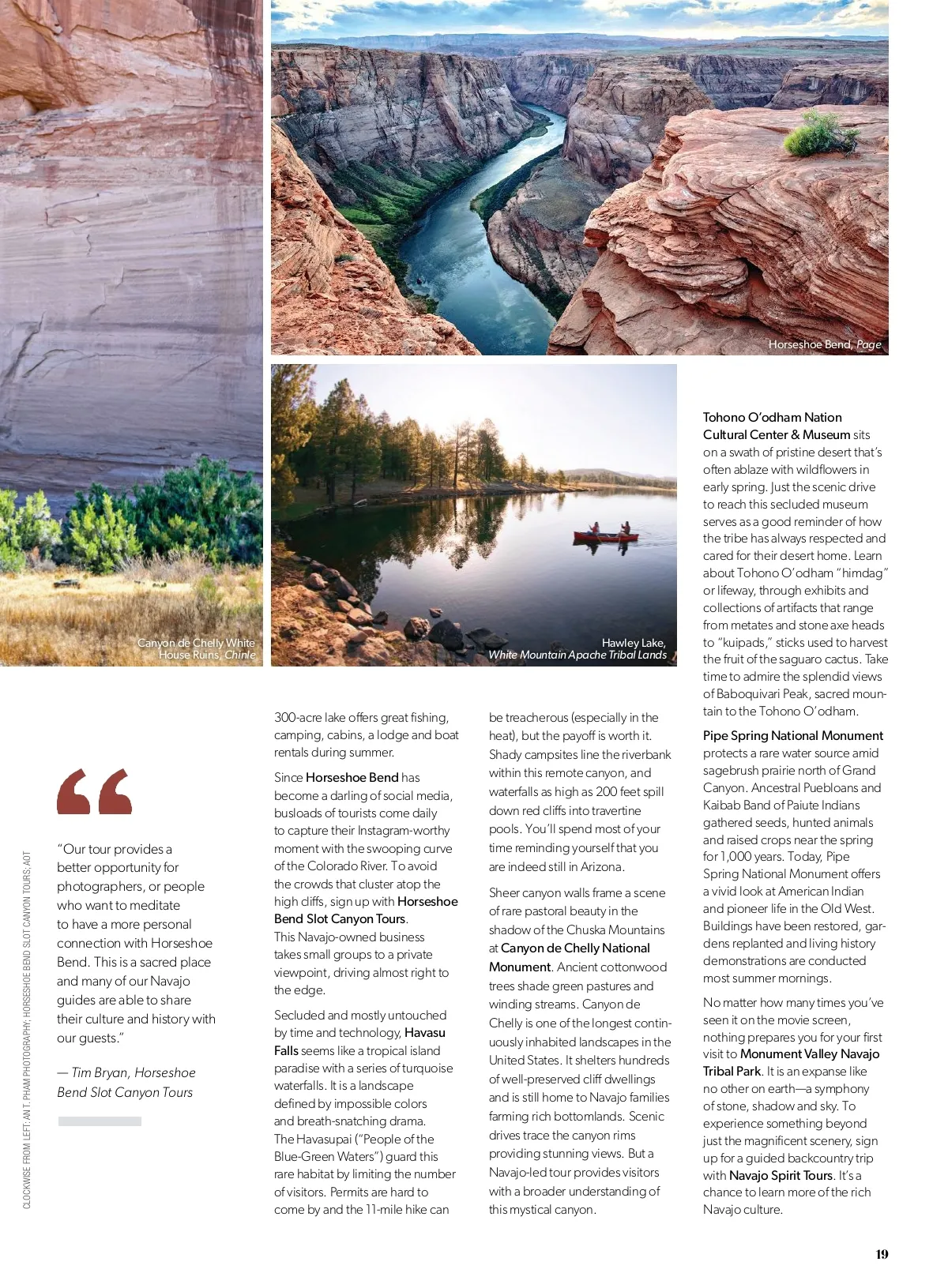
Horseshoe Bend, Page Canyon de Chelly White House Ruins, Chinle Hawley Lake, White Mountain Apache Tribal Lands 300-acre lake offers great fishing, camping, cabins, a lodge and boat rentals during summer. Since Horseshoe Bend has become a darling of social media, busloads of tourists come daily to capture their Instagram-worthy moment with the swooping curve of the Colorado River. To avoid the crowds that cluster atop the high cliffs, sign up with Horseshoe Bend Slot Canyon Tours . This Navajo-owned business takes small groups to a private viewpoint, driving almost right to the edge. Secluded and mostly untouched by time and technology, Havasu Falls seems like a tropical island paradise with a series of turquoise waterfalls. It is a landscape defined by impossible colors and breath-snatching drama. The Havasupai (“People of the Blue-Green Waters”) guard this rare habitat by limiting the number of visitors. Permits are hard to come by and the 11-mile hike can CLOCKWISE FROM LEFT: AN T. PHAM PHOTOGRAPHY; HORSESHOE BEND SLOT CANYON TOURS; AOT “Our tour provides a better opportunity for photographers, or people who want to meditate to have a more personal connection with Horseshoe Bend. This is a sacred place and many of our Navajo guides are able to share their culture and history with our guests.” be treacherous (especially in the heat), but the payoff is worth it. Shady campsites line the riverbank within this remote canyon, and waterfalls as high as 200 feet spill down red cliffs into travertine pools. You’ll spend most of your time reminding yourself that you are indeed still in Arizona. Sheer canyon walls frame a scene of rare pastoral beauty in the shadow of the Chuska Mountains at Canyon de Chelly National Monument . Ancient cottonwood trees shade green pastures and winding streams. Canyon de Chelly is one of the longest contin-uously inhabited landscapes in the United States. It shelters hundreds of well-preserved cliff dwellings and is still home to Navajo families farming rich bottomlands. Scenic drives trace the canyon rims providing stunning views. But a Navajo-led tour provides visitors with a broader understanding of this mystical canyon. Tohono O’odham Nation Cultural Center & Museum sits on a swath of pristine desert that’s often ablaze with wildflowers in early spring. Just the scenic drive to reach this secluded museum serves as a good reminder of how the tribe has always respected and cared for their desert home. Learn about Tohono O’odham “himdag” or lifeway, through exhibits and collections of artifacts that range from metates and stone axe heads to “kuipads,” sticks used to harvest the fruit of the saguaro cactus. Take time to admire the splendid views of Baboquivari Peak, sacred moun-tain to the Tohono O’odham. Pipe Spring National Monument protects a rare water source amid sagebrush prairie north of Grand Canyon. Ancestral Puebloans and Kaibab Band of Paiute Indians gathered seeds, hunted animals and raised crops near the spring for 1,000 years. Today, Pipe Spring National Monument offers a vivid look at American Indian and pioneer life in the Old West. Buildings have been restored, gar-dens replanted and living history demonstrations are conducted most summer mornings. No matter how many times you’ve seen it on the movie screen, nothing prepares you for your first visit to Monument Valley Navajo Tribal Park . It is an expanse like no other on earth—a symphony of stone, shadow and sky. To experience something beyond just the magnificent scenery, sign up for a guided backcountry trip with Navajo Spirit Tours . It’s a chance to learn more of the rich Navajo culture. 19 — Tim Bryan, Horseshoe Bend Slot Canyon Tours
Arizona Official State Travel Guide Arizona 2020-21: Page 19