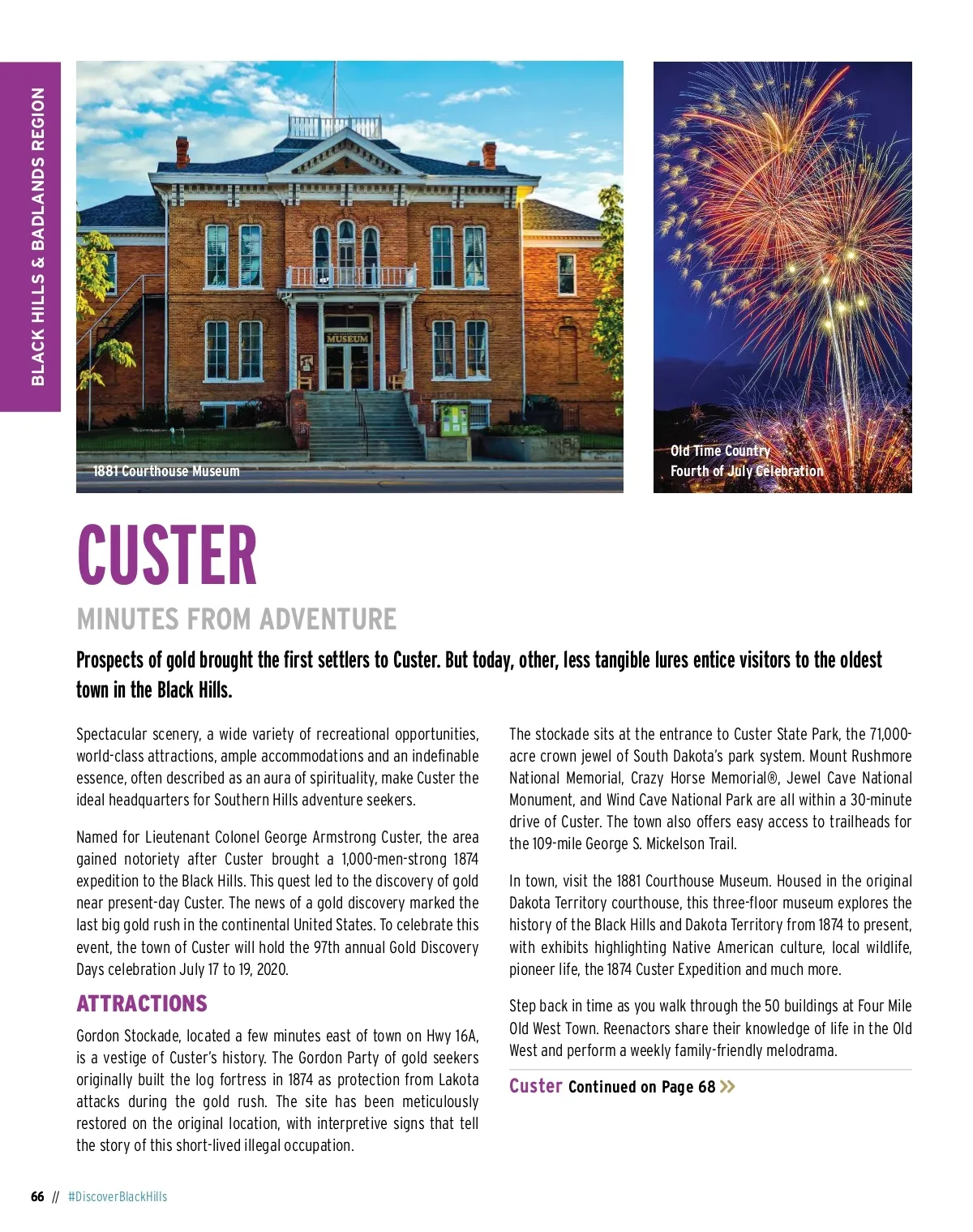
BLACK HILLS & BADLANDS REGION 1881 Courthouse Museum Old Time Country Fourth of July Celebration CUSTER MINUTES FROM ADVENTURE Prospects of gold brought the first settlers to Custer. But today, other, less tangible lures entice visitors to the oldest town in the Black Hills. Spectacular scenery, a wide variety of recreational opportunities, world-class attractions, ample accommodations and an indefinable essence, often described as an aura of spirituality, make Custer the ideal headquarters for Southern Hills adventure seekers. Named for Lieutenant Colonel George Armstrong Custer, the area gained notoriety after Custer brought a 1,000-men-strong 1874 expedition to the Black Hills. This quest led to the discovery of gold near present-day Custer. The news of a gold discovery marked the last big gold rush in the continental United States. To celebrate this event, the town of Custer will hold the 97th annual Gold Discovery Days celebration July 17 to 19, 2020. The stockade sits at the entrance to Custer State Park, the 71,000-acre crown jewel of South Dakota’s park system. Mount Rushmore National Memorial, Crazy Horse Memorial®, Jewel Cave National Monument, and Wind Cave National Park are all within a 30-minute drive of Custer. The town also offers easy access to trailheads for the 109-mile George S. Mickelson Trail. In town, visit the 1881 Courthouse Museum. Housed in the original Dakota Territory courthouse, this three-floor museum explores the history of the Black Hills and Dakota Territory from 1874 to present, with exhibits highlighting Native American culture, local wildlife, pioneer life, the 1874 Custer Expedition and much more. Step back in time as you walk through the 50 buildings at Four Mile Old West Town. Reenactors share their knowledge of life in the Old West and perform a weekly family-friendly melodrama. ATTRACTIONS Gordon Stockade, located a few minutes east of town on Hwy 16A, is a vestige of Custer’s history. The Gordon Party of gold seekers originally built the log fortress in 1874 as protection from Lakota attacks during the gold rush. The site has been meticulously restored on the original location, with interpretive signs that tell the story of this short-lived illegal occupation. 66 // #DiscoverBlackHills Custer Continued on Page 68
South Dakota Vacation Guide South Dakota Vacation Guide South Dakota Vacation Guide 2020: Page 66