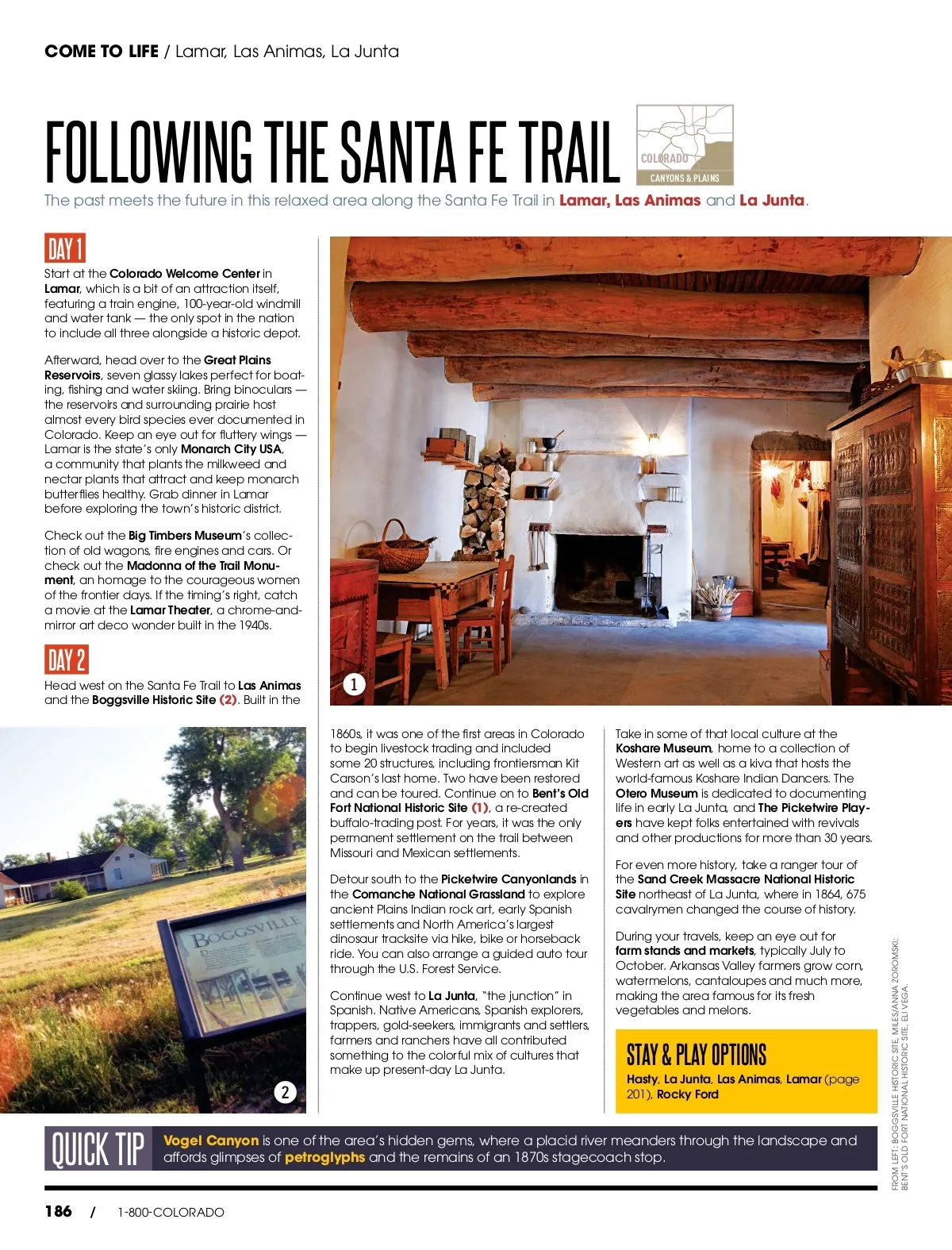
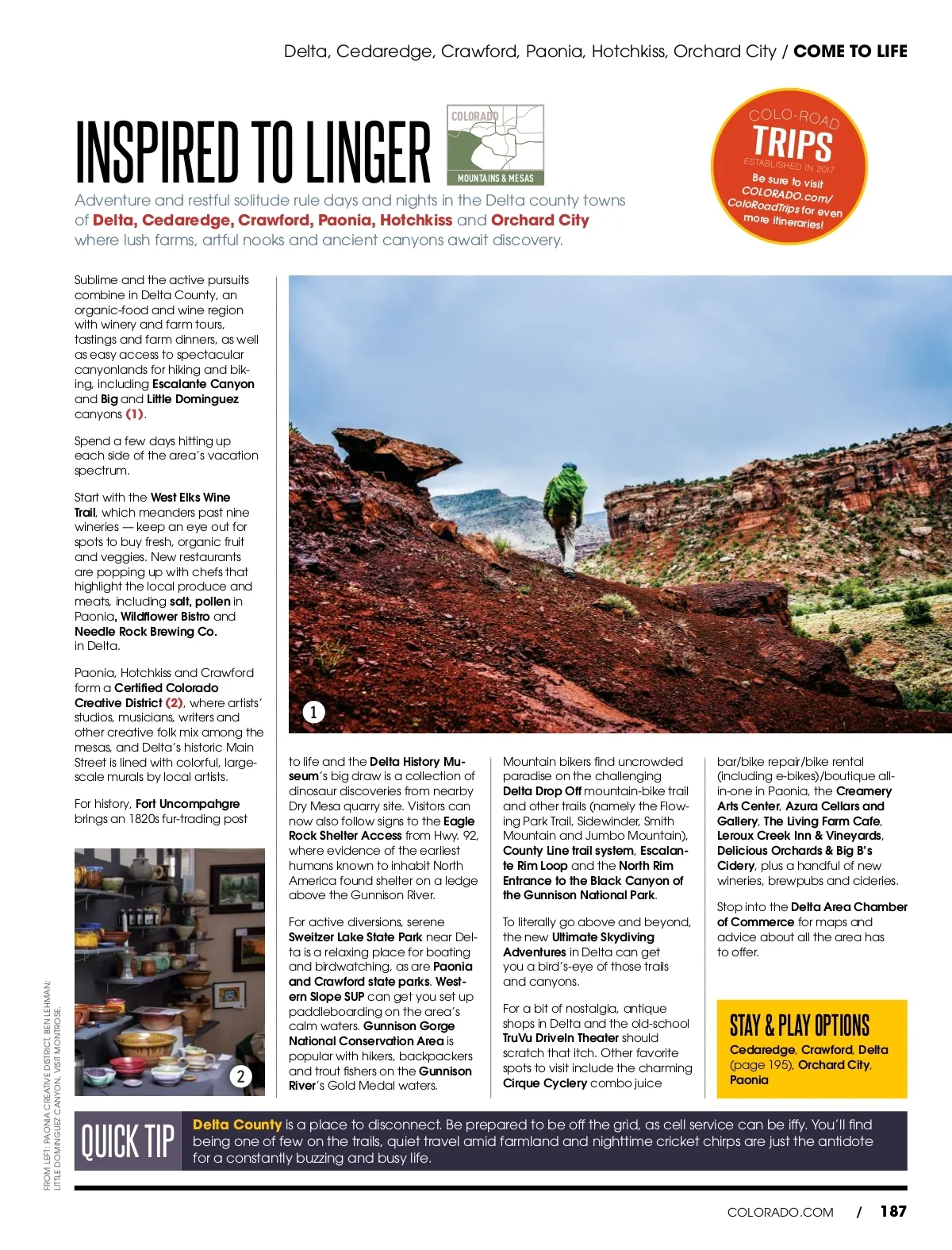
COME TO LIFE / Lamar, Las Animas, La Junta FOLLOWING THE SANTA FE TRAIL DAY 1 Start at the Colorado Welcome Center in Lamar , which is a bit of an attraction itself, featuring a train engine, 100-year-old windmill and water tank — the only spot in the nation to include all three alongside a historic depot. Afterward, head over to the Great Plains Reservoirs , seven glassy lakes perfect for boat-ing, fishing and water skiing. Bring binoculars — the reservoirs and surrounding prairie host almost every bird species ever documented in Colorado. Keep an eye out for fluttery wings — Lamar is the state’s only Monarch City USA , a community that plants the milkweed and nectar plants that attract and keep monarch butterflies healthy. Grab dinner in Lamar before exploring the town’s historic district. Check out the Big Timbers Museum ’s collec-tion of old wagons, fire engines and cars. Or check out the Madonna of the Trail Monu ment , an homage to the courageous women of the frontier days. If the timing’s right, catch a movie at the Lamar Theater , a chrome-and-mirror art deco wonder built in the 1940s. COLORADO CANYONS & PLAINS The past meets the future in this relaxed area along the Santa Fe Trail in Lamar, Las Animas and La Junta . DAY 2 Head west on the Santa Fe Trail to Las Animas and the Boggsville Historic Site (2) . Built in the 1 1860s, it was one of the first areas in Colorado to begin livestock trading and included some 20 structures, including frontiersman Kit Carson’s last home. Two have been restored and can be toured. Continue on to Bent’s Old Fort National Historic Site (1) , a re-created buffalo-trading post. For years, it was the only permanent settlement on the trail between Missouri and Mexican settlements. Detour south to the Picketwire Canyonlands in the Comanche National Grassland to explore ancient Plains Indian rock art, early Spanish settlements and North America’s largest dinosaur tracksite via hike, bike or horseback ride. You can also arrange a guided auto tour through the U.S. Forest Service. Continue west to La Junta , “the junction” in Spanish. Native Americans, Spanish explorers, trappers, gold-seekers, immigrants and settlers, farmers and ranchers have all contributed something to the colorful mix of cultures that make up present-day La Junta. Take in some of that local culture at the Koshare Museum , home to a collection of Western art as well as a kiva that hosts the world-famous Koshare Indian Dancers. The Otero Museum is dedicated to documenting life in early La Junta, and The Picketwire Play ers have kept folks entertained with revivals and other productions for more than 30 years. For even more history, take a ranger tour of the Sand Creek Massacre National Historic Site northeast of La Junta, where in 1864, 675 cavalrymen changed the course of history. FROM LEFT: BOGGSVILLE HISTORIC SITE, MILES/ANNA ZOROMSKI; BENT’S OLD FORT NATIONAL HISTORIC SITE, ELI VEGA. During your travels, keep an eye out for farm stands and markets , typically July to October. Arkansas Valley farmers grow corn, watermelons, cantaloupes and much more, making the area famous for its fresh vegetables and melons. STAY & PLAY OPTIONS Hasty , La Junta , Las Animas , Lamar (page 201), Rocky Ford 2 QUICK TIP 186 / Vogel Canyon is one of the area’s hidden gems, where a placid river meanders through the landscape and affords glimpses of petroglyphs and the remains of an 1870s stagecoach stop. 1-800-COLORADO
Colorado Official State Vacation Guide 2020: Page 186