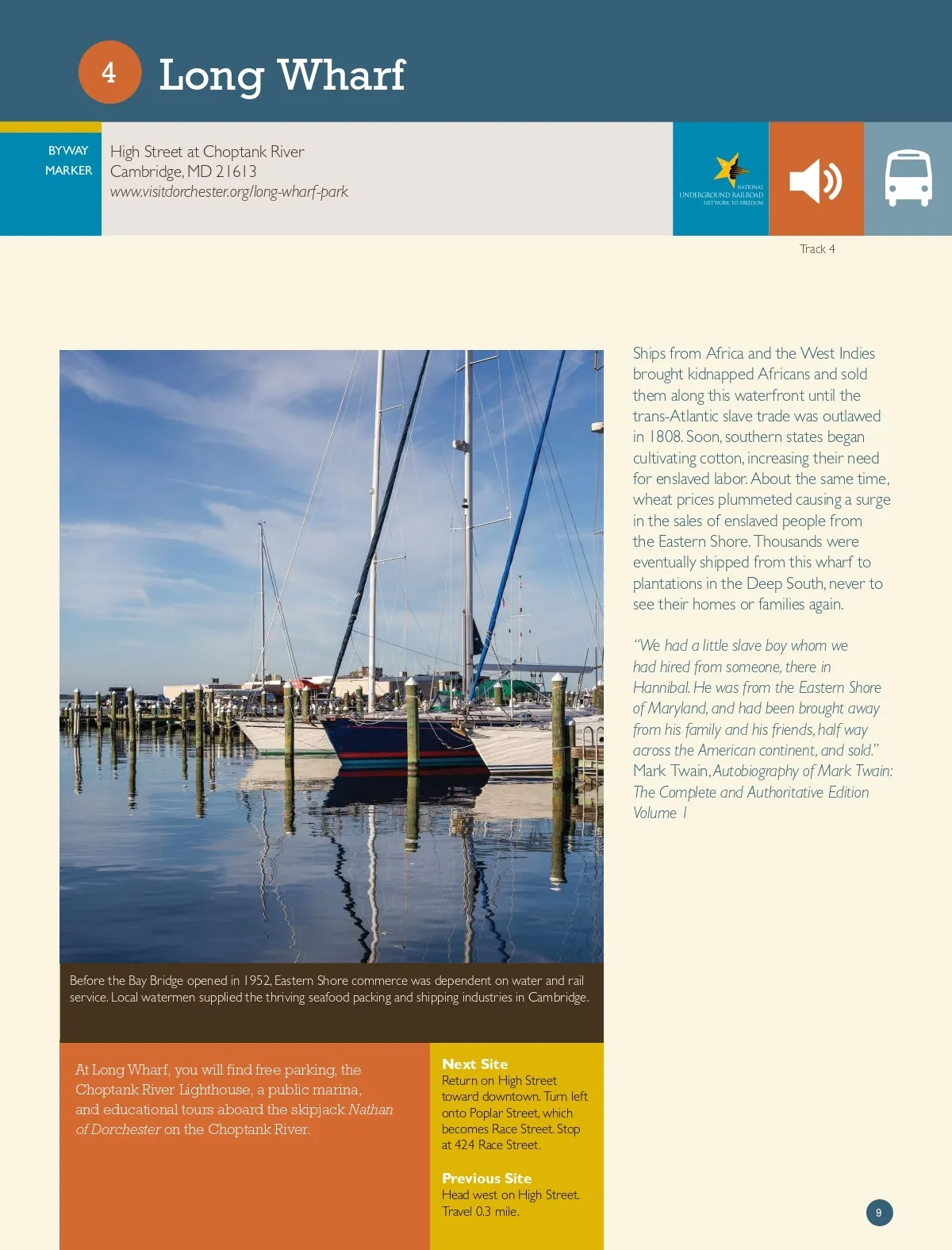
4 BYWAY MARKER Long Wharf High Street at Choptank River Cambridge, MD 21613 www.visitdorchester.org/long-wharf-park Track 4 Ships from Africa and the West Indies brought kidnapped Africans and sold them along this waterfront until the trans-Atlantic slave trade was outlawed in 1808. Soon, southern states began cultivating cotton, increasing their need for enslaved labor. About the same time, wheat prices plummeted causing a surge in the sales of enslaved people from the Eastern Shore. Thousands were eventually shipped from this wharf to plantations in the Deep South, never to see their homes or families again. “We had a little slave boy whom we had hired from someone, there in Hannibal. He was from the Eastern Shore of Maryland, and had been brought away from his family and his friends, half way across the American continent, and sold.” Mark Twain, Autobiography of Mark Twain: The Complete and Authoritative Edition Volume 1 Before the Bay Bridge opened in 1952, Eastern Shore commerce was dependent on water and rail service. Local watermen supplied the thriving seafood packing and shipping industries in Cambridge. At Long Wharf, you will find free parking, the Choptank River Lighthouse, a public marina, and educational tours aboard the skipjack Nathan of Dorchester on the Choptank River. Next Site Return on High Street toward downtown. Turn left onto Poplar Street, which becomes Race Street. Stop at 424 Race Street. Previous Site Head west on High Street. Travel 0.3 mile. 9
Harriet Tubman Guide 2019 Harriet Tubman Guide: Page 9