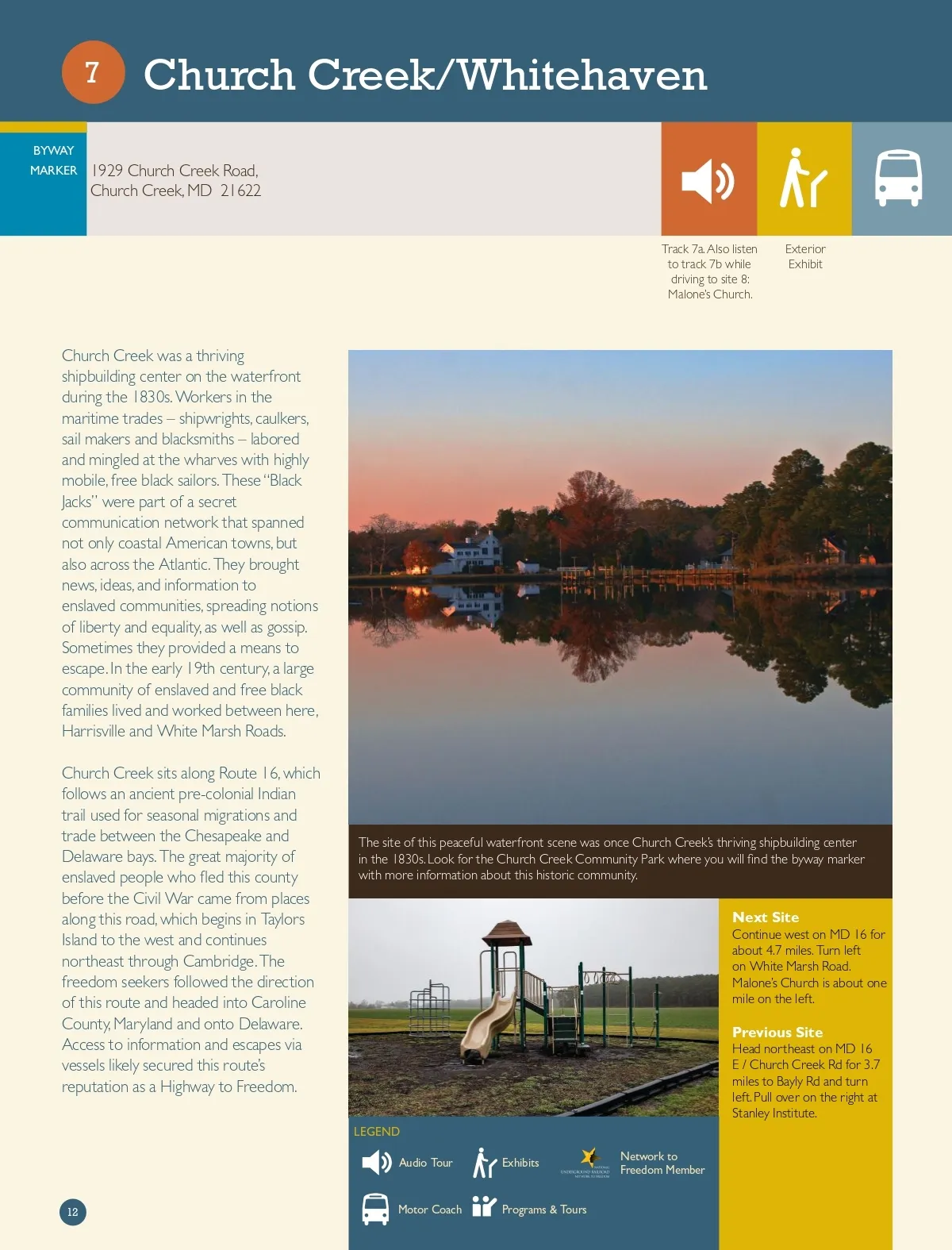
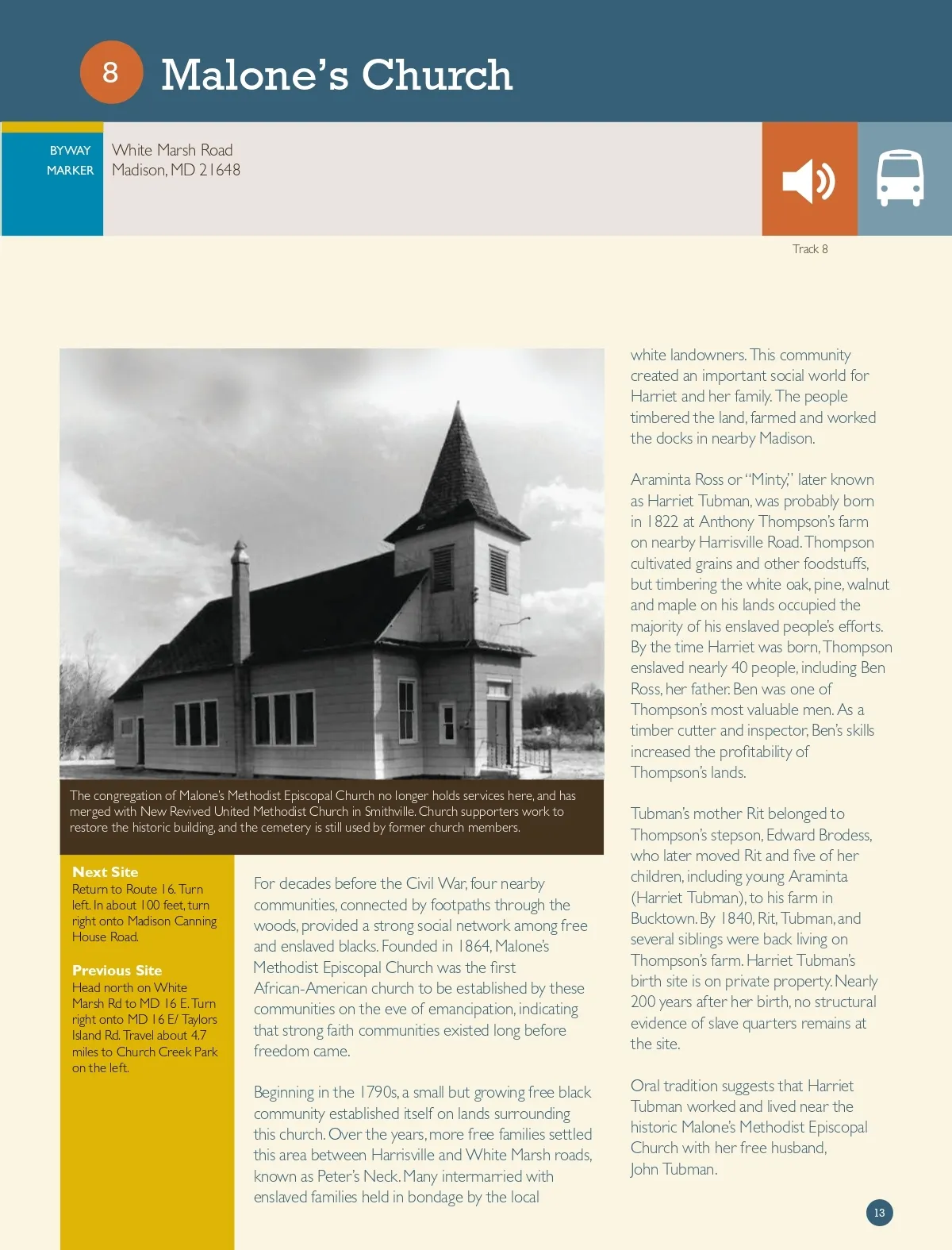
8 BYWAY MARKER Malone’s Church White Marsh Road Madison, MD 21648 Track 8 white landowners. This community created an important social world for Harriet and her family. The people timbered the land, farmed and worked the docks in nearby Madison. Araminta Ross or “Minty,” later known as Harriet Tubman, was probably born in 1822 at Anthony Thompson’s farm on nearby Harrisville Road. Thompson cultivated grains and other foodstuffs, but timbering the white oak, pine, walnut and maple on his lands occupied the majority of his enslaved people’s efforts. By the time Harriet was born, Thompson enslaved nearly 40 people, including Ben Ross, her father. Ben was one of Thompson’s most valuable men. As a timber cutter and inspector, Ben’s skills increased the profitability of Thompson’s lands. The congregation of Malone’s Methodist Episcopal Church no longer holds services here, and has merged with New Revived United Methodist Church in Smithville. Church supporters work to restore the historic building, and the cemetery is still used by former church members. Next Site Return to Route 16. Turn left. In about 100 feet, turn right onto Madison Canning House Road. Previous Site Head north on White Marsh Rd to MD 16 E. Turn right onto MD 16 E/ Taylors Island Rd. Travel about 4.7 miles to Church Creek Park on the left. For decades before the Civil War, four nearby communities, connected by footpaths through the woods, provided a strong social network among free and enslaved blacks. Founded in 1864, Malone’s Methodist Episcopal Church was the first African-American church to be established by these communities on the eve of emancipation, indicating that strong faith communities existed long before freedom came. Beginning in the 1790s, a small but growing free black community established itself on lands surrounding this church. Over the years, more free families settled this area between Harrisville and White Marsh roads, known as Peter’s Neck. Many intermarried with enslaved families held in bondage by the local Tubman’s mother Rit belonged to Thompson’s stepson, Edward Brodess, who later moved Rit and five of her children, including young Araminta (Harriet Tubman), to his farm in Bucktown. By 1840, Rit, Tubman, and several siblings were back living on Thompson’s farm. Harriet Tubman’s birth site is on private property. Nearly 200 years after her birth, no structural evidence of slave quarters remains at the site. Oral tradition suggests that Harriet Tubman worked and lived near the historic Malone’s Methodist Episcopal Church with her free husband, John Tubman. 13
Harriet Tubman Guide 2019 Harriet Tubman Guide: Page 13