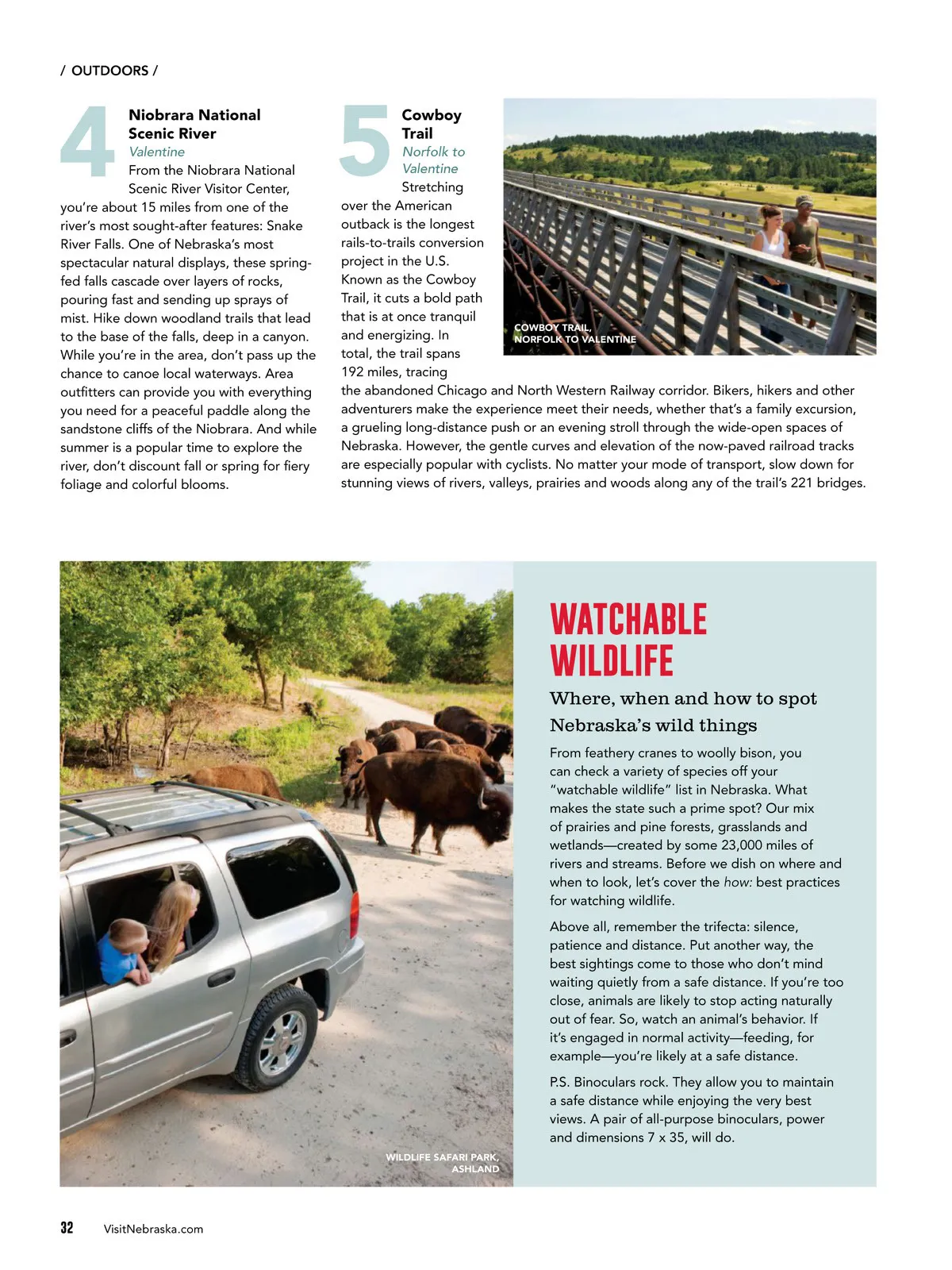
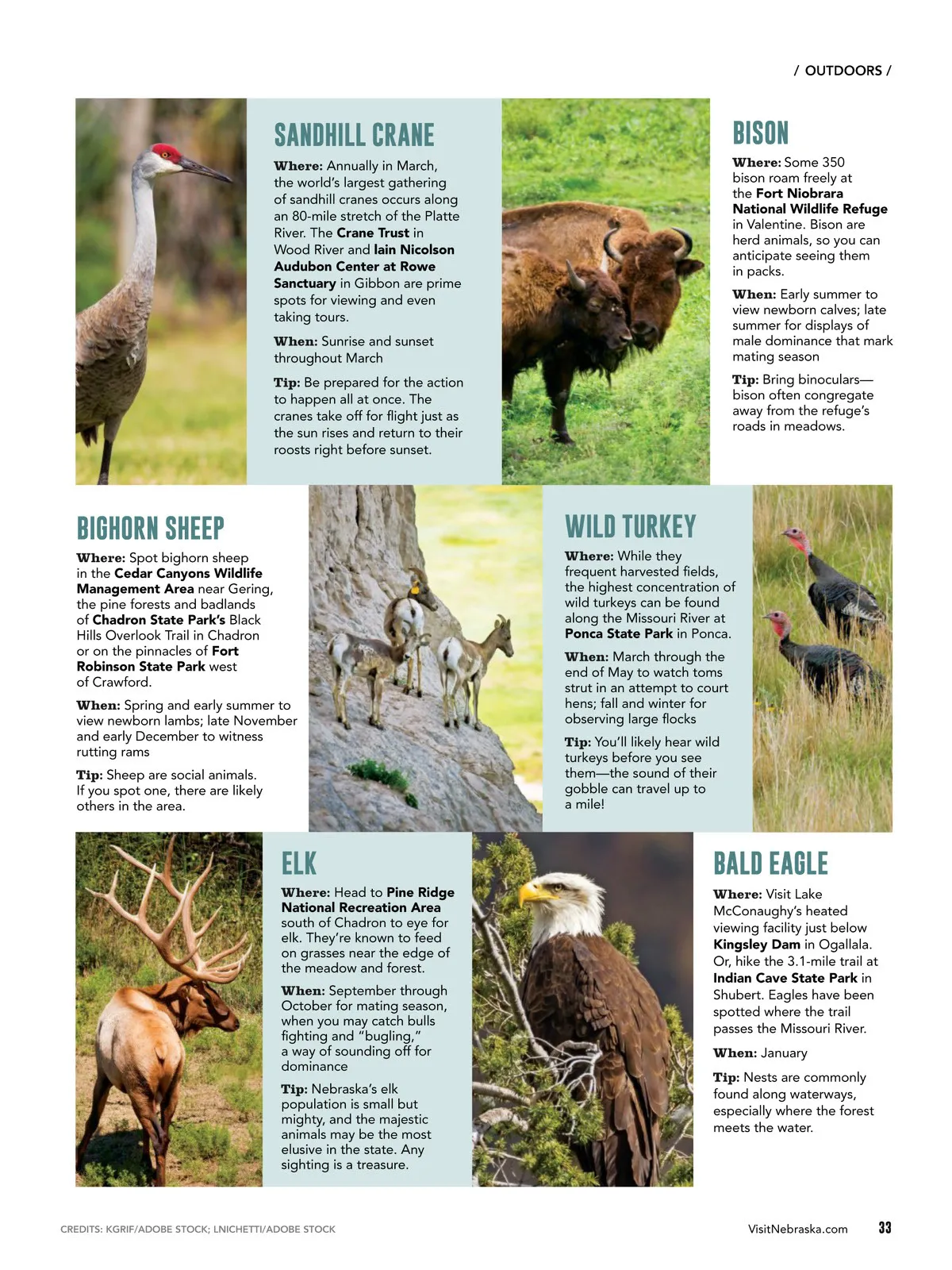
/ OUTDOORS / SANDHILL CRANE Where: Annually in March, the world’s largest gathering of sandhill cranes occurs along an 80-mile stretch of the Platte River. The Crane Trust in Wood River and lain Nicolson Audubon Center at Rowe Sanctuary in Gibbon are prime spots for viewing and even taking tours. When: Sunrise and sunset throughout March Tip: Be prepared for the action to happen all at once. The cranes take off for flight just as the sun rises and return to their roosts right before sunset. BISON Where: Some 350 bison roam freely at the Fort Niobrara National Wildlife Refuge in Valentine. Bison are herd animals, so you can anticipate seeing them in packs. When: Early summer to view newborn calves; late summer for displays of male dominance that mark mating season Tip: Bring binoculars— bison often congregate away from the refuge’s roads in meadows. BIGHORN SHEEP Where: Spot bighorn sheep in the Cedar Canyons Wildlife Management Area near Gering, the pine forests and badlands of Chadron State Park’s Black Hills Overlook Trail in Chadron or on the pinnacles of Fort Robinson State Park west of Crawford. When: Spring and early summer to view newborn lambs; late November and early December to witness rutting rams Tip: Sheep are social animals. If you spot one, there are likely others in the area. WILD TURKEY Where: While they frequent harvested fields, the highest concentration of wild turkeys can be found along the Missouri River at Ponca State Park in Ponca. When: March through the end of May to watch toms strut in an attempt to court hens; fall and winter for observing large flocks Tip: You’ll likely hear wild turkeys before you see them—the sound of their gobble can travel up to a mile! ELK Where: Head to Pine Ridge National Recreation Area south of Chadron to eye for elk. They’re known to feed on grasses near the edge of the meadow and forest. When: September through October for mating season, when you may catch bulls fighting and “bugling,” a way of sounding off for dominance Tip: Nebraska’s elk population is small but mighty, and the majestic animals may be the most elusive in the state. Any sighting is a treasure. BALD EAGLE Where: Visit Lake McConaughy’s heated viewing facility just below Kingsley Dam in Ogallala. Or, hike the 3.1-mile trail at Indian Cave State Park in Shubert. Eagles have been spotted where the trail passes the Missouri River. When: January Tip: Nests are commonly found along waterways, especially where the forest meets the water. CREDITS: KGRIF/ADOBE STOCK; LNICHETTI/ADOBE STOCK VisitNebraska.com 33
Nebraska Official State Travel Guide The Official 2019 Not-At-All What You Thought State Travel Guide: Page 37