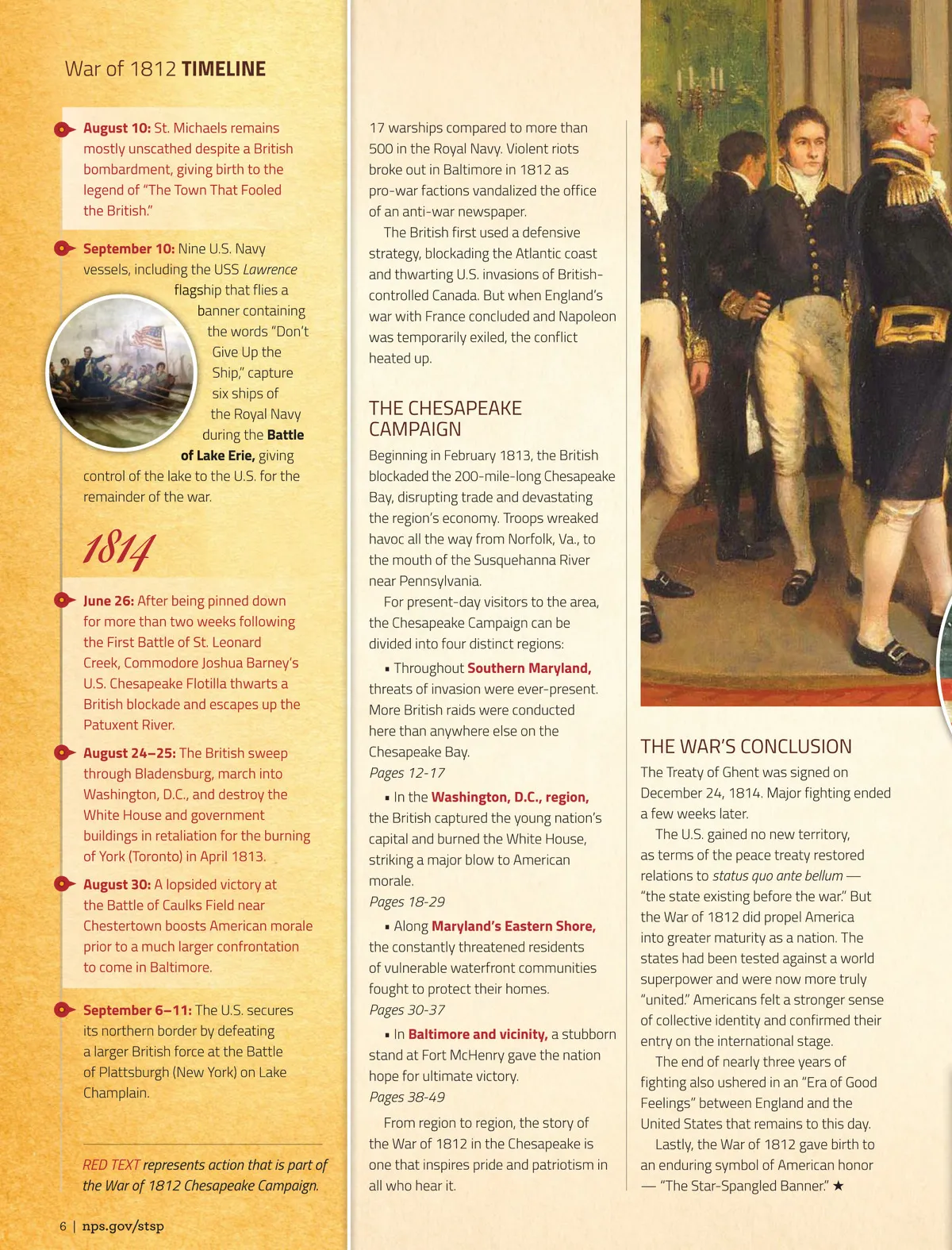
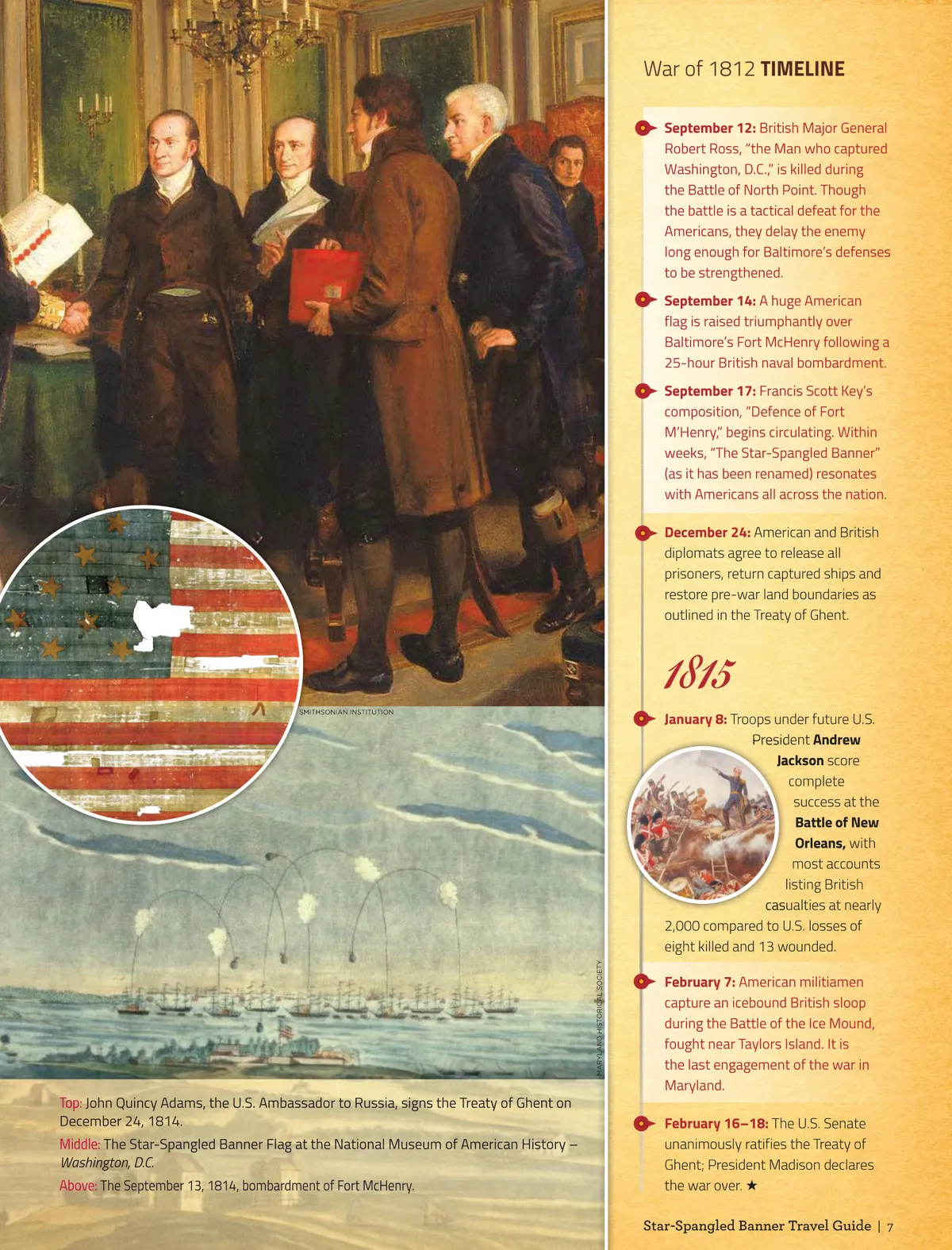
War of 1812 TIMELINE September 12: British Major General Robert Ross, “the Man who captured Washington, D.C.,” is killed during the Battle of North Point. Though the battle is a tactical defeat for the Americans, they delay the enemy long enough for Baltimore’s defenses to be strengthened. September 14: A huge American flag is raised triumphantly over Baltimore’s Fort McHenry following a 25-hour British naval bombardment. September 17: Francis Scott Key’s composition, “Defence of Fort M’Henry,” begins circulating. Within weeks, “The Star-Spangled Banner” (as it has been renamed) resonates with Americans all across the nation . December 24: American and British diplomats agree to release all prisoners, return captured ships and restore pre-war land boundaries as outlined in the Treaty of Ghent. SMITHSONIAN INSTITUTION 1815 MARYLAND HISTORICAL SOCIETY January 8: Troops under future U.S. President Andrew Jackson score complete success at the Battle of New Orleans, with most accounts listing British casualties at nearly 2,000 compared to U.S. losses of eight killed and 13 wounded. February 7: American militiamen capture an icebound British sloop during the Battle of the Ice Mound, fought near Taylors Island. It is the last engagement of the war in Maryland. February 16–18: The U.S. Senate unanimously ratifies the Treaty of Ghent; President Madison declares the war over. + Top: John Quincy Adams, the U.S. Ambassador to Russia, signs the Treaty of Ghent on December 24, 1814. Middle: The Star-Spangled Banner Flag at the National Museum of American History – Washington, D.C. Above: The September 13, 1814, bombardment of Fort McHenry. Star-Spangled Banner Travel Guide | 7
Star-Spangled Banner Star-Spangled Banner 2018: Page 7