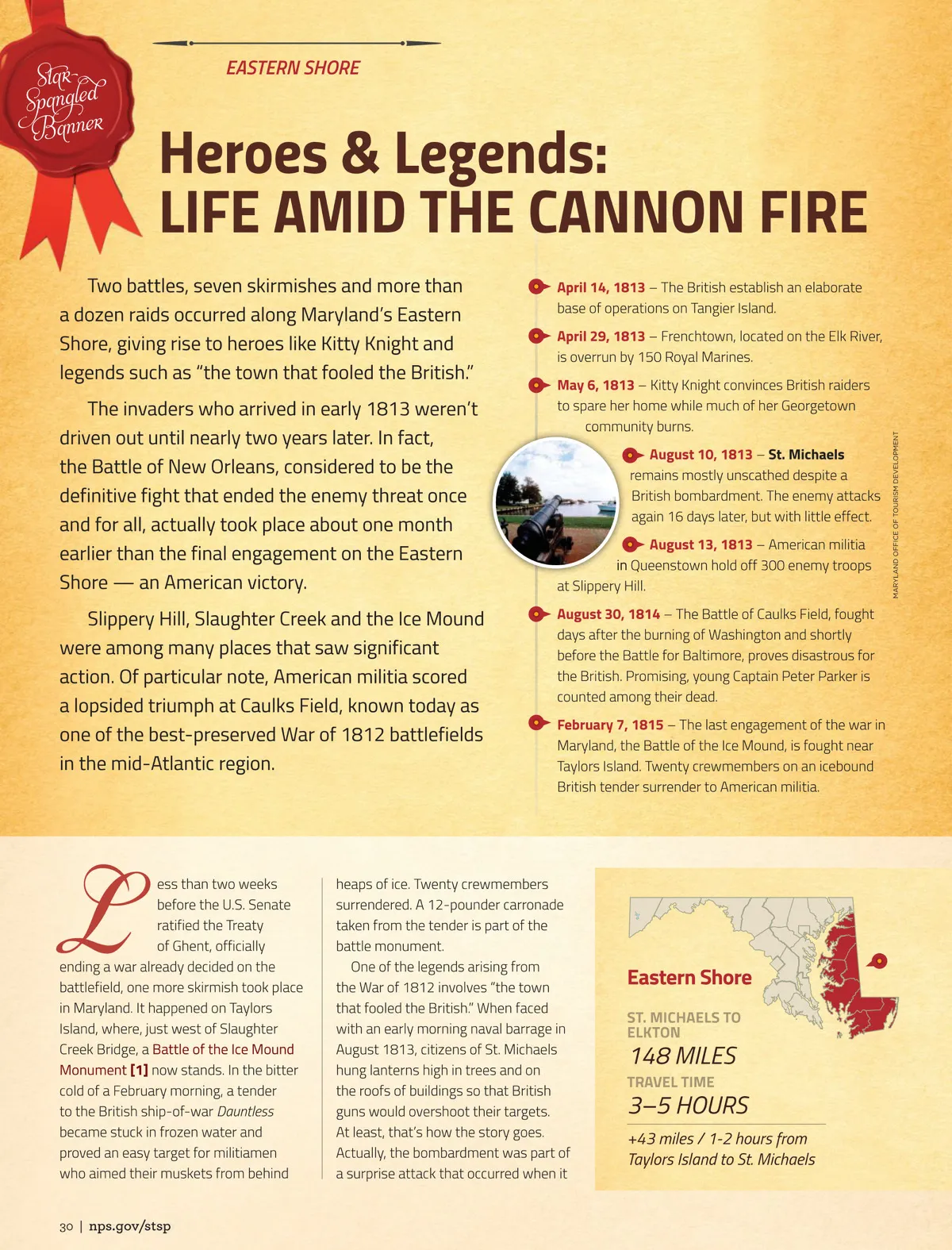
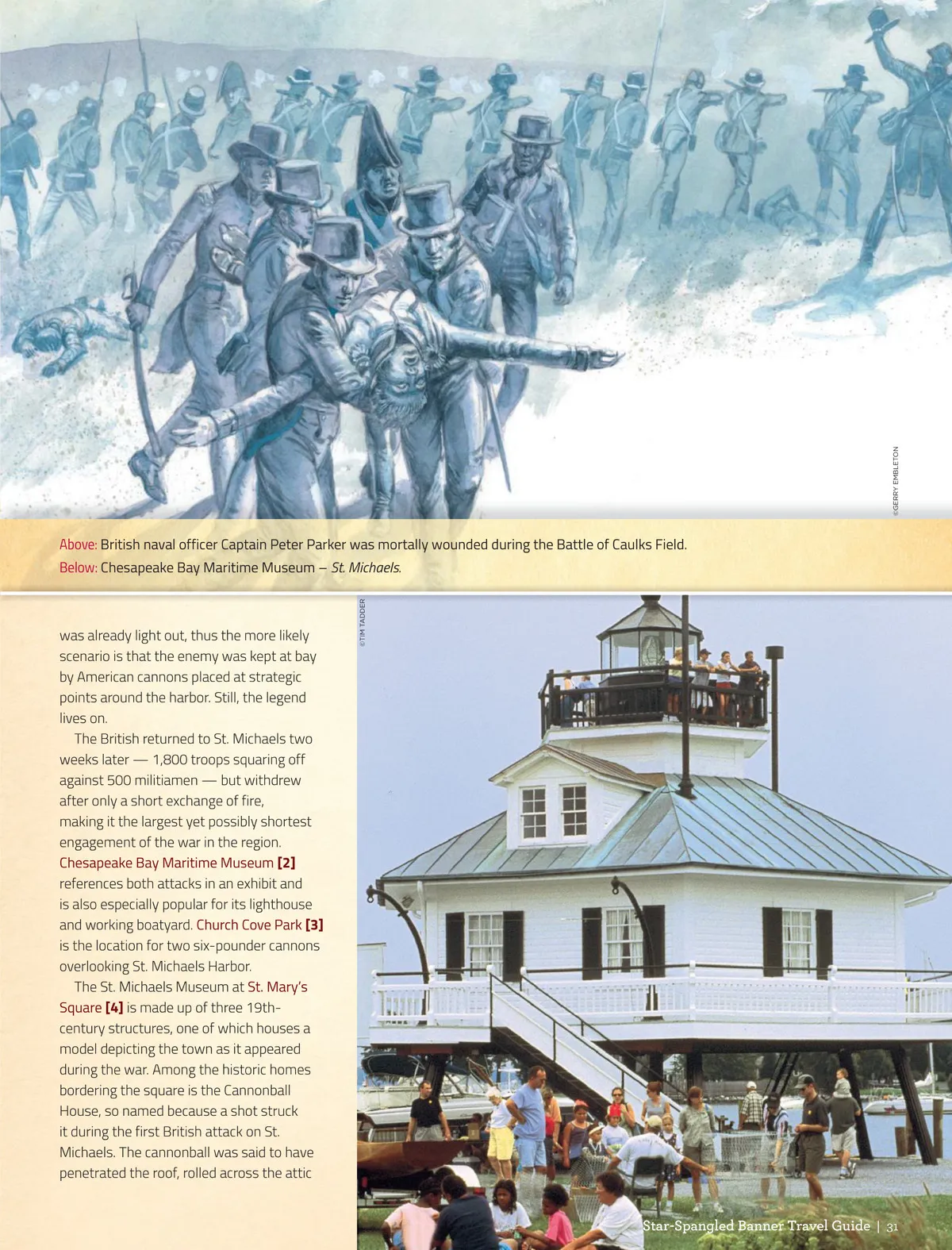
Above: British naval officer Captain Peter Parker was mortally wounded during the Battle of Caulks Field. Below: Chesapeake Bay Maritime Museum – St. Michaels. ©TIM TADDER On August 28, Parker and his li in fancy uniforms near Fairlee Cree mouse with local horsemen, the Br cannonballs at the Americans. One George Beynon, described the late fi re to the house [Big Fairlee] . . . I o . . . and giving them sharp and galli laid some of them low; they were ex dress’d in Blue and long white feath them . . . at dusk . . . we all embarke ©GERRY EMBLETON was already light out, thus the more likely scenario is that the enemy was kept at bay by American cannons placed at strategic points around the harbor. Still, the legend lives on. The British returned to St. Michaels two weeks later — 1,800 troops squaring off against 500 militiamen — but withdrew after only a short exchange of fire, making it the largest yet possibly shortest engagement of the war in the region. Chesapeake Bay Maritime Museum [2] references both attacks in an exhibit and is also especially popular for its lighthouse and working boatyard. Church Cove Park [3] is the location for two six-pounder cannons overlooking St. Michaels Harbor. The St. Michaels Museum at St. Mary’s Square [4] is made up of three 19th-century structures, one of which houses a model depicting the town as it appeared during the war. Among the historic homes bordering the square is the Cannonball House, so named because a shot struck it during the first British attack on St. Michaels. The cannonball was said to have penetrated the roof, rolled across the attic Star-Spangled Star-Spangled Banner Banner Travel Travel Guide Guide | | 31 31
Star-Spangled Banner Star-Spangled Banner 2018: Page 31