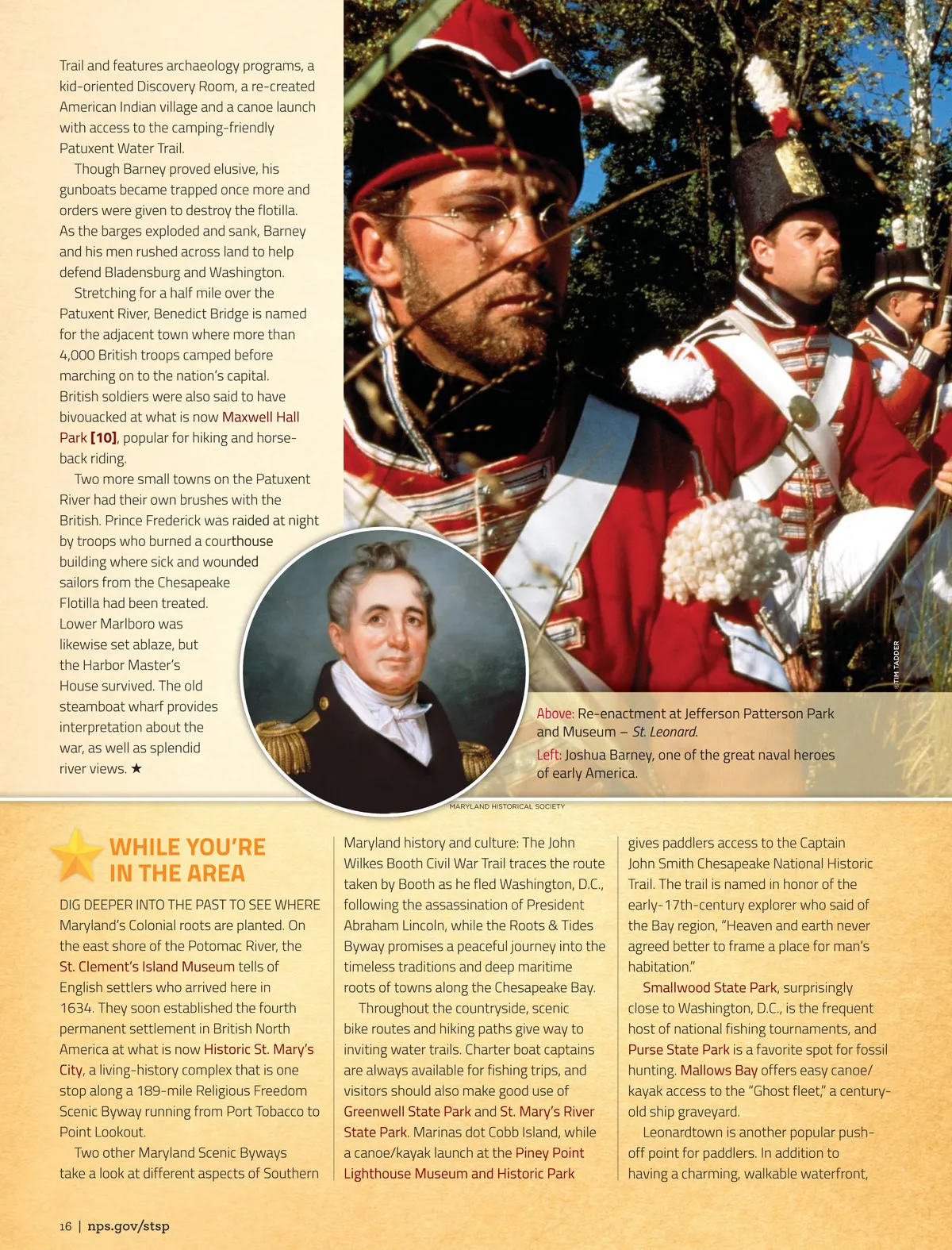
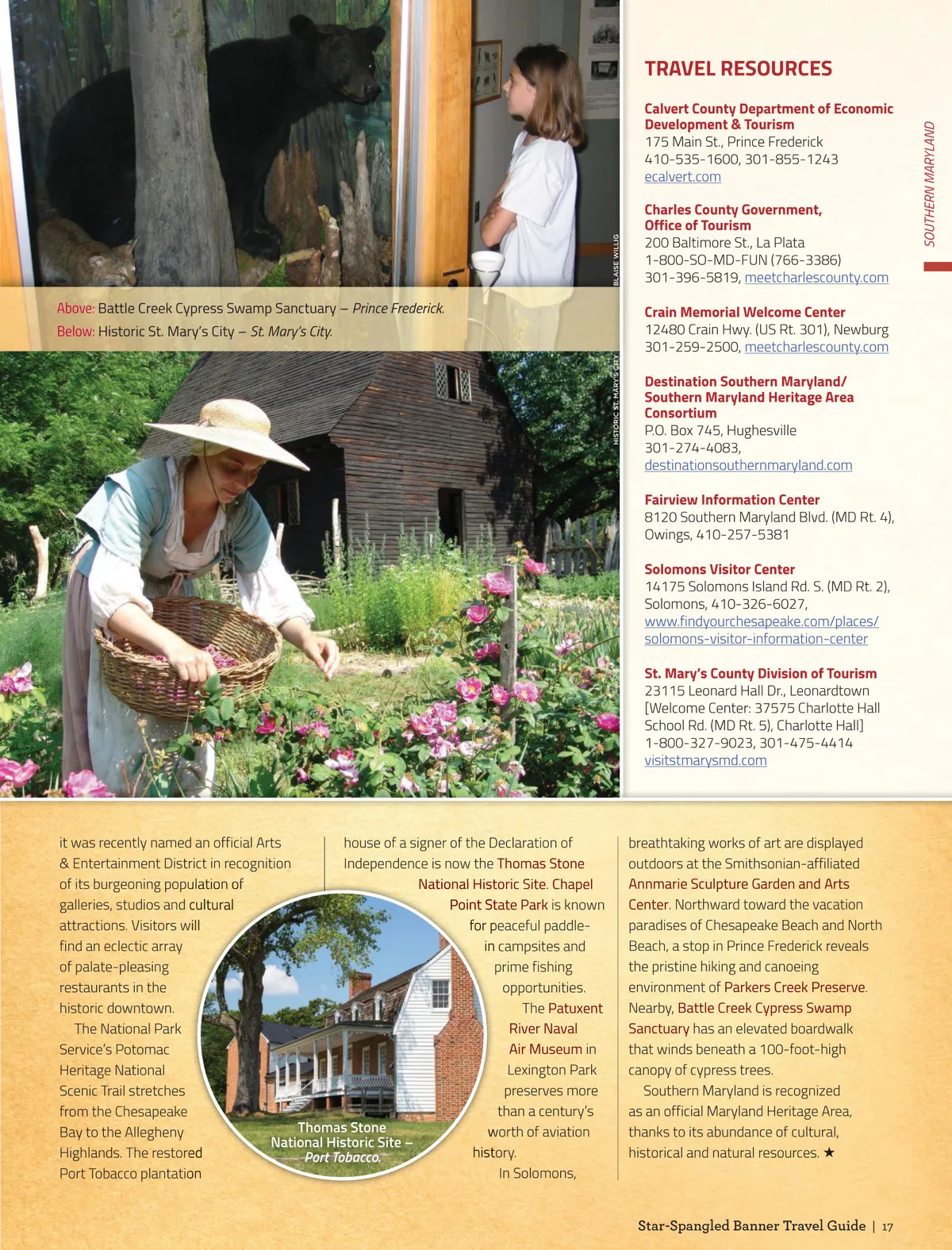
Trail and features archaeology programs, a kid-oriented Discovery Room, a re-created American Indian village and a canoe launch with access to the camping-friendly Patuxent Water Trail. Though Barney proved elusive, his gunboats became trapped once more and orders were given to destroy the flotilla. As the barges exploded and sank, Barney and his men rushed across land to help defend Bladensburg and Washington. Stretching for a half mile over the Patuxent River, Benedict Bridge is named for the adjacent town where more than 4,000 British troops camped before marching on to the nation’s capital. British soldiers were also said to have bivouacked at what is now Maxwell Hall Park [10] , popular for hiking and horse-back riding. Two more small towns on the Patuxent River had their own brushes with the British. Prince Frederick was raided at night by troops who burned a courthouse building where sick and wounded sailors from the Chesapeake Flotilla had been treated. Lower Marlboro was likewise set ablaze, but the Harbor Master’s House survived. The old steamboat wharf provides interpretation about the war, as well as splendid river views. + Above: Re-enactment at Jefferson Patterson Park and Museum – St. Leonard . Left: Joshua Barney, one of the great naval heroes of early America. MARYLAND HISTORICAL SOCIETY WHILE YOU’RE IN THE AREA DIG DEEPER INTO THE PAST TO SEE WHERE Maryland’s Colonial roots are planted. On the east shore of the Potomac River, the St. Clement’s Island Museum tells of English settlers who arrived here in 1634. They soon established the fourth permanent settlement in British North America at what is now Historic St. Mary’s City , a living-history complex that is one stop along a 189-mile Religious Freedom Scenic Byway running from Port Tobacco to Point Lookout. Two other Maryland Scenic Byways take a look at different aspects of Southern Maryland history and culture: The John Wilkes Booth Civil War Trail traces the route taken by Booth as he fled Washington, D.C., following the assassination of President Abraham Lincoln, while the Roots & Tides Byway promises a peaceful journey into the timeless traditions and deep maritime roots of towns along the Chesapeake Bay. Throughout the countryside, scenic bike routes and hiking paths give way to inviting water trails. Charter boat captains are always available for fishing trips, and visitors should also make good use of Greenwell State Park and St. Mary’s River State Park . Marinas dot Cobb Island, while a canoe/kayak launch at the Piney Point Lighthouse Museum and Historic Park gives paddlers access to the Captain John Smith Chesapeake National Historic Trail. The trail is named in honor of the early-17th-century explorer who said of the Bay region, “Heaven and earth never agreed better to frame a place for man’s habitation.” Smallwood State Park , surprisingly close to Washington, D.C., is the frequent host of national fishing tournaments, and Purse State Park is a favorite spot for fossil hunting. Mallows Bay offers easy canoe/ kayak access to the “Ghost fleet,” a century-old ship graveyard. Leonardtown is another popular push-off point for paddlers. In addition to having a charming, walkable waterfront, 16 | nps.gov/stsp ©TIM TADDER
Star-Spangled Banner Star-Spangled Banner 2018: Page 16