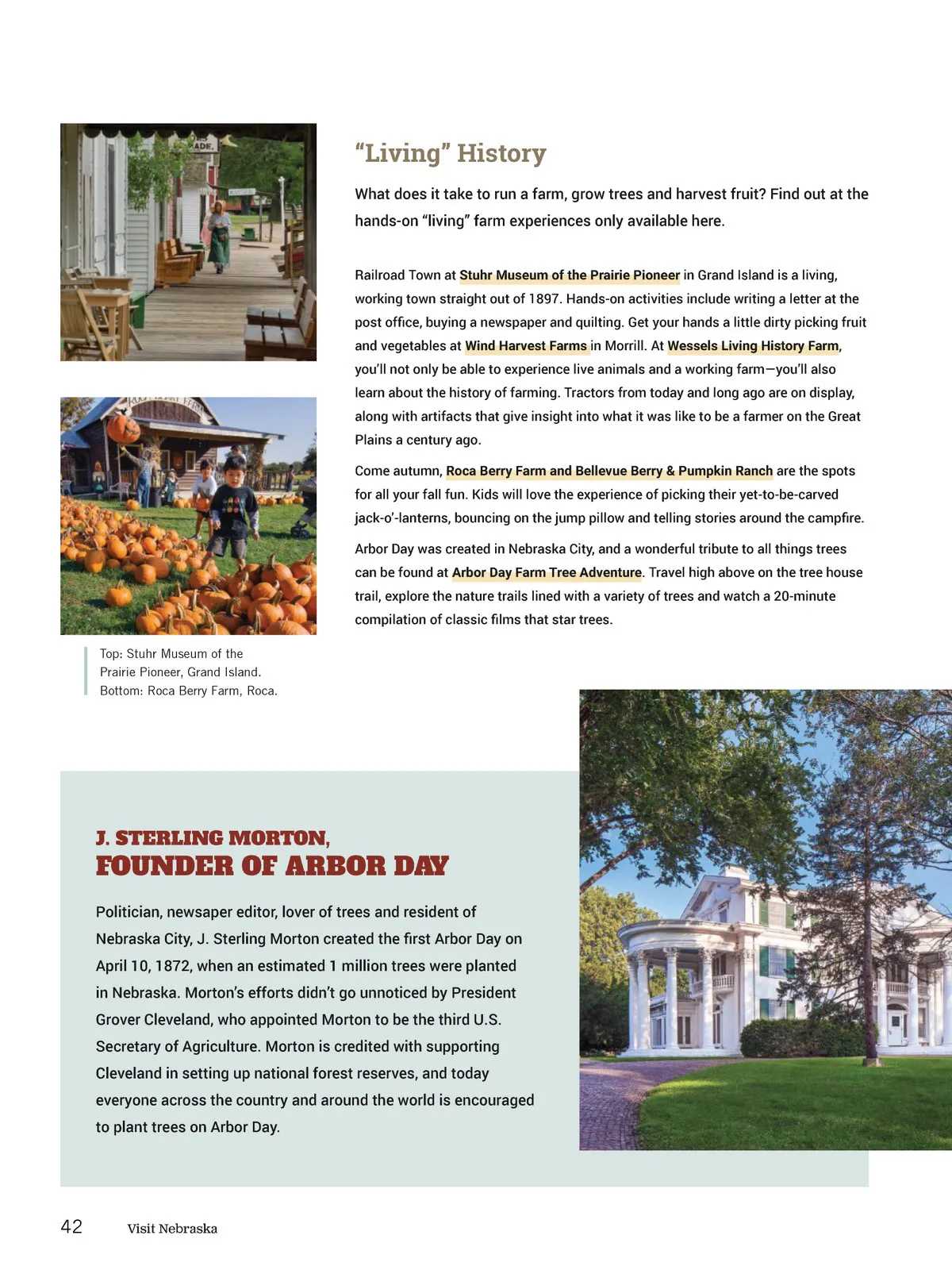
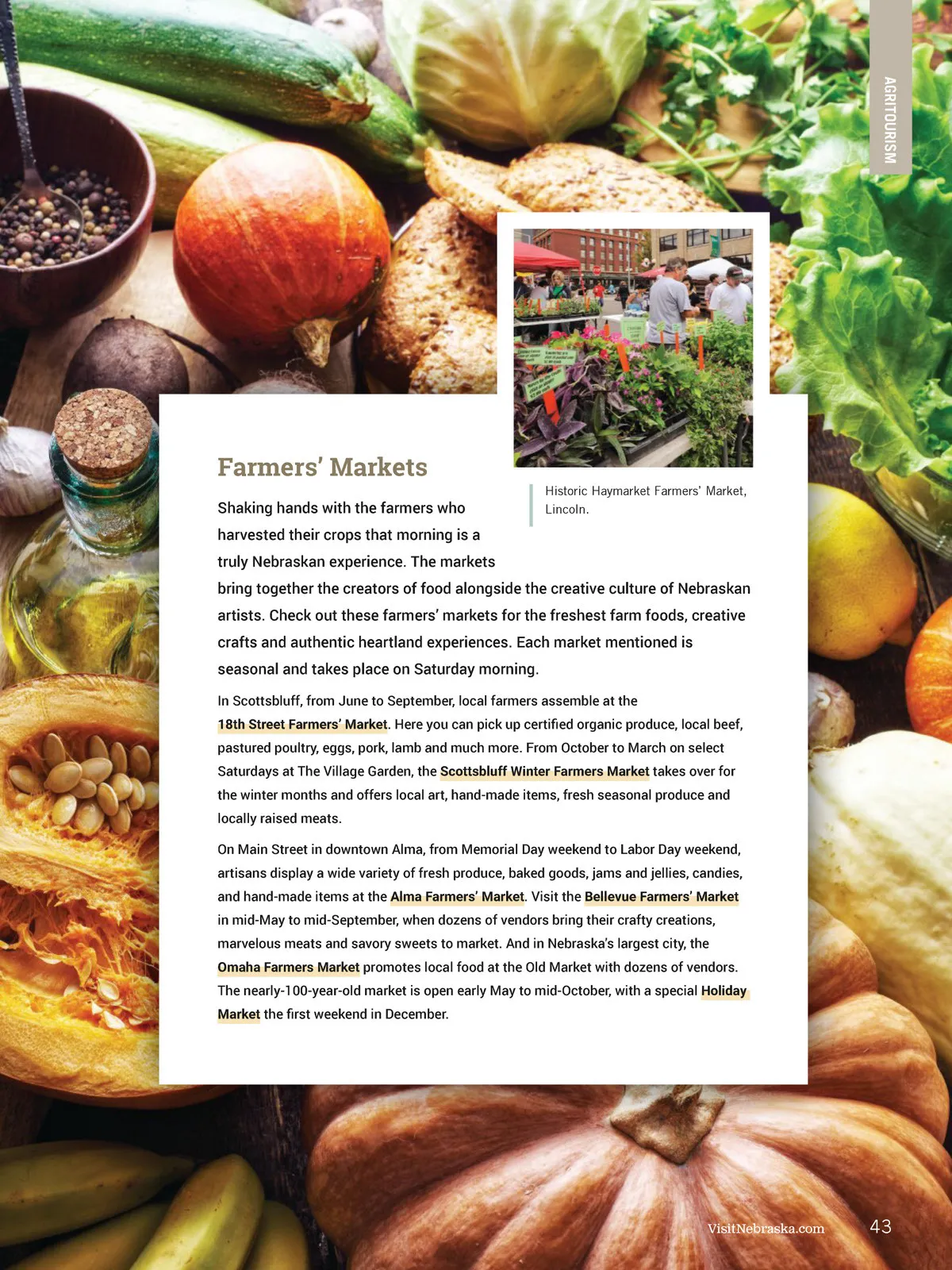
“Living” History What does it take to run a farm, grow trees and harvest fruit? Find out at the hands-on “living” farm experiences only available here. Railroad Town at Stuhr Museum of the Prairie Pioneer in Grand Island is a living, working town straight out of 1897. Hands-on activities include writing a letter at the post office, buying a newspaper and quilting. Get your hands a little dirty picking fruit and vegetables at Wind Harvest Farms in Morrill. At Wessels Living History Farm , you’ll not only be able to experience live animals and a working farm—you’ll also learn about the history of farming. Tractors from today and long ago are on display, along with artifacts that give insight into what it was like to be a farmer on the Great Plains a century ago. Come autumn, Roca Berry Farm and Bellevue Berry & Pumpkin Ranch are the spots for all your fall fun. Kids will love the experience of picking their yet-to-be-carved jack-o’-lanterns, bouncing on the jump pillow and telling stories around the campfire. Arbor Day was created in Nebraska City, and a wonderful tribute to all things trees can be found at Arbor Day Farm Tree Adventure . Travel high above on the tree house trail, explore the nature trails lined with a variety of trees and watch a 20-minute compilation of classic films that star trees. Top: Stuhr Museum of the Prairie Pioneer, Grand Island. Bottom: Roca Berry Farm, Roca. J. STERLING MORTON, FOUNDER OF ARBOR DAY Politician, newsaper editor, lover of trees and resident of Nebraska City, J. Sterling Morton created the first Arbor Day on April 10, 1872, when an estimated 1 million trees were planted in Nebraska. Morton’s efforts didn’t go unnoticed by President Grover Cleveland, who appointed Morton to be the third U.S. Secretary of Agriculture. Morton is credited with supporting Cleveland in setting up national forest reserves, and today everyone across the country and around the world is encouraged to plant trees on Arbor Day. 42 Visit Nebraska
Nebraska Official State Travel Guide 2018 Nebraska Official State Travel Guide: Page 42