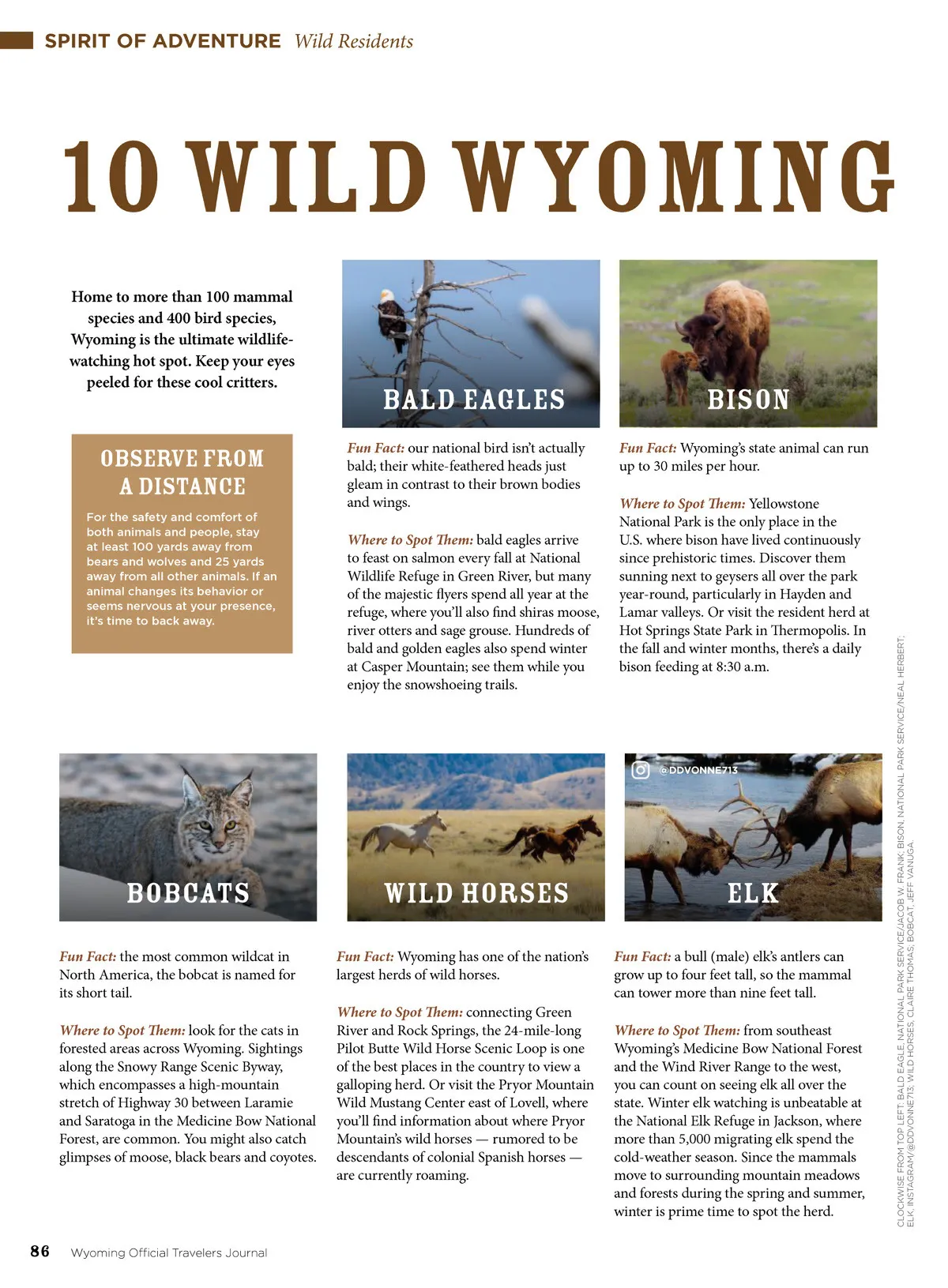
Wild Residents SPIRIT OF ADVENTURE Residents To Spot pronghorn CLOCKWISE FROM TOP LEFT: PRONGHORN, ECOTOUR ADVENTURES; BEARS, NATIONAL PARK SERVICE/ERIC JOHNSTON; BIGHORN SHEEP, NATIONAL PARK SERVICE/DIANE RENKIN; TRUMPETER SWANS, NATIONAL PARK SERVICE/JACOB W. FRANK; MOOSE, JEFF VANUGA. bears Fun Fact: Yellowstone National Park is one of the few areas in the U.S. where black bears and grizzly bears coexist. Where to Spot Them: Yellowstone’s Tower and Mammoth areas are favorite hangouts of the black bear, who feed on the park’s grasses, rodents and cutthroat trout in the spring, summer and fall. Meanwhile, the grizzly bear population is much smaller (there are only about 150 in the park), but in the spring, they often spend time at Yellowstone Lake or in Hayden and Lamar valleys. bighorn sheep Fun Fact: bighorn sheep are equipped with curved horns that can weigh up to 30 pounds. Where to Spot Them: the largest wintering herd of Rocky Mountain bighorn sheep reside at Wyoming’s Whiskey Mountain. Learn all about the hearty mammals at the National Bighorn Sheep Center in Dubois and embark on a self-guided or reserve a guided tour of the area from November through March. Or go hiking or biking in northeast Wyoming’s Bear Lodge Mountains for great chances to see bighorn sheep, as well as mountain goats and elk. Fun Fact: with the ability to run at speeds up to 55 miles per hour, the pronghorn is North America’s swiftest land animal. Where to Spot Them: the six million acres of sand dunes and buttes at Wyoming’s Red Desert are inhabited by 350 species of wildlife, including the largest migratory herd of pronghorn in the lower 48. They journey 150 miles from the Upper Green River Basin to Grand Teton National Park every spring and back in the fall. Other Red Desert creatures you might encounter include rare desert elk, the black-footed ferret and pygmy rabbit. WY INDEED moose Fun Fact: a flap of skin known as a bell sways beneath each moose’s throat. Scientists still aren’t sure of its purpose. Where to Spot Them: for the best chances to observe these gigantic mammals (they can weight up to 1,800 pounds), spend some time in Grand Teton National Park. Drive the Moose-Wilson Road in the Moose District or visit Oxbow Bend east of Jackson Lake Junction, where you could see a moose grazing on the lush meadows at the water’s edge. trumpeter swans Fun Fact: these pearly white birds require a 100-yard runway for takeoff. Where to Spot Them: the swans nest in a variety of wetlands, ponds, lakes and rivers. Look for them floating gracefully in the waters at Seedskadee National Wildlife Refuge in Green River, in wetlands around Jackson Hole and in Grand Teton and Yellowstone national parks. Learn more about wildlife watching in Wyoming at TravelWyoming.com/things-to-do/wildlife-viewing. “Bring your high-quality binoculars and spotting scopes — that’s very important for safe and ethical viewing. And check in with the local visitors’ centers; they typically have up-to-date information about what species have been seen where.” — Taylor Phillips, owner of EcoTour Adventures in Jackson, a company that hosts wildlife-viewing tours TravelWyoming.com 87
Wyoming Official Travel Guide 2018 Wyoming OTJ: Page 87