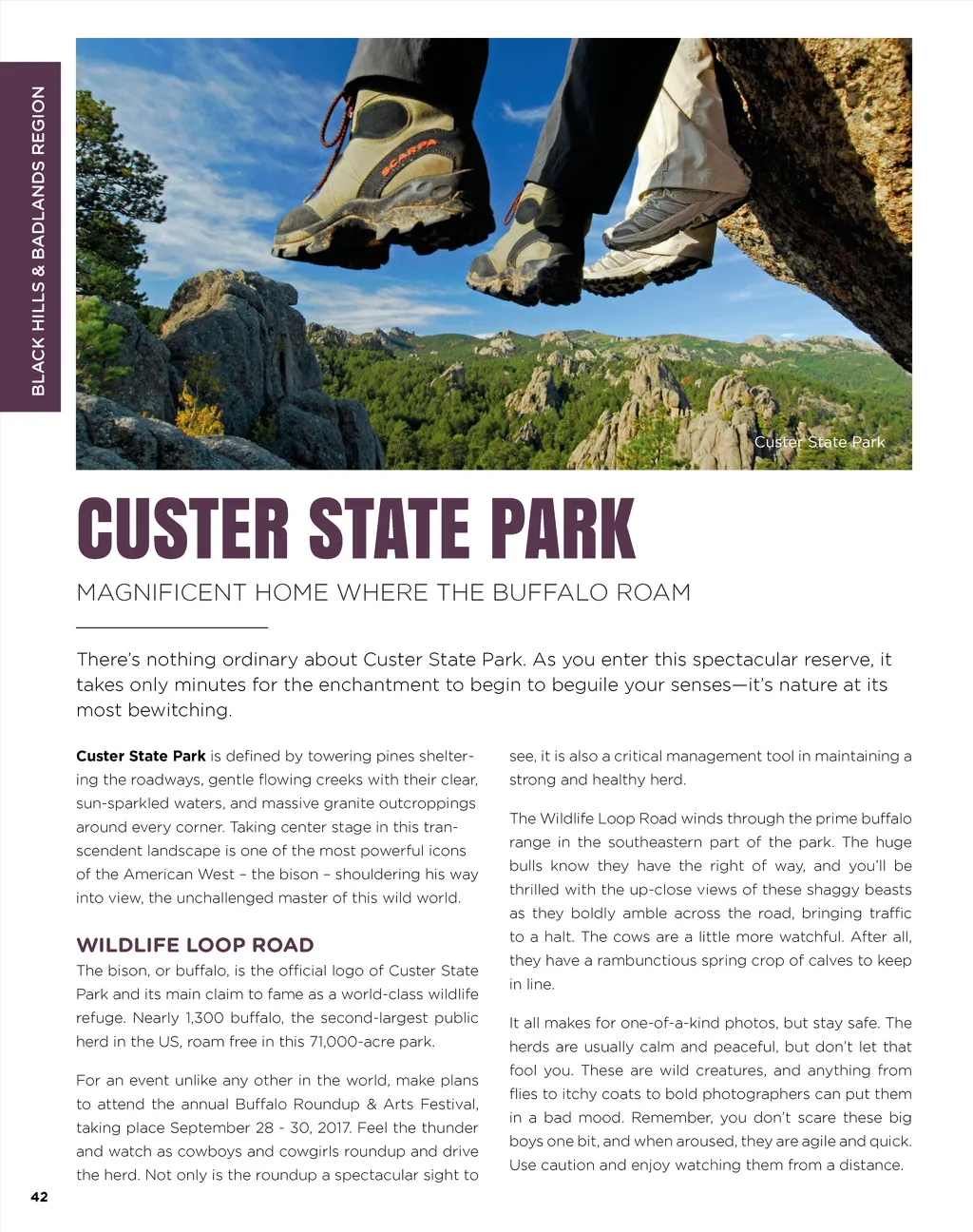
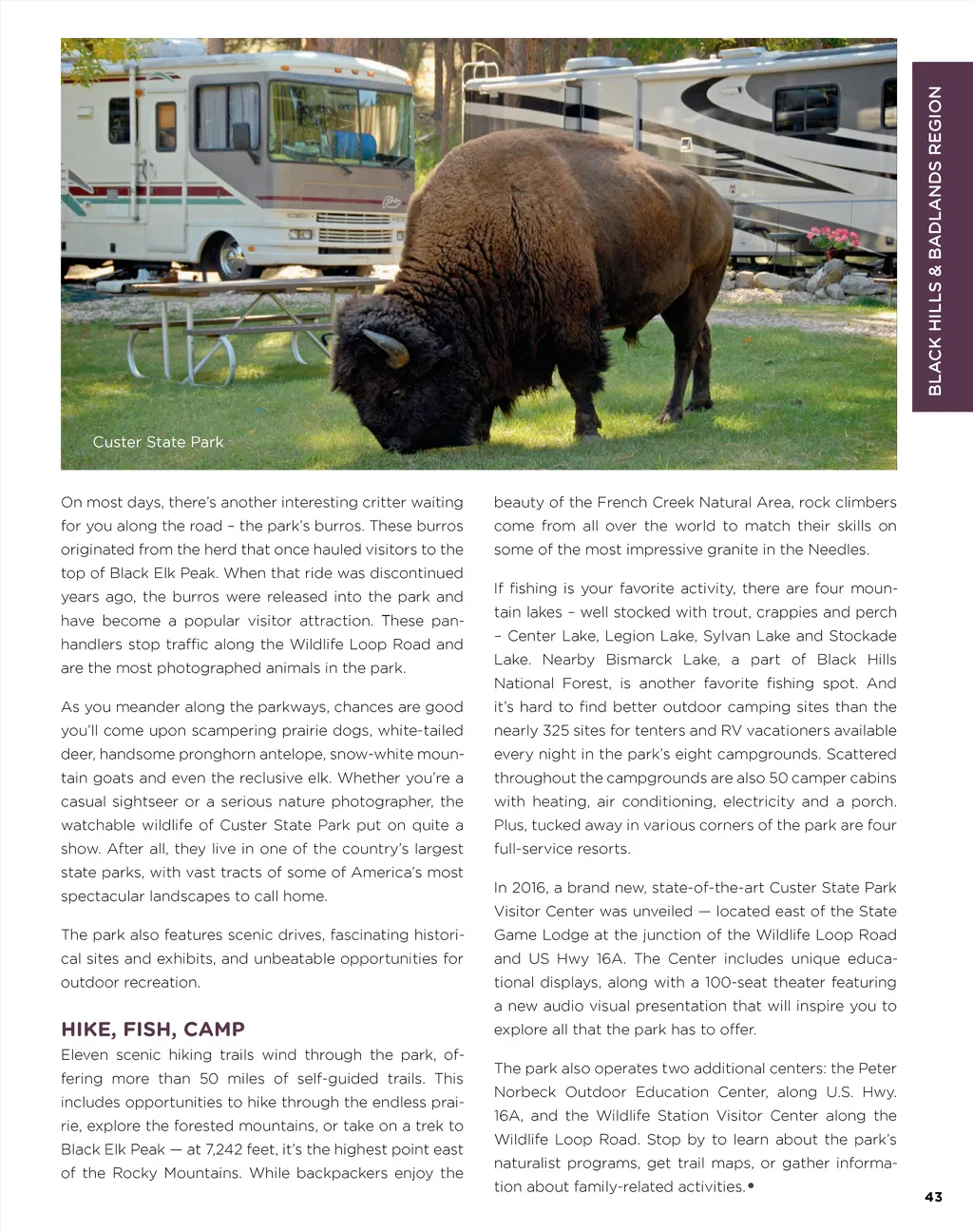
Custer State Park On most days, there’s another interesting critter waiting for you along the road – the park’s burros. These burros originated from the herd that once hauled visitors to the top of Black Elk Peak. When that ride was discontinued years ago, the burros were released into the park and have become a popular visitor attraction. These pan-handlers stop traffic along the Wildlife Loop Road and are the most photographed animals in the park. As you meander along the parkways, chances are good you’ll come upon scampering prairie dogs, white-tailed deer, handsome pronghorn antelope, snow-white moun-tain goats and even the reclusive elk. Whether you’re a casual sightseer or a serious nature photographer, the watchable wildlife of Custer State Park put on quite a show. After all, they live in one of the country’s largest state parks, with vast tracts of some of America’s most spectacular landscapes to call home. The park also features scenic drives, fascinating histori-cal sites and exhibits, and unbeatable opportunities for outdoor recreation. beauty of the French Creek Natural Area, rock climbers come from all over the world to match their skills on some of the most impressive granite in the Needles. If fishing is your favorite activity, there are four moun-tain lakes – well stocked with trout, crappies and perch – Center Lake, Legion Lake, Sylvan Lake and Stockade Lake. Nearby Bismarck Lake, a part of Black Hills National Forest, is another favorite fishing spot. And it’s hard to find better outdoor camping sites than the nearly 325 sites for tenters and RV vacationers available every night in the park’s eight campgrounds. Scattered throughout the campgrounds are also 50 camper cabins with heating, air conditioning, electricity and a porch. Plus, tucked away in various corners of the park are four full-service resorts. In 2016, a brand new, state-of-the-art Custer State Park Visitor Center was unveiled — located east of the State Game Lodge at the junction of the Wildlife Loop Road and US Hwy 16A. The Center includes unique educa-tional displays, along with a 100-seat theater featuring a new audio visual presentation that will inspire you to explore all that the park has to offer. The park also operates two additional centers: the Peter Norbeck Outdoor Education Center, along U.S. Hwy. 16A, and the Wildlife Station Visitor Center along the Wildlife Loop Road. Stop by to learn about the park’s naturalist programs, get trail maps, or gather informa-tion about family-related activities. • 43 HIKE, FISH, CAMP Eleven scenic hiking trails wind through the park, of-fering more than 50 miles of self-guided trails. This includes opportunities to hike through the endless prai-rie, explore the forested mountains, or take on a trek to Black Elk Peak — at 7,242 feet, it’s the highest point east of the Rocky Mountains. While backpackers enjoy the BLACK HILLS & BADLANDS REGION
South Dakota Vacation Guide SD Vacation Guide 2017: Page 43