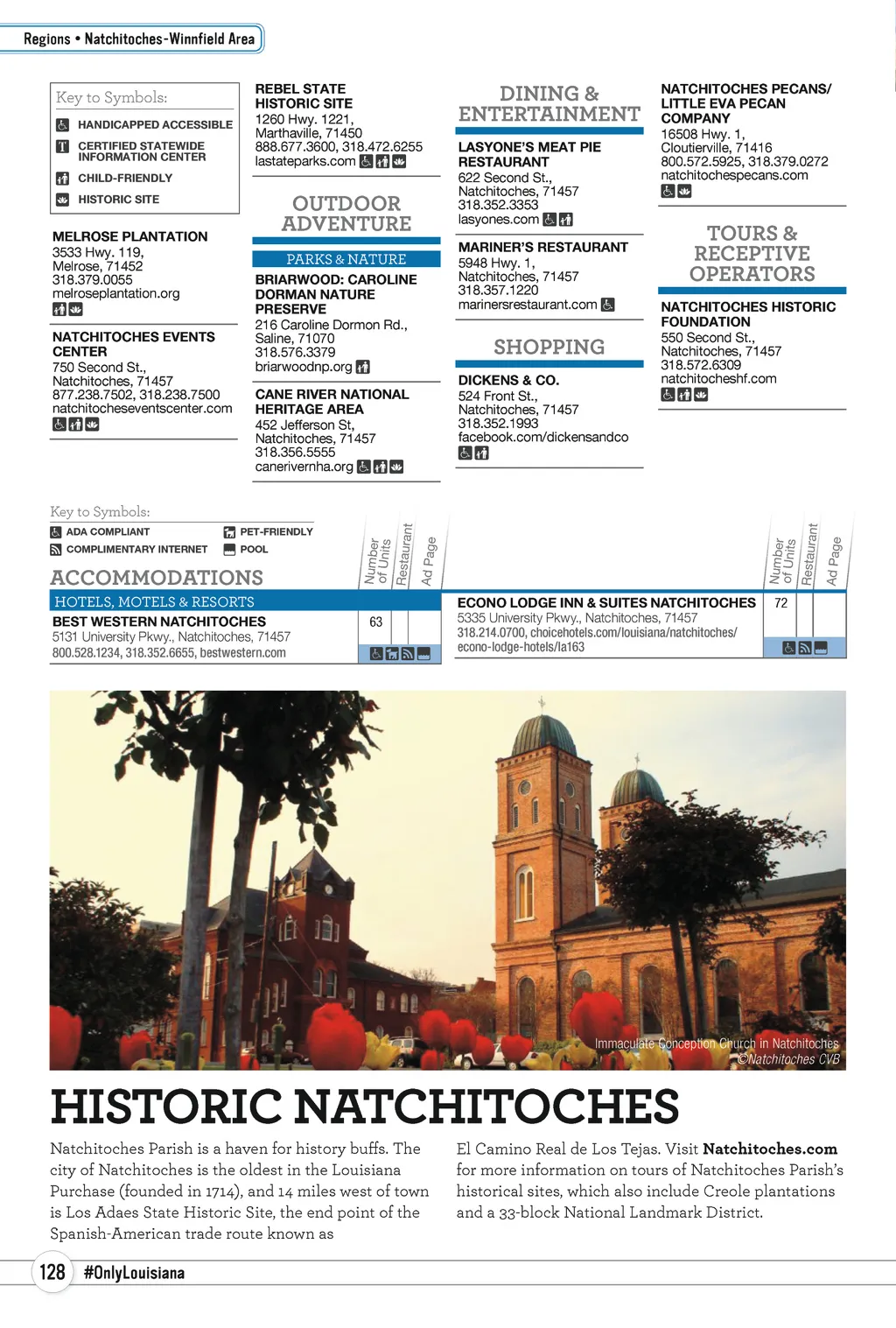
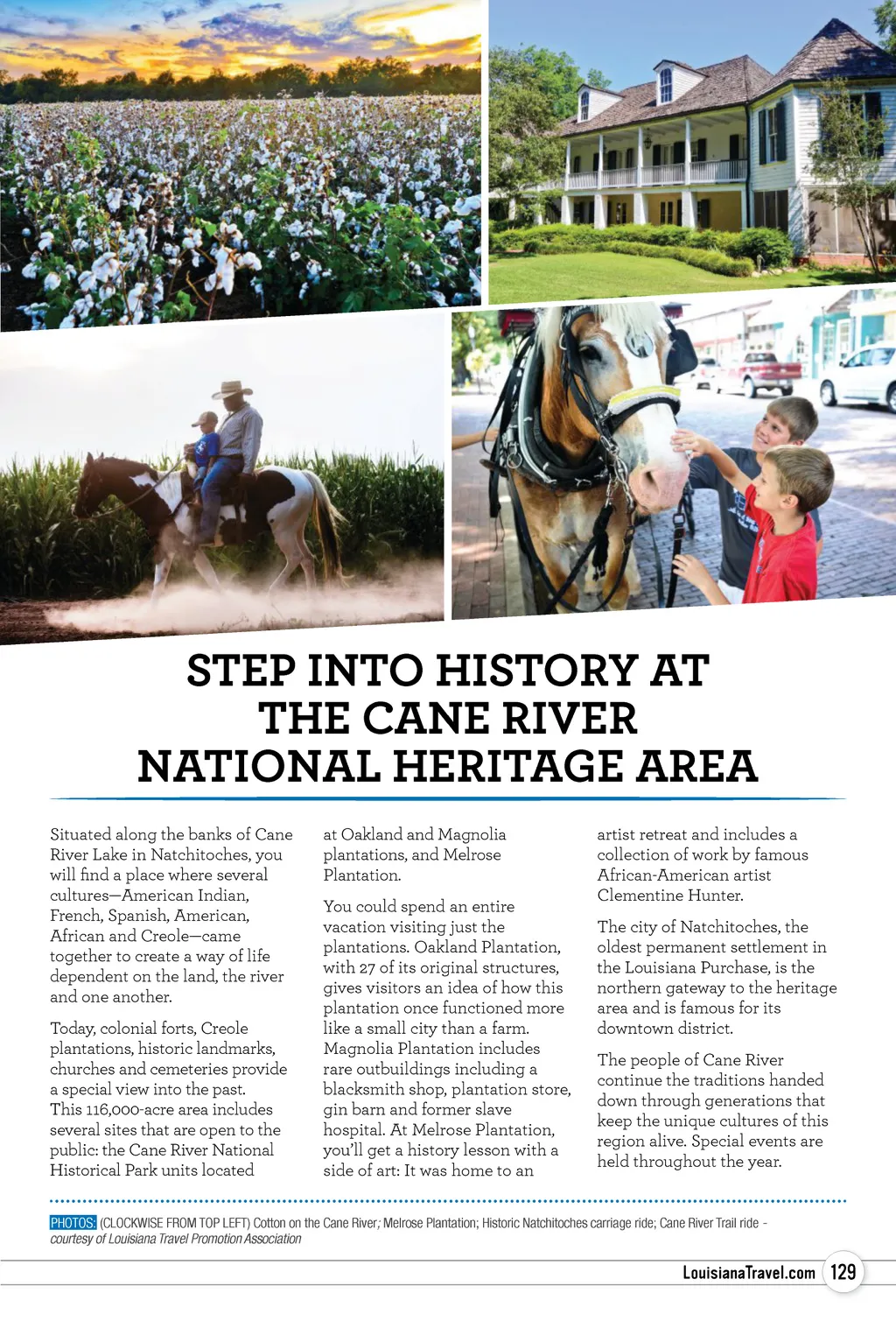
STEP INTO HISTORY AT THE CANE RIVER NATIONAL HERITAGE AREA Situated along the banks of Cane River Lake in Natchitoches, you will find a place where several cultures—American Indian, French, Spanish, American, African and Creole—came together to create a way of life dependent on the land, the river and one another. Today, colonial forts, Creole plantations, historic landmarks, churches and cemeteries provide a special view into the past. This 116,000-acre area includes several sites that are open to the public: the Cane River National Historical Park units located at Oakland and Magnolia plantations, and Melrose Plantation. You could spend an entire vacation visiting just the plantations. Oakland Plantation, with 27 of its original structures, gives visitors an idea of how this plantation once functioned more like a small city than a farm. Magnolia Plantation includes rare outbuildings including a blacksmith shop, plantation store, gin barn and former slave hospital. At Melrose Plantation, you’ll get a history lesson with a side of art: It was home to an artist retreat and includes a collection of work by famous African-American artist Clementine Hunter. The city of Natchitoches, the oldest permanent settlement in the Louisiana Purchase, is the northern gateway to the heritage area and is famous for its downtown district. The people of Cane River continue the traditions handed down through generations that keep the unique cultures of this region alive. Special events are held throughout the year. PHOTOS: (CLOCKWISE FROM TOP LEFT) Cotton on the Cane River ; Melrose Plantation; Historic Natchitoches carriage ride; Cane River Trail ride -courtesy of Louisiana Travel Promotion Association LouisianaTravel.com 129
Louisiana Travel Guide 2017: Page 129