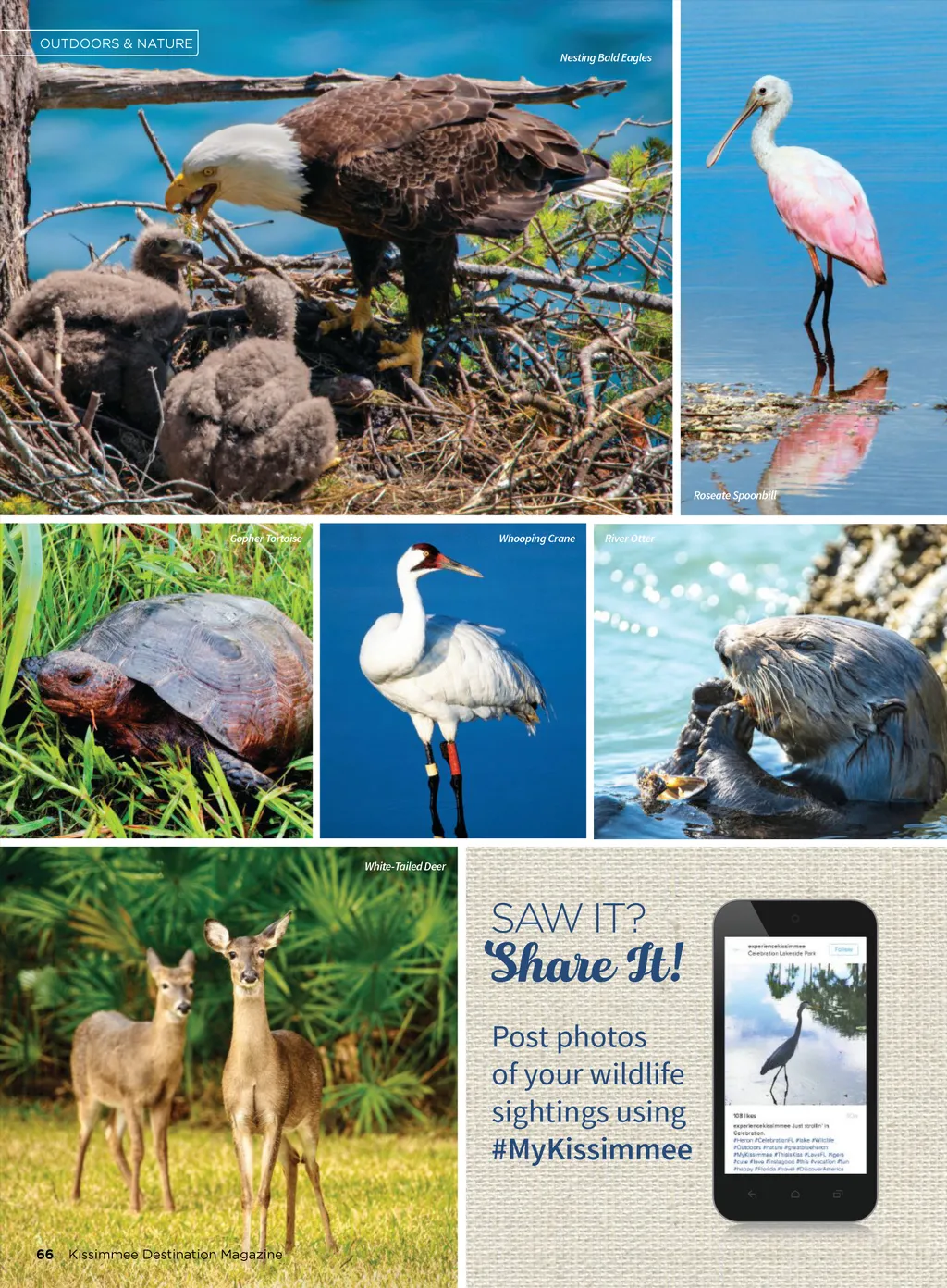
OUTDOORS & NATURE WILDLIFE With entry points along both the Great Florida Birding Trail and The Florida Trail, the Kissimmee area o ers opportunities to spot an amazing variety of indigenous bird and animal species, as well as non-native ones. To view their habitats and learn about the creatures, as well as the conservation e orts dedicated to their protection and proliferation, hike along the region's magnificent nature trails; boat, airboat or paddle on local lakes and waterways; take a self-directed driving tour through forested preserves; and visit attractions that allow for up-close encounters and interactive experiences with animals. Some places allow you to touch and feed them. Here are just a few examples of the wildlife you are likely to see along the way. Wonders RIVER OTTERS WHOOPING CRANES Kissimmee was selected as a site for the reintroduction of captive-reared whooping cranes, which had been facing extinction. The birds have been making a terrific comeback. You can recognize these mammals in Shingle Creek by their long body, flattened head, long whiskers, short legs and webbed feet. But since they can remain underwater for as long as eight minutes (they feed on aquatic wildlife), you might pass them by. NESTING BALD EAGLES Kissimmee is home to the largest population of nesting bald eagles in the continental United States. The Twin Oaks Conservation Area is a great place to see these majestic creatures. They mostly feed on fish and reuse the same nest every year. WHITE-TAILED DEER You’ll see these deer wandering around wooded and grassy areas, putting their great senses of smell, eyesight and hearing to work as they feast on woody shrubs and vines, succulent green plants, grasses and aquatic plants. ROSEATE SPOONBILLS With their distinctive spatula-shaped bills, spoonbills are one of Florida's most unusual wading birds. You’ll see them feeding on fish, crustaceans and aquatic insects in mangroves, lakes and marshes—view them up close at Kissimmee Lakefront Park . TO LEARN Craving MORE? ExperienceKissimmee.com 67 HAVE A GOPHER TORTOISES Considered to be threatened, these reptiles (they can live up to 60 years in the wild) reside in local forests and pastures where they dig deep burrows for shelter and feed on herbs and grasses. They don’t have ears but are extremely sensitive to vibration. Read more about the Kissimmee trail mix and the plants and animals you can see along them here: ExperienceKissimmee.com/trails
Experience Kissimmee Experience Kissimmee 2017: Page 67