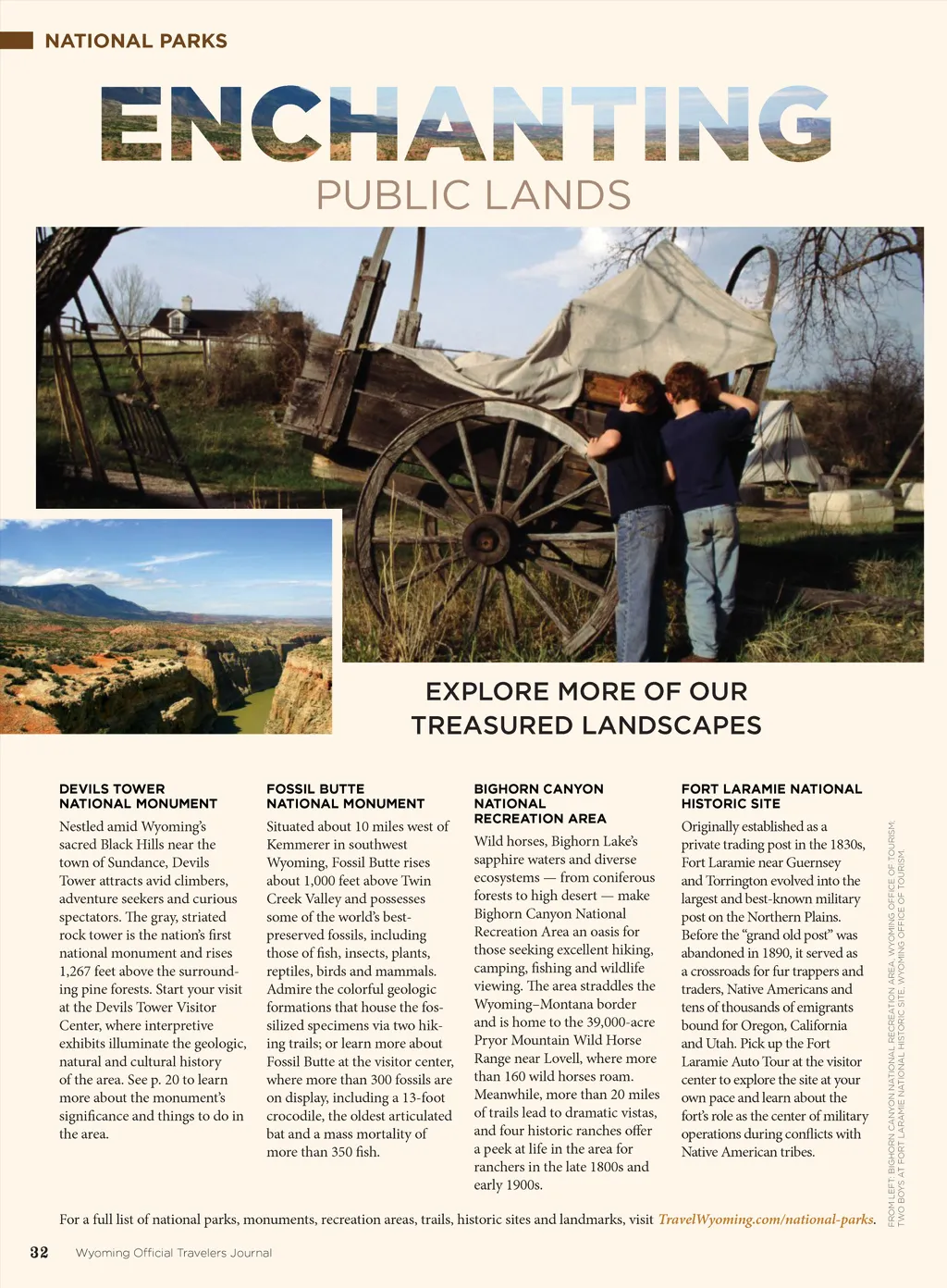
NATIONAL PARKS PUBLIC LANDS EXPLORE MORE OF OUR TREASURED LANDSCAPES DEVILS TOWER NATIONAL MONUMENT FOSSIL BUTTE NATIONAL MONUMENT BIGHORN CANYON NATIONAL RECREATION AREA FORT LARAMIE NATIONAL HISTORIC SITE FROM LEFT: BIGHORN CANYON NATIONAL RECREATION AREA, WYOMING OFFICE OF TOURISM; TWO BOYS AT FORT LARAMIE NATIONAL HISTORIC SITE, WYOMING OFFICE OF TOURISM. Nestled amid Wyoming’s sacred Black Hills near the town of Sundance, Devils Tower attracts avid climbers, adventure seekers and curious spectators. The gray, striated rock tower is the nation’s first national monument and rises 1,267 feet above the surround-ing pine forests. Start your visit at the Devils Tower Visitor Center, where interpretive exhibits illuminate the geologic, natural and cultural history of the area. See p. 20 to learn more about the monument’s significance and things to do in the area. Situated about 10 miles west of Kemmerer in southwest Wyoming, Fossil Butte rises about 1,000 feet above Twin Creek Valley and possesses some of the world’s best-preserved fossils, including those of fish, insects, plants, reptiles, birds and mammals. Admire the colorful geologic formations that house the fos-silized specimens via two hik-ing trails; or learn more about Fossil Butte at the visitor center, where more than 300 fossils are on display, including a 13-foot crocodile, the oldest articulated bat and a mass mortality of more than 350 fish. Wild horses, Bighorn Lake’s sapphire waters and diverse ecosystems — from coniferous forests to high desert — make Bighorn Canyon National Recreation Area an oasis for those seeking excellent hiking, camping, fishing and wildlife viewing. The area straddles the Wyoming–Montana border and is home to the 39,000-acre Pryor Mountain Wild Horse Range near Lovell, where more than 160 wild horses roam. Meanwhile, more than 20 miles of trails lead to dramatic vistas, and four historic ranches offer a peek at life in the area for ranchers in the late 1800s and early 1900s. Originally established as a private trading post in the 1830s, Fort Laramie near Guernsey and Torrington evolved into the largest and best-known military post on the Northern Plains. Before the “grand old post” was abandoned in 1890, it served as a crossroads for fur trappers and traders, Native Americans and tens of thousands of emigrants bound for Oregon, California and Utah. Pick up the Fort Laramie Auto Tour at the visitor center to explore the site at your own pace and learn about the fort’s role as the center of military operations during conflicts with Native American tribes. For a full list of national parks, monuments, recreation areas, trails, historic sites and landmarks, visit TravelWyoming.com/national-parks . 32 Wyoming Official Travelers Journal
Wyoming Official Travel Guide 2017 Wyoming OTJ: Page 32